Cookery Classes

I teach Turkish cooking classes in England,Turkey & USA, hope you can join us!,
Find Out More

Recipes    

Turkish cuisine provides healthy, hearty, delicious food for family and friends.
Find out more

Flavoring with Spices & Inspirations from my Turkish Cooking Class (Stuffed Eggplants, Baklava and more!)


We had a delightful day of cooking and sharing Turkish food last Saturday. Wonderful, enthusiastic participants joined my Turkish cooking class in Surrey (for the folks in Texas; I so look forward to coming back to teach at Central Market Cooking School, hope soon!), and we had a day of Turkish feast 🙂 It was so wonderful to share Turkish cuisine, traditions, history, and I was humbled, delighted to get such positive feedback.

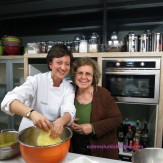
Here we are, dear friend Sadaf and I, dressed with dried eggplants and peppers (we dry them at home, to use when they are not in season. They are wonderful when stuffed and baked), just before the class 🙂

I have been getting a lot of questions on spices; their usage and where to get them. It is wonderful to see folks interested in spices and wanting to learn more. Spices are very important in Turkish cuisine, as we add wonderful flavors to the dishes through the artful use of spices, and very healthy too.

During the cooking class, we used cumin, red pepper flakes and mint; three spices that we use at Turkish cooking often.  Take cumin; its pungent aroma lingers  and it is warm and slightly sweet. Combined with chickpeas and tahini, cumin is the spice that makes hummus taste like hummus. Urfa or Aleppo chillies are dark red or purple-black and come from southeastern Turkey, where my roots are from. They are very exciting to work with and my favorite chili pepper. They are simultaneously bitter like coffee or chocolate and sweet like molasses, and they lend a wonderful, deep, smoky aroma to sauces. Its heat is moderate but meaningful. I use Urfa chilies in tomato based sauces, on grilled vegetables and marinated meats. Mint is a very common herb used in Turkish cooking. We like to mix it with cubed cucumbers, yoghurt and water for a refreshing accompaniment, “Cacik”, served with meat courses. It is also commonly used in salads, lemonades and stuffed grapevine leaves. Mint pairs very well with lamb too.

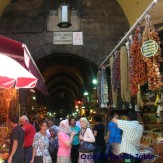
Malatya Pazari, my favorite spice shop in Spice Market, Istanbul

Middle eastern or specialty food stores should carry these spices, also Central Market and Whole Foods Market as well as Waitrose and Sainsbury’s in England carry a good selection. You can also get good quality spices on line through Kalustyans and Tulumba

During the class we had a go with the sweet Turkish treat, baklava. It is very easy to make with fillo pastry sheets and you can adjust how much butter and syrup you put on. My version is less sweet and more fragrant with the addition of lemon juice, it is a lovely treat, if you’d like to have a go.

Buttered layers of fillo sheets with walnuts, ready to go to the oven

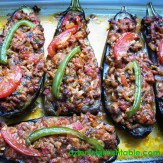
Karniyarik; Stuffed eggplants with ground meat and vegetables

And here is karniyarik; stuffed eggplant with ground meat and vegetables we prepared; eggplant is our national vegetable (actually fruit, as it has seeds in it) and the flesh become wonderfully meaty and sweet once cooked. There are a few tricks to it; you need to salt the eggplant halves (salt will help the moisture come out of the eggplant) and drain all the bitter juices. Served with plain rice and yoghurt by the side, Karniyarik, stuffed eggplants is a wonderful treat.

Wonderful, enthusiastic participants of the Turkish Cooking Class

Sadaf and Nadia, who were in the class said they already made the hummus, got the red pepper paste and bulgur for the bulgur wheat salad and Nadia already made the baklava using the fillo pastry sheets. So wonderful to see the recipes come alive and enjoyed, no better compliment; many thank yous, ladies!:)

I hope the photos and recipes inspire you to have a go too; please let me know if you have any questions, I would be very happy to help.

Afiyet Olsun!


Continue Reading

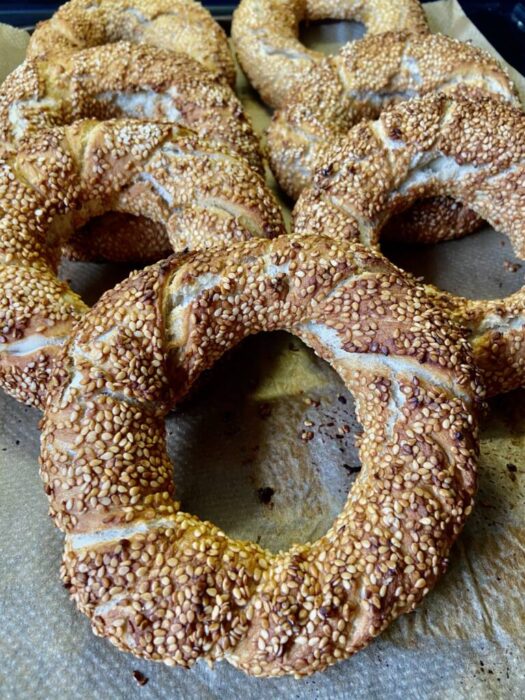
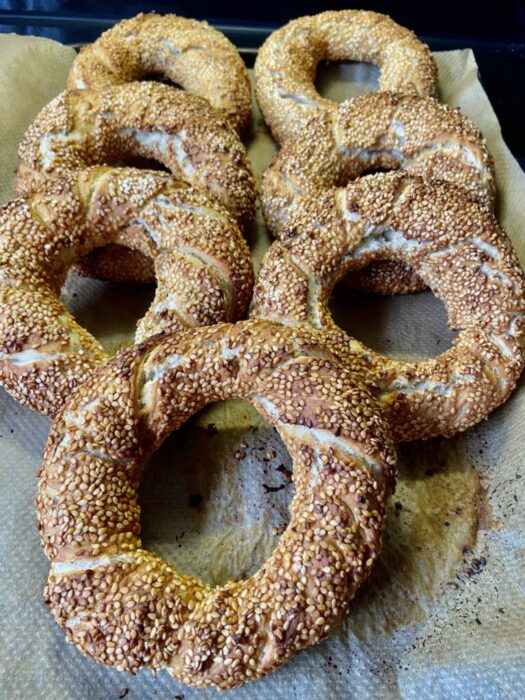
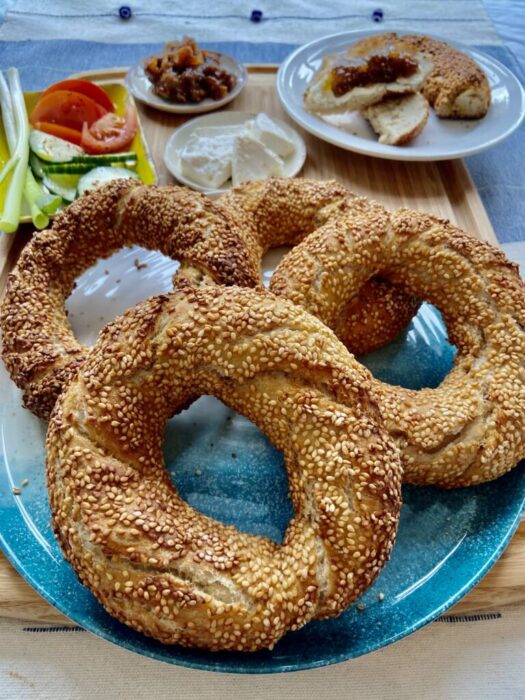
Simit; Sesame-Encrusted Turkish Bread Rings

Simit is indeed the quintessential Turkish food; these sesame-encrusted bread rings must be the most popular snack at home. You can have simit for breakfast with a cup of cay (tea), sliced cucumber, tomatoes, feta cheese and olives. You can enjoy them for a mid morning or afternoon snack with cheese or simply plain. Turks prefer savory accompaniments to simit, though I must say it is also lovely over some butter and jam. Their flavor and deeply satisfying texture are quite unlike anything else.

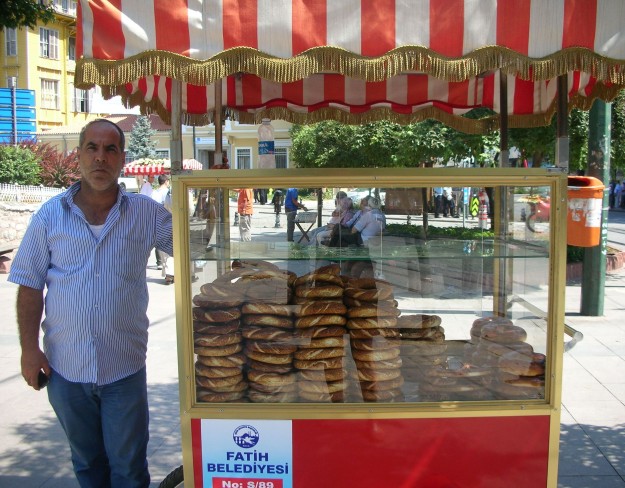
Traditional simit stall (simitci) in Istanbul

There are mobile simit stalls everywhere, especially in Istanbul (Istanbullus pride themselves as to have the genuine article). Recently, there are also Simit Houses opened all around the country, where you can enjoy simit with various fillings; cheese, olive paste, sucuk (Turkish spicy sausages made from dried cured beef). A magnificent revival of this all time favorite street food.

 When I saw the Simit recipe at Leanne Kitchen’s delightful book  Turkey; Recipes and tales from the road, I was over the moon. No one bothers making simit at home, as it is so widely available and so good. But living abroad, you don’t mind tackling to make it and would be surprised to see how easy to make them. This simit recipe is adapted from Leanne Kitchen’s version and based on Australian cup measurement (1 US cup in volume equals about 0.95 Australian cup measurement) . I hope you enjoy them at least as much as we did.

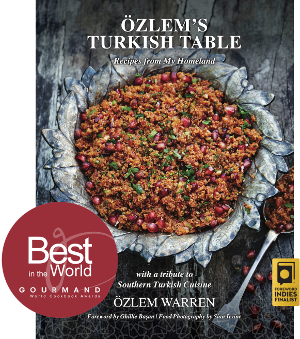
We love savoury pastries in Turkish cuisine;  variety of boreks, gozleme, pogaca, flatbreads with various fillings, pide and regional specialty pastries are all included at my cookery book (though please kindly note that simit is not at my current book), Ozlem’s Turkish Table, Recipes from My Homeland. Signed copies are available at this link, and it is delivered worldwide including USA, we hope it would bring joy for home cooking.

Makes 8

Prep time: 40 minutes (+1 hr for the dough to rise) Baking time:15-18 minutes

1 pinch sugar

15ml/3 teaspoons dried yeast

500gr (1lb 2oz/3 1/4 cups (Australian) or generous 4 US cups) plain flour

1 1/2 teaspoons sea salt

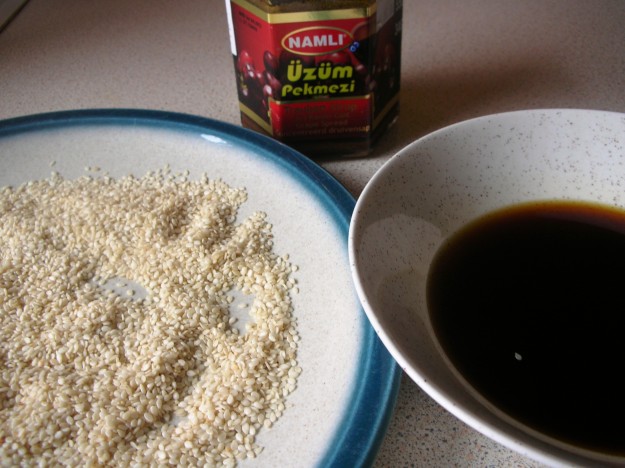
125ml (4 fl oz/1/2 cup) pekmez (molasses like syrup, see note)

155g/5 1/2oz golden sesame seeds


Combine the sugar and 60 ml (2fl oz/ 1/4 cup) lukewarm water in a small bowl, then sprinkle over the yeast. Set aside for about 8 minutes, or until foamy, then add another 310 ml (10 3/4 fl oz/ 1 1/4 cups) lukewarm water.

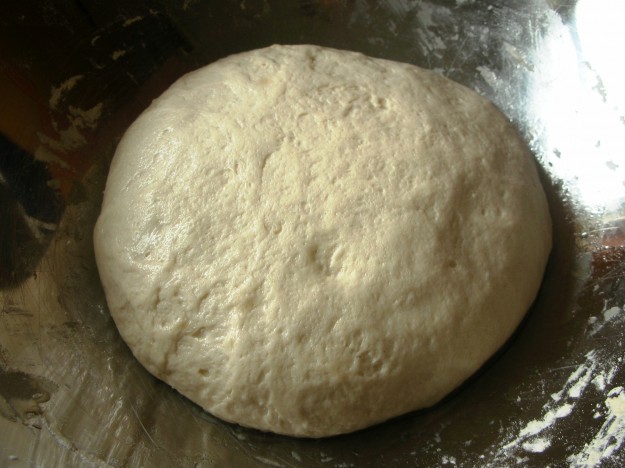
 Combine the flour and salt in a bowl, then add the yeast mixture and stir to form a coarse dough. Turn out onto a lightly floured surface ( a little bit of extra flour on the surface will help the dough to come together) and knead for 6-7 minutes, or until the dough is smooth and elastic. Roll the dough into a ball and place in a lightly oiled bowl, turning to coat. Cover with plastic wrap and set aside in a warm, draught-free place for 45 minutes to 1 hour, or until doubled in size.

Preheat the oven to 220 C (425 F/Gas 7) and line a large size baking tray with baking paper. Knock back the dough on a lightly floured work surface and divide it into 8 even sized pieces. Combine the pekmez with 60 ml/2fl oz water in a large bowl. Place the sesame seeds on a large plate. Working with one piece of dough at a time, use your hands to roll the dough out to make 60 cm (24″) long ropes. Fold in half so two ends align, then lift off the board and use your hands to twist each rectangle into a two stranded “rope”. Place back on the work surface and join the ends together to make a circle, pressing the ends firmly together to seal. Repeat with the remaining dough to make 8 rope circles.

Dip each ring, first into the pekmez mixture, immersing completely to coat, then drain well and toss in the sesame seeds, turning gently to coat. Transfer to the prepared tray and set aside at room temperature for about 20 minutes, to puff slightly. Bake in the oven for 15-18 minutes, or until deep golden and cooked through. Transfer to a wire rack to cool. Simit are best eaten on the day of making but will keep, frozen in an airtight container, for up to 1 month.

 Note: Pekmez is a molasses-like syrup made from the juice and must of certain fruits, usually grapes or figs. It is available from Middle Eastern and Turkish grocery stores.

 Afiyet Olsun,

Ozlem

Continue Reading

Natural History Museum – A Fantastic Day Out in London

My son Mark wanted to have a day out in London for his 8th birthday – which we all embraced happily!- NHM, Natural History Museum is one of his favorite spots in London. NHM is a home to more than 70 million wonderful specimens from the natural world. In their permanent galleries, the museum has a broad range of exhibitions about Earth and Life on Earth. My son especially loves the age of dinosaurs  – check out the terrifying T.rex!- , marvels at the blue whale, the largest animal in the world.

Red zone in the museum hosts our ever changing planet, space and the natural forces that shape it. You can even experience what it feels like to be caught in earthquake and witness the devastating impacts of volcanic eruptions.

 Above all, admission to NHM is free of charge, what a fascinating place to explore for all ages, if you are inLondon. The wonderful museum building is a piece of art itself, and it looks magical with a touch of snow 🙂

And right across the NHM is the wonderful Victoria and Albert Museum, one of the world’s greatest museums of arts and design. One of the Exhibitions they are hosting at the moment features the photographs of the Queen Elizabeth II by royal photographer Cecil Beaton. This exhibition celebrates Her Majesty in her roles as princess, monarch and mother and coincides with the 60th anniversary of her accession to the throne. This museum is also free of charge and a fascinating spot to explore.

Hope these get you in the mood for exploring fascinating sites, happy travels!

Continue Reading