Cookery Classes

I teach Turkish cooking classes in England,Turkey & USA, hope you can join us!,
Find Out More

Recipes    

Turkish cuisine provides healthy, hearty, delicious food for family and friends.
Find out more

Give Bulgur a Chance and Create Delicious, Satisfying Meals

If you have been following this blog for a while, you must have noticed that bulgur wheat is often used in Turkish cuisine. In addition to its great health benefits, (like it’s wholegrain and high in fiber), I love its delicious, nutty taste and that it is so easy to create a variety of delicious meals with it in no time.
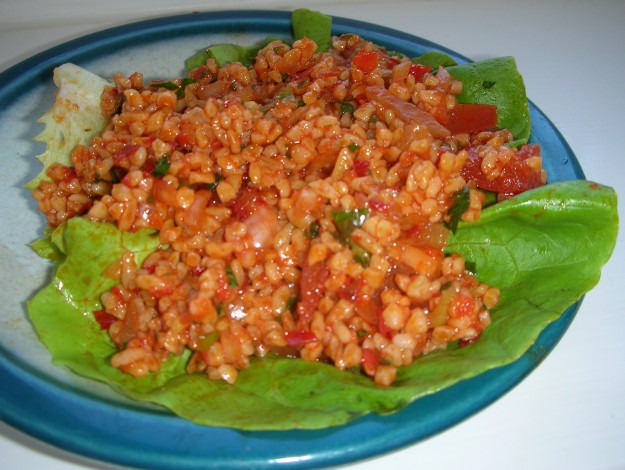
Kisir; Bulgur Wheat Salad with vegetables, olive oil and pomegranate molasses - tastes even better the next day!

Bulgur wheat unlike cracked wheat, is a grain made from the cooked wheat berries which have the bran removed, and are then dried and pounded. There are two varieties generally available, fine and coarse. The coarse type is used for pilaff and fine bulgur is used in salads. Take this wonderful Bulgur wheat salad with vegetables, olive oil and pomegranate molasses, Kisir. It is ‘a bowl of health’, refreshing and taste even better the next day!
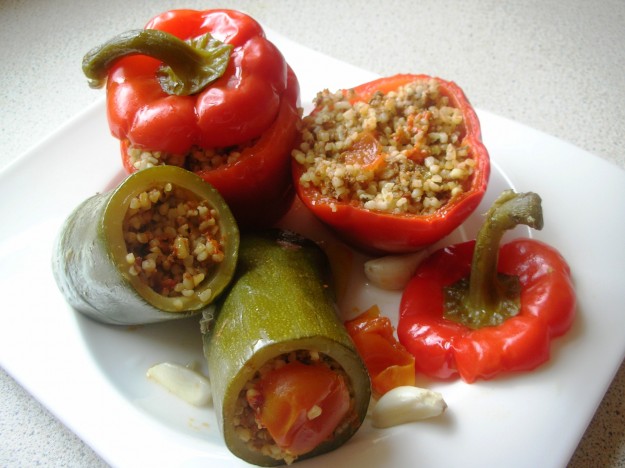
Stuffed Zucchini (Courgettes), and Peppers with Bulgur, Southern Turkish Style

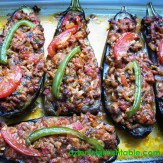
How about stuffing vegetables with bulgur? A popular way to enjoy Bulgur, especially at the Middle and Southern part of Turkey, a delicious and satisfying meal with some plain yoghurt by the side.
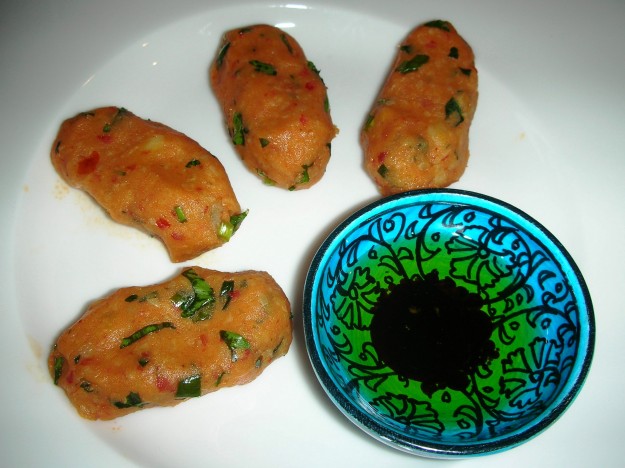
Potato and Bulgur patties with pomegranate molasses, a wonderful appetizer

Bulgur also features quite a lot in Turkish appetizers. These Potato and Bulgur patties are one of my favorite mezzes; they are scrumptious dipped on pomegranate molasses (or good balsamic vinegar).
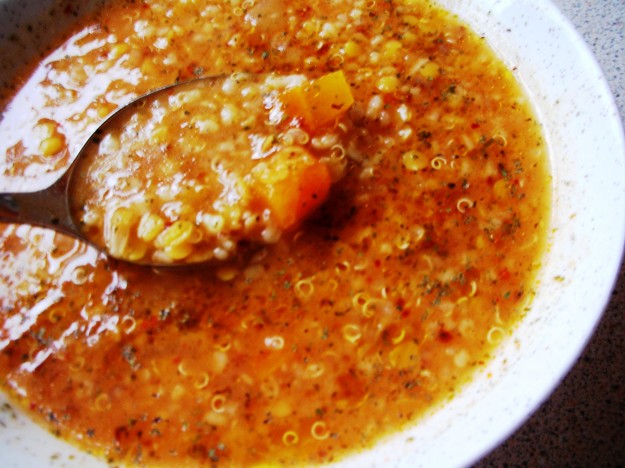
Spicy Lentil and Bulgur soup with dried mint and vegetables

Bulgur can be a part of hearty, delicious soups too, like this Spicy Bulgur and Lentil Soup. It is common for this soup to be enjoyed as part of breakfast in Anatolia, central part of Turkey.

Bulgur is healthy, delicious, affordable and now widely available. I hope you can give bulgur a chance, you won’t be disappointed. If you are already enjoying bulgur, I wonder what your favorite bulgur recipe is, would you share with us?

Here is a new, delicious recipe featuring bulgur; it has been a great hit at my recent Cooking Class, I hope you enjoy it too.

Bulgur Wheat Pilaf with Sautéed Almonds

In Central Anatolia, bulgur wheat is eaten far more than the rice. We like to add vegetables and sometimes nuts to bulgur, like in this recipe. Sautéed almonds give a lovely texture and flavor to bulgur. This pilaff can be a meal by itself, why not serving with Shepherd’s Salad of cucumbers, tomatoes and peppers, drizzled with olive oil?
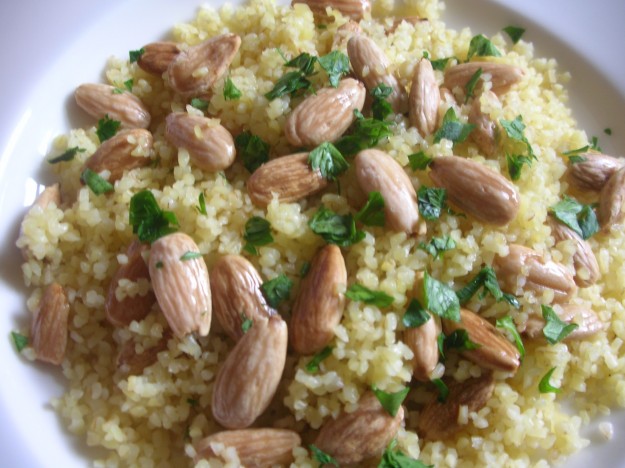
Bulgur Wheat with sauteed almonds


Serves 4-6

Preparation time: 10 minutes            Cooking time: 20 minutes (+10 min resting)

350gr/12oz bulgur wheat, rinsed and drained

75gr/3oz/3/4 cup blanched or flaked almonds

600ml/1 pint/2 1/2 cup hot water

30ml/2 tablespoon olive oil

Salt and ground black pepper to taste

Handful of fresh herbs (like parsley or coriander), chopped to serve

Heat 1 tbsp olive oil in a heavy pan and stir in the bulgur, tossing it thoroughly. Pour in the hot water, season with salt and pepper and combine well. Bring to the boil for 1-2 minutes, then reduce the heat and cover the pan. Simmer for about 15 minutes or until all the liquid has been completely absorbed.

Turn the heat off, cover the pan with a paper or tea towel and place the lid on top. Leave to steam for a further 10-15 minutes.
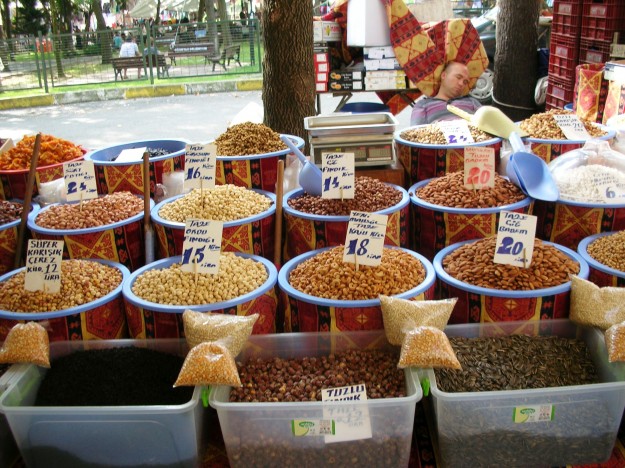
A nuts stall in Levent Market, Pazar - Istanbul. Nuts have an important part in Turkish cuisine (and it is OK to have a little siesta in hot summers day!)
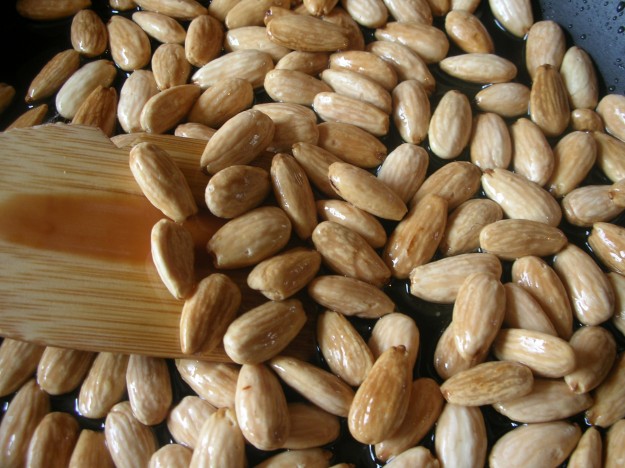
 

Sauteed almonds

In the meantime, heat the rest of the oil in a small pan and stir in the almonds. Gently sauté the almonds for 3-4 minutes, until they are golden (take care, as they can burn quickly).

Stir in the sautéed almonds to the bulgur pilaff, mix well. Serve hot with chopped parsley, coriander, or dill on top. You can also enjoy this dish with Shepherd’s Salad of cucumber, tomatoes and peppers, with a drizzle of olive oil.

Ideally, I would love to eat my bulgur overlooking to fascinating Istanbul; if we can’t be there for the moment, hopefully the photo may provide some ambiance.

Imagine being by the Bosphorus, Istanbul over looking the Topkapi Palace and floating ferries, Vapur

Afiyet Olsun!

Ozlem


Continue Reading

Home Made Turkish Delight – Lokum

Lokum ph2,Turkish Delight with OTT

Home made, fragrant Turkish Delights; easier than you think!

Have you ever tried Turkish Delight? These delicately flavored, scrumptious sweets are one ofTurkey’s hallmarks. They can be plain, sade, delicately flavored with fragrant rose water or dried fruits, nuts and desiccated coconut can be incorporated into the luscious mouthfuls of fragrant jelly.

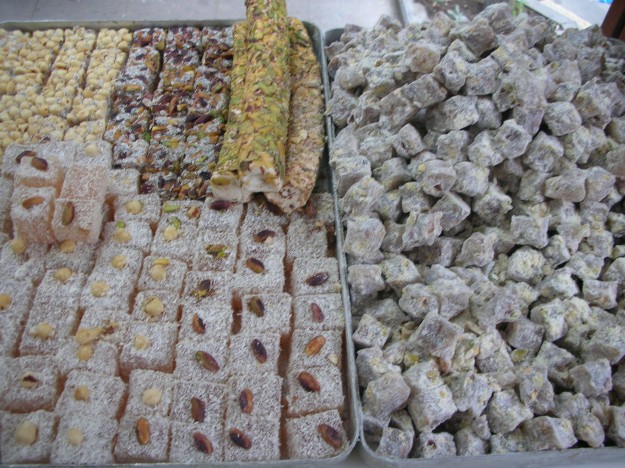
Scrumptious Turkish Delights with nuts in Turkey; they are a real treat

My children love Turkish Delight, and living abroad, I can’t always get those wonderful delights from home. Making Turkish Delight, having them properly set can be a bit of a challenge, but this new recipe we tried at my Turkish cooking class last weekend came out so well, we were all so pleased! And yes, you can now make Turkish Delight in your home! I would allow for the fragrant jelly to set at least overnight (and more if you can). They also make wonderful gifts; to pack as presents, sprinkle a little corn flour mixture into a bag to stop sweets sticking.

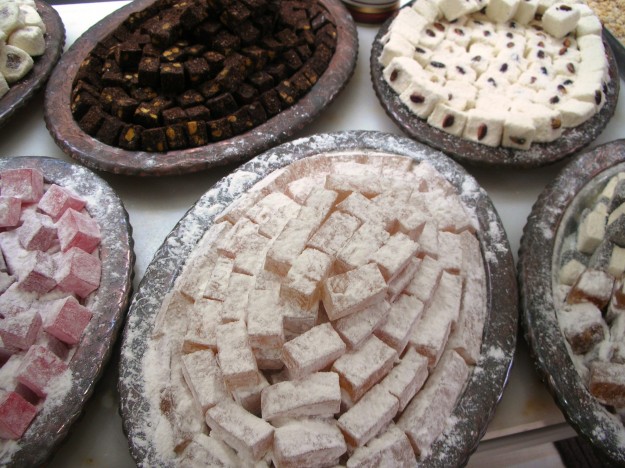
Turkish Delight with rose water, and the back, with chocolate – you get all sorts of flavours these days!

Now, a bit of history on Turkish Delight. Prior to the arrival of refined sugar in the late 18th century, the Ottomans made a crude version of Turkish Delight using honey or pekmez, a concentrated grape syrup and wheat flour. Haci Bekir, a confectioner of the time, became famous due to his ingenious use of white sugar and corn starch and was summoned to Topkapi Palace to pioneer the development of what is today one of Turkey’s hallmarks. Special recipes for variations of Turkish Delight can be found in all regions ofTurkey. Sakiz (mastic gum) another ingredient revered by the Sultans, can be used to create a chewier version and is a must if you are preparing rolled up versions of lokum. This recipe is for plain (sade) lokum, however, you may wish to add shelled and chopped nuts of your choice – hazelnuts, pistachio nuts or walnuts work extremely well.

Prep time: 15 minutes (plus setting overnight) Cooking time: about 25 minutes

Makes about 64 small squares

25gr/1oz icing sugar

100gr/3 1/2 oz corn flour

700gr/1 1/2lb caster sugar

Juice of 1 lemon

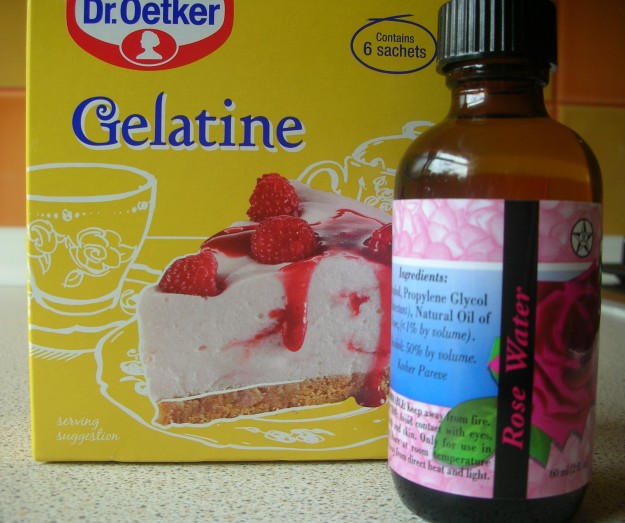
3 tbsp powdered gelatine (* see for a vegetarian gel option)

Red or pink coloring – optional

2 tbsp rose water

Gold edible glitter – optional

* If you prefer to use vegetarian gelatine, Dr Oetker has a vegetarian gel too, here is the link;
Vege-Gel is a vegetarian alternative to gelatine and not a substitute. Therefore, it has to be used in a slightly different way to gelatine and it may be necessary to adapt your recipe.

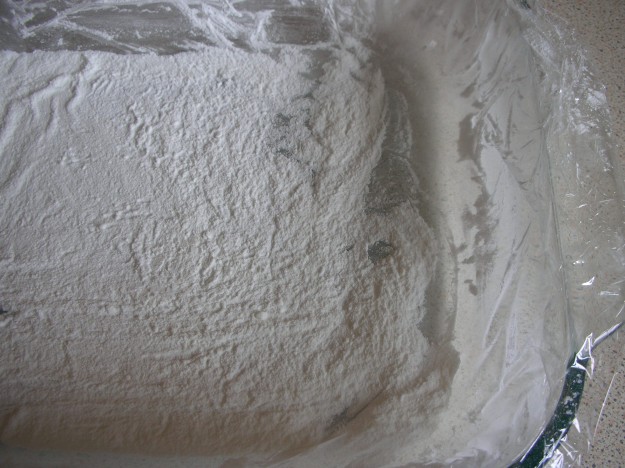
Sprinkle a little cornflour and icing sugar mixture over the base and sides of the bowl

Line a 20.5 (8in) square baking tin with a cling film. Sift icing sugar and 25g (1oz) of the corn flour into a small bowl. Sprinkle a little over the base and sides of the tin. Set bowl aside.

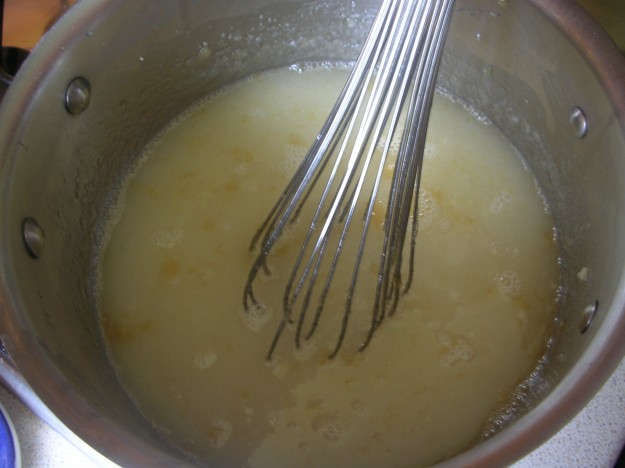
Put caster sugar, lemon juice and water into large pan, heat gently until dissolved

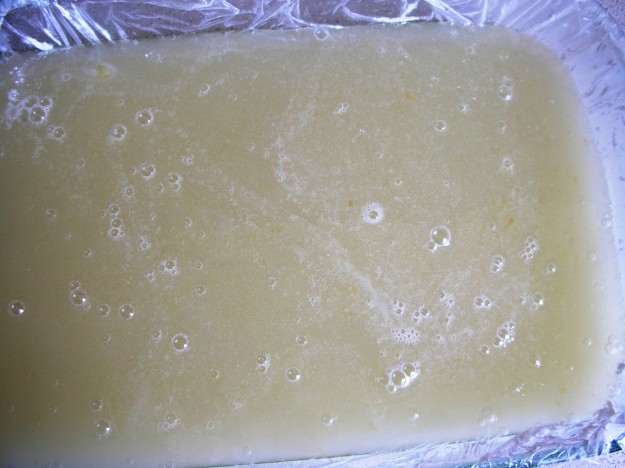
Put caster sugar, lemon juice and 400ml (14fl oz) water into large pan. Heat gently until dissolved – do not boil. In a small bowl, mix the remaining corn flour with 100ml (3 1/2 fl oz) cold water, and then stir into sugar syrup. Sprinkle gelatine over liquid and stir with balloon whisk to break up lumps. Bring to boil, then simmer over medium heat for 20 minutes, whisking often. The mixture should thicken and turn pale yellow.


Gelatine helps set the Turkish Delight and rose water adds a delicately perfumed flavor

Remove from heat and whisk in a little food coloring to turn mixture into light pink (optional). Set aside for 5 min. Stir in rose water and pour into tin. Leave to set in a cool place overnight.

Leave to set Turkish Delight in a cool place overnight

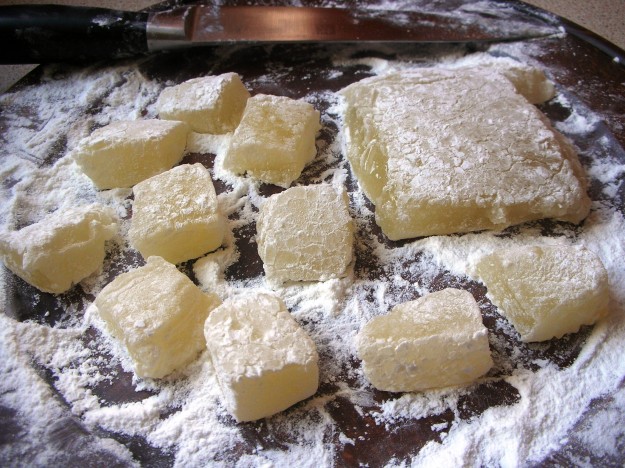
Dust a board with some reserved corn flour mixture, and then invert Turkish Delight on to it. Remove tin; peel off clingfilm. Cut into cubes, and then roll each gently in corn flour mixture to coat.

Dusting a board with the corn flour and icing sugar mixture really helps for the jelly not to stick

Sprinkle over a little glitter, if using. Place grease proof paper on a large metal tray. Then place the Turkish delight cubes on the tray side by side with a little space in between, in one layer. Let the Turkish delight air dry for 24 hours, for best results; this will prevent homemade Turkish delight from sweating.

Sprinkle the remaining corn flour mixture and gently coat each piece. Store in an airtight glass or metal container at a cool, room temperature (away from heat, sunlight, radiator etc.). If there is more than one layer in the container, place a sheet of grease proof paper between each layer and make sure there is a little space between each Turkish delight piece. Homemade Turkish delight is best enjoyed when fresh, though it keeps well stored in a dry place for up to 1 month.

To pack as gifts, sprinkle a little cornstarch mixture into a paper bag to stop the sweets sticking.

Afiyet Olsun, as we say in Turkish, which means “May you be happy and healthy with this food”. I hope you enjoy making Turkish delight, lokum, at home.

Poached dried apricots with clotted cream, from my book, SEBZE

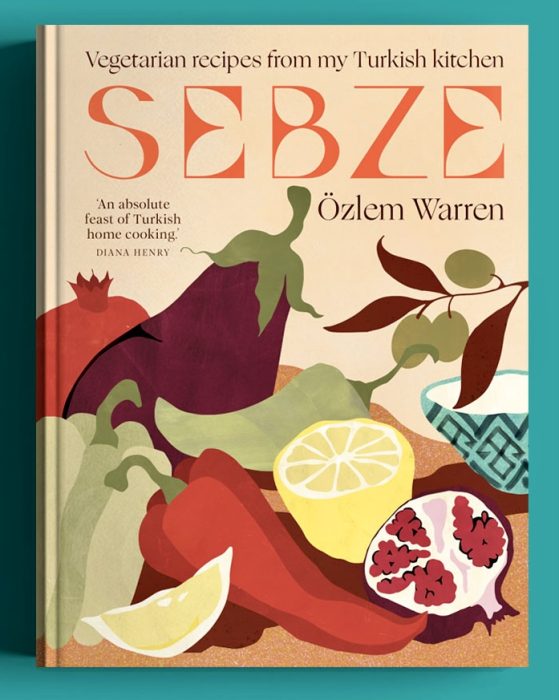
Sweets takes center stage in Turkish cuisine, enjoyed during special occasions, festivities, celebrations or to make any day a bit more special. There are scrumptious and easy Turkish sweet treats in my new book SEBZE, Vegetarian recipes from my Turkish kitchen, including Firin Sutlac, Acibadem cookies, Poached dried apricots in clotted cream, Revani with caramalised orange slices, Quince dessert, Pistachio short bread cookies and  more.  You can order a copy of SEBZE here, worldwide.

SEBZE, Vegetarian Recipes From My Turkish Kitchen

SEBZE, Vegetarian Recipes From My Turkish Kitchen

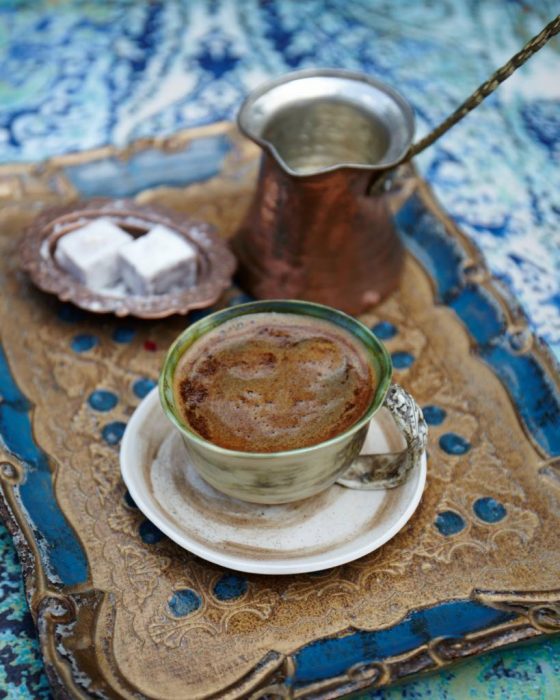
Turkish Delight goes so well with Turkish Coffee, and here is the recipe, of you would like to try.

Turkish coffee, Turk kahvesi

Afiyet Olsun,

Ozlem


Continue Reading

Baby Artichokes Poached in Olive Oil with Peas, Carrots and Almonds – Zeytinyagli Enginar

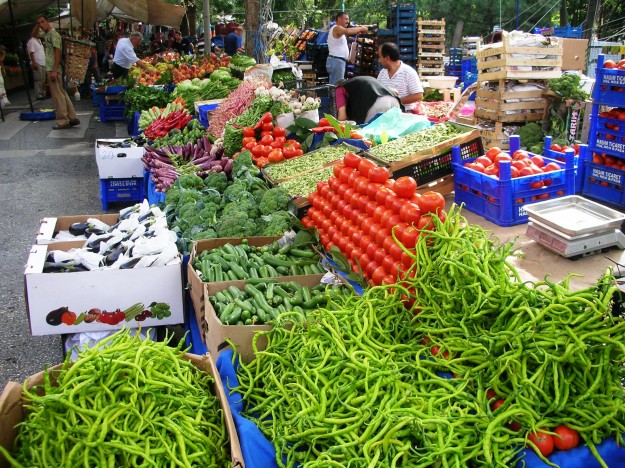
Vegetable Market in Istanbul – Sali Pazari, Istanbul

Turkish cuisine is very much based on using fresh, seasonal ingredients. A daily trip to Pazar, fresh fruit and vegetable market is a ritual, most Turks do daily at home. Rather than having a recipe in mind, we go to the Market, Pazar, to see which vegetables are seasonal and freshly available in the market and then decide what we will be cooking accordingly.

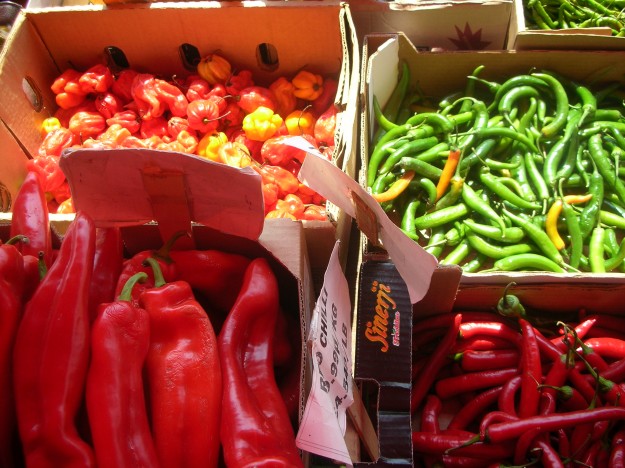
 Very inviting sweet and spicy peppers at the Cheam Market, England

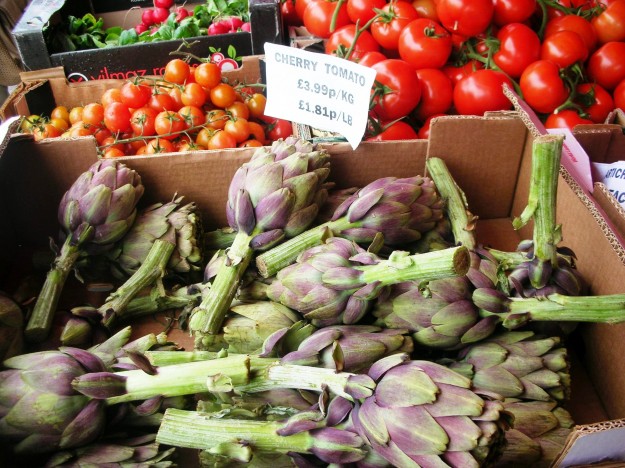
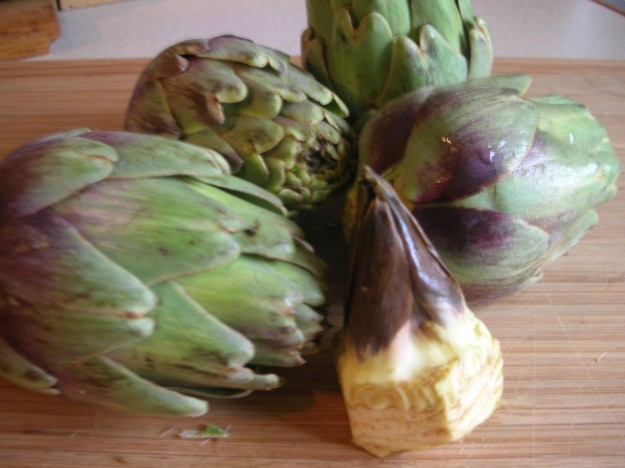
I had one of these moments when we went to the Turkish Market in Cheam last week. It so wonderful to see great displays of different kinds of peppers (red pointy ones, slim long and spicy green peppers, small spicy peppers and small, less meaty green bell peppers which are great for stuffing), slim aubergines, vine tomatoes and.. baby artichokes.

Baby artichokes at Cheam Market; they are a real treat. Until ready to use, fresh artichokes should be treated like flowers and put in a jug of water.

I rarely can get baby artichokes at my local market, so seeing it was a real treat and the menu for that day is decided; poached baby artichokes in olive oil. We Turks love to poach especially the big, meaty globe artichokes in olive oil with vegetables, dressed with lemon juice and dill. This style of cooking in Turkish cuisine is called “vegetables cooked in olive oil”,  and we enjoy them at room temperature or cold. Dressed with olive oil and lemon juice,they are not only very healthy but a joy to eat during summer time and can be kept in fridge 2-3 days.

I adapted this recipe from one of my favourite cookery author Ghillie Basan’s Complete Book of Turkish Cooking Book. Ghillie added blanched almonds to hers, a brilliant idea for added texture and flavour, worked really well in mine too. This dish would be a wonderful starter, a light lunch or a side dish and you will be creating a healthy, delicious dish using a few fresh ingredients – I hope you can give it a go sometime.

Artichokes in olive oil, Em tennis, almond bulgur, lokum first p 015

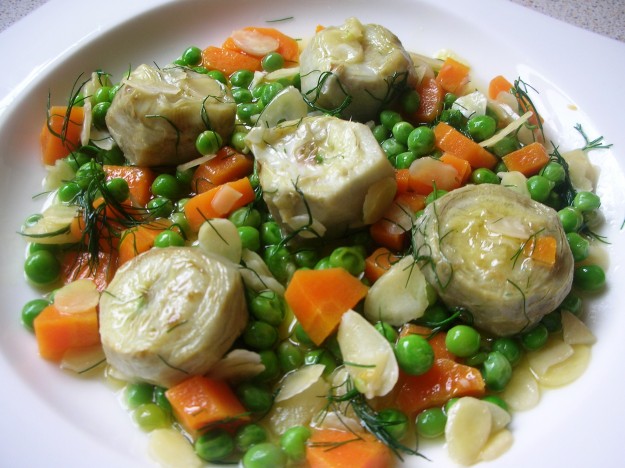
Baby artichokes poached in olive oil with peas, carrots and almonds

Serves 4

Preparation time: 25 minutes              Cooking time: 30 minutes

4 large globe artichokes or 10-12 baby artichokes

1 small cooked carrot,diced

90gr/3oz fresh peas (or frozen if you can’t get fresh peas)

75gr/3oz blanched or flaked almonds

Juice of 1 lemon

30ml/2 tablespoons olive oil

5m/teaspoon granulated sugar

15ml/1 tablespoon fresh dill,chopped

Salt to taste

Wedges of lemon to serve

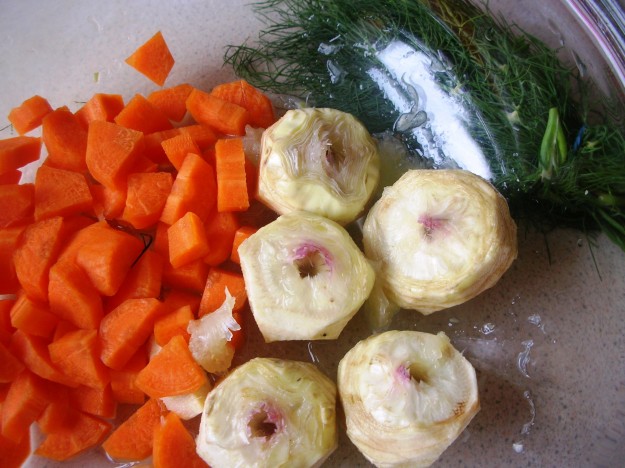
Cut off the stalks and pull off all the leaves of the artichokes

First let’s prepare the artichokes. Cut off the stalks and pull off all the leaves. Dig out the hairy choke from the middle with a spoon (you don’t need to do this stage with baby artichokes). Then cut away any hard bits with a sharp knife and trim into a neat cup shape. Rub the cups – called bottoms – with a mixture of lemon juice and a little salt to prevent them from coloring (tip: until ready to use, fresh artichokes should be treated like flowers and put in a jug of water).

Rub the artichoke cups with a mixture of lemon juice and a little salt to prevent them from colouring.

Heat the olive oil in a heavy pan and stir in the artichokes in lemon sauce and the diced carrots. Pour 100ml/4fl oz/1/2cup water over the vegetables, combine well. Cover the pan and poach the vegetables gently for about 25 minutes. Then add the fresh or frozen peas, sugar and almonds, combine well. Cover again and continue to cook gently for another 5 minutes, until the artichokes are tender.

Toss in the dill, season with salt and turn off the heat. Leave to cool the artichokes in the pan.

Serve this delicious course at room temperature with wedges of lemon by the side.

Baby artichokes poached in olive oil; a refreshing, delicious and healthy course

You can enjoy this refreshing vegetable course as a starter or by the side of grilled meat, fish or pasta.

Afiyet Olsun!

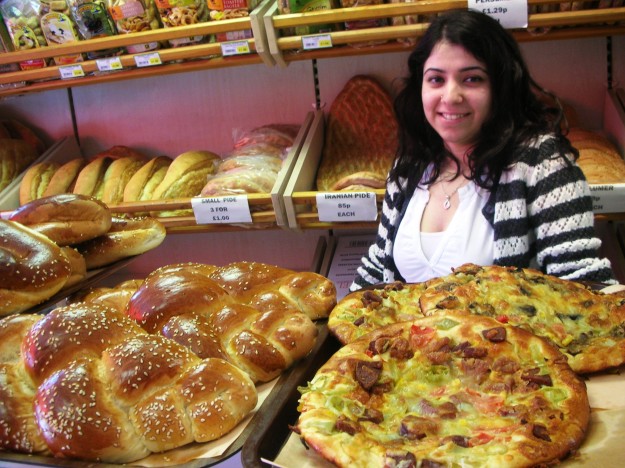
Friendly lady at the bakery, filling us with delicious breads and pastries

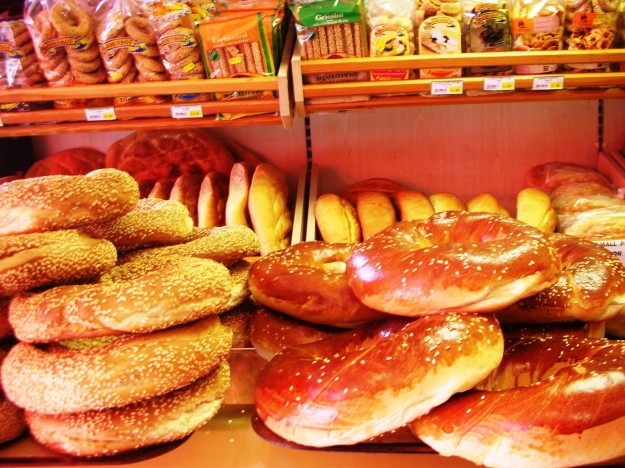
And a few more photos to share from the Cheam Market; the bakery is always a big hit with fresh flat breads, sesame seeded pastries, ekmek, Turkish loaf of bread and many more.

Simit, sesame coated bread rings are a big part of Turkish breakfast

Simit is the quintessential Turkish food; these sesame-encrusted bread rings are the most popular snack at home, and they are easy to make too, here  is the recipe, if you’d like to have a go.

Wishing you all a good week ahead, filled with delicious food to share!

Ozlem


Continue Reading