Cookery Classes

I teach Turkish cooking classes in England,Turkey & USA, hope you can join us!,
Find Out More

Recipes    

Turkish cuisine provides healthy, hearty, delicious food for family and friends.
Find out more

Turkish vegetarian rose ravioli with filo pastry; Mantarli Gul Manti

Turkish vegetarian rose ravioli with filo pastry; mushrooms make a delicious filling.

Turkish vegetarian rose ravioli with filo pastry; mushrooms make a delicious filling.

The traditional manti, Turkish dumplings or ravioli, was a central dish in the 15th century Ottoman cuisine. A very popular dish, it was cooked in imperial kitchens and was eaten by Sultan Mehmet II almost daily. This version of manti, traditionally made with “yufka”, the fresh pastry sheets, is a popular one at home and was a big hit at our Turkish cookery class last Saturday. These mantis are also named as “Sosyete Mantisi” or Gul Manti / Gul Boregi, as they look like the shape of rose.
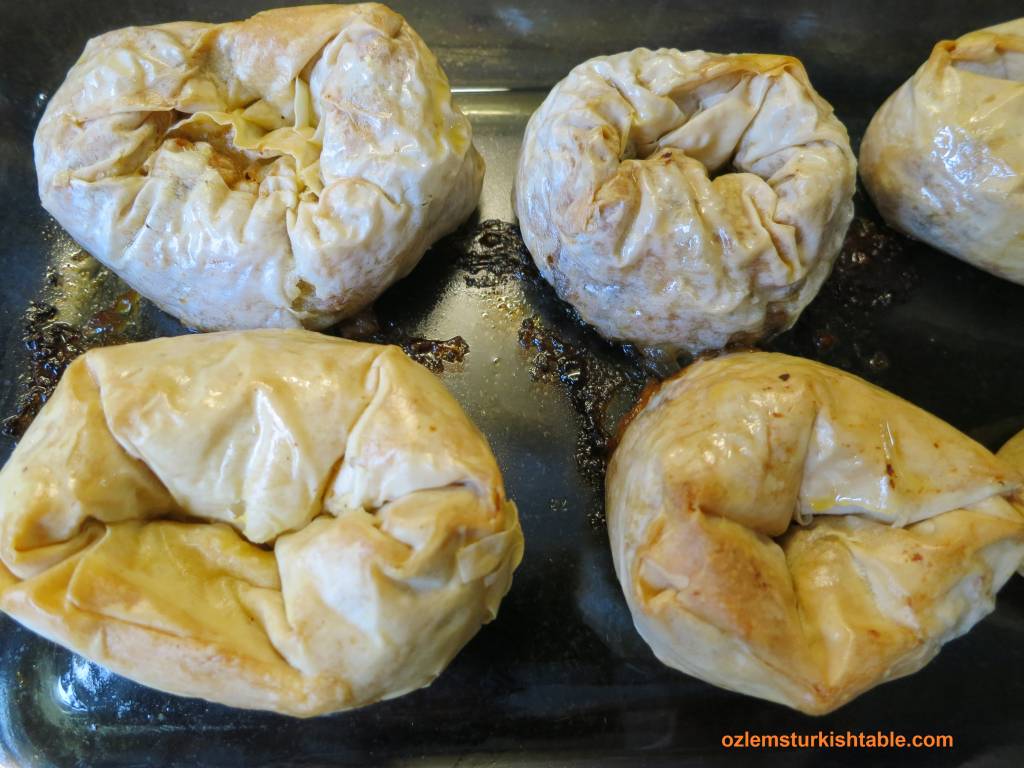
Baked Turkish rose ravioli with filo pastry and mushroom filling; Mantarli Gul Manti or Gul Boregi

Baked Turkish rose ravioli with filo pastry and mushroom filling; Mantarli Gul Manti or Gul Boregi

Gul Manti is traditionally made with ground meat and onion filling. We made a vegetarian version during our class, using chestnut mushrooms, onions, garlic and tomato; it proved to be a delicious vegetarian filling and we all enjoyed it.
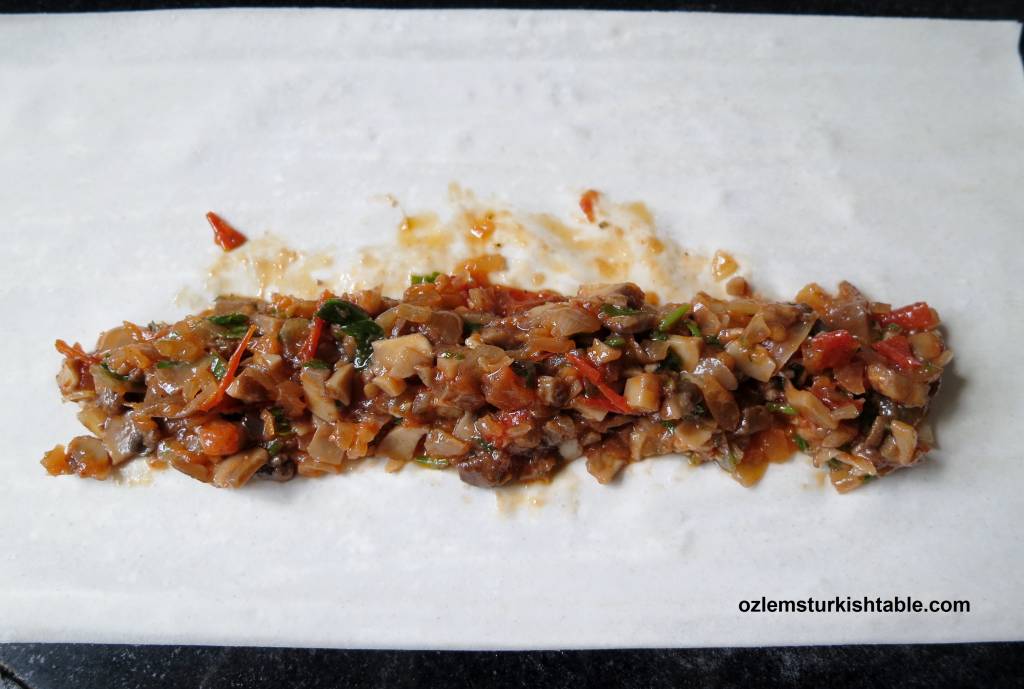
Spread 1 ½  tablespoon of the mushroom mixture in a line the middle of the filo pastry.
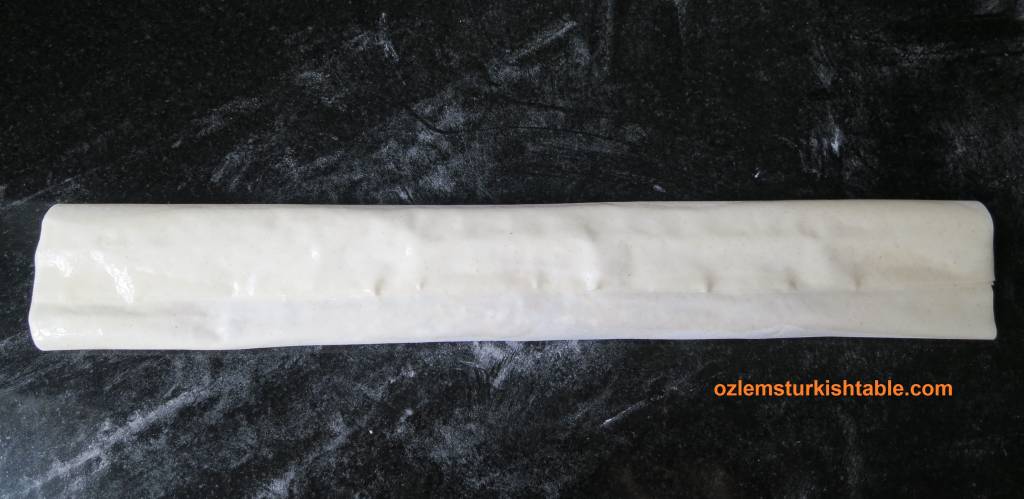
Spread 1 ½ tablespoon of the mushroom mixture in a line the middle of the filo pastry.

Roll the pastry like a cigar. Seal the ends of the pastry with a little water.
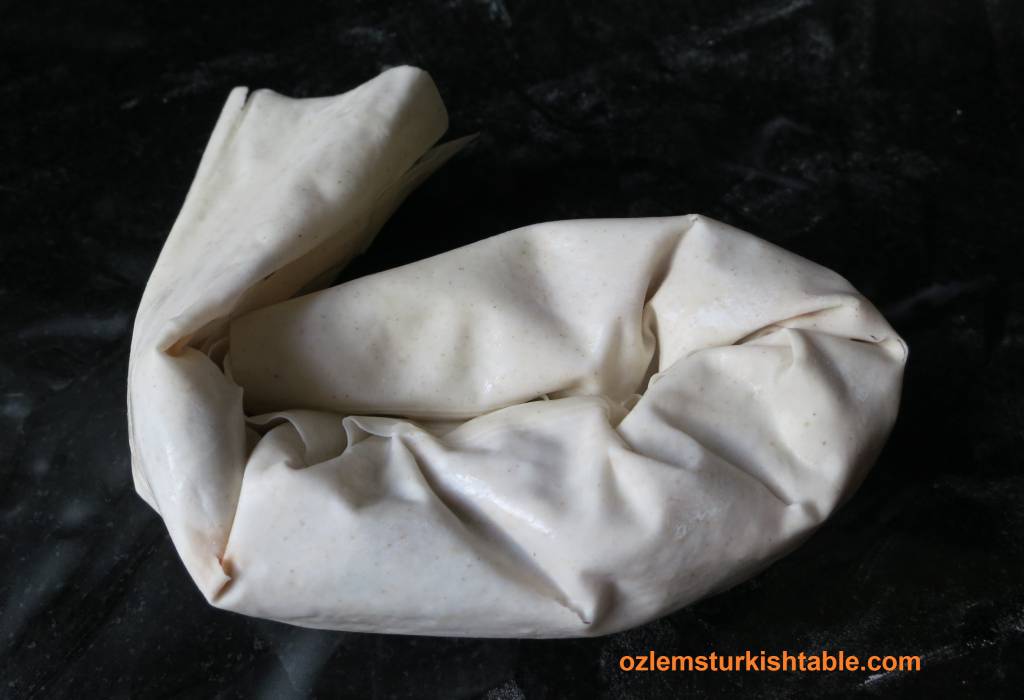
Roll the pastry like a cigar. Seal the ends of the pastry with a little water.

Then, starting from one end, roll the cigar shape into a rose shape.
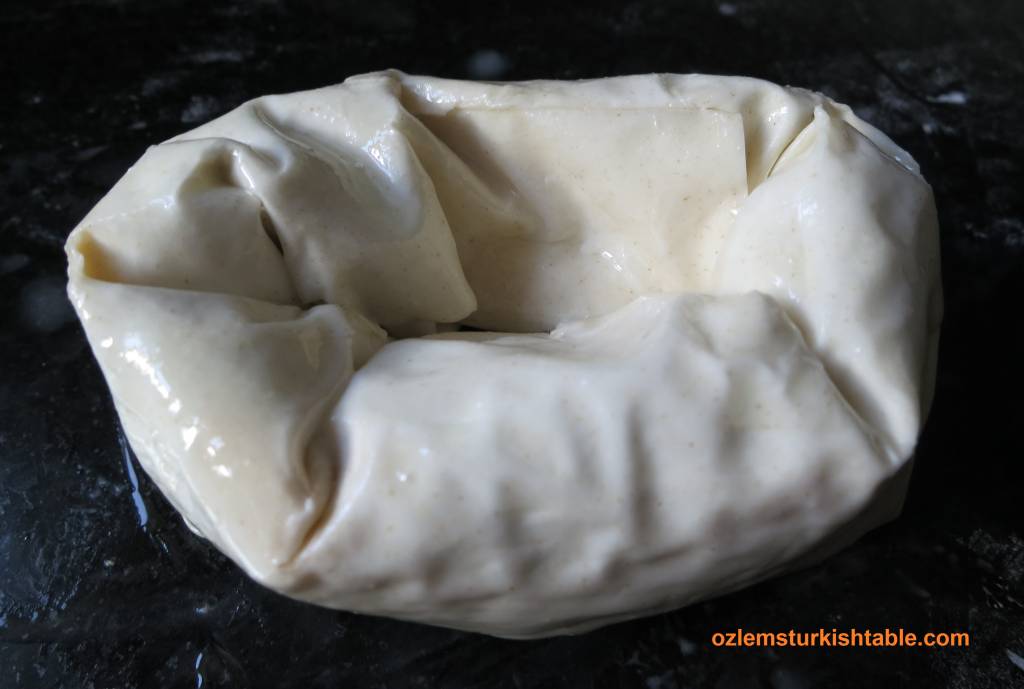
Then, starting from one end, roll the cigar shape into a rose shape.

Seal the ends of the pastry well with a little water.

Seal the ends of the pastry well with a little water.

Rose ravioli, gul manti, may seem a little awkward to make but they look so attractive that the extra effort is worthwhile. Please bear in mind that filo pastry dries out quickly and may become difficult to work with. To prevent this, keep the pastry sheets under a damp dish towel and only take out one at a time. Above is a step by step photo of how to fold and bend the filo pastry into the rose shape. If the pastry breaks as you fold/bend, please don’t worry. Keep a bowl of water by your side and seal all the broken parts with water and patch with a little pastry. It will all work just fine at the end.
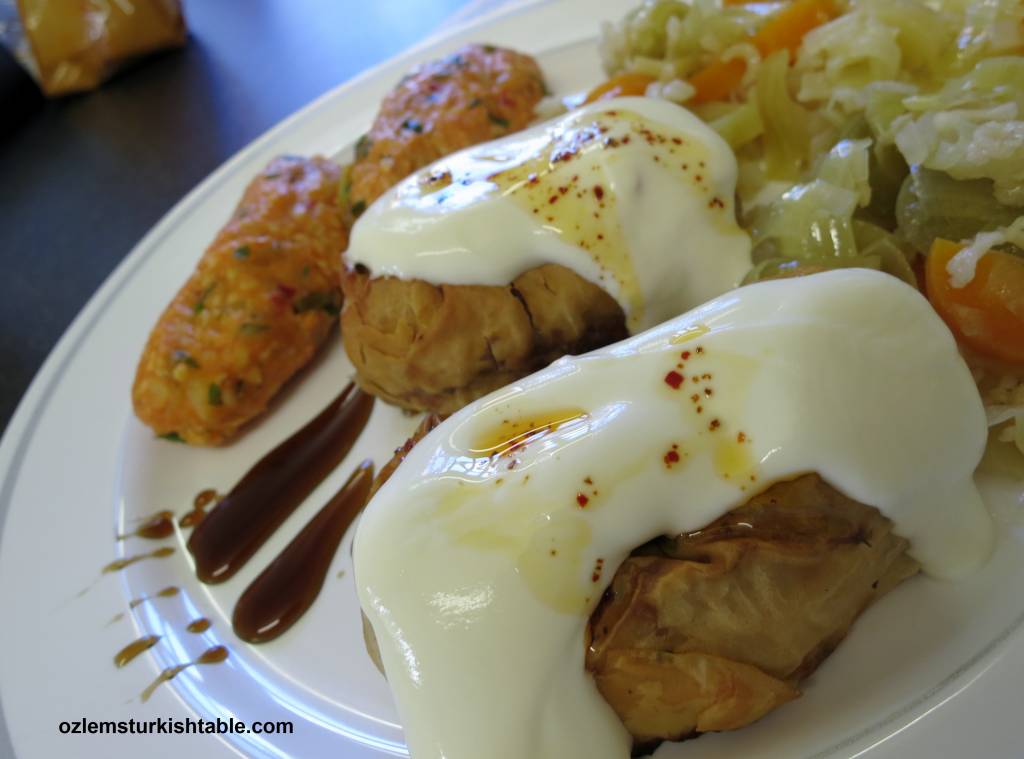
Baked Turkish rose ravioli with mushrooms, gul manti; we served bulgur and potato patties aside at our Turkish cookery class

Baked Turkish rose ravioli with mushrooms, gul manti; we served bulgur and potato patties aside at our Turkish cookery class

With the garlicky yoghurt and red pepper flakes infused olive oil drizzled over, these rose raviolis with mushroom filling make an impressive, delicious course. We served them with bulgur and potato patties, bulgurlu, patatesli kofte with pomegranate molasses aside, they complemented each other well.

Afiyet Olsun,

Ozlem
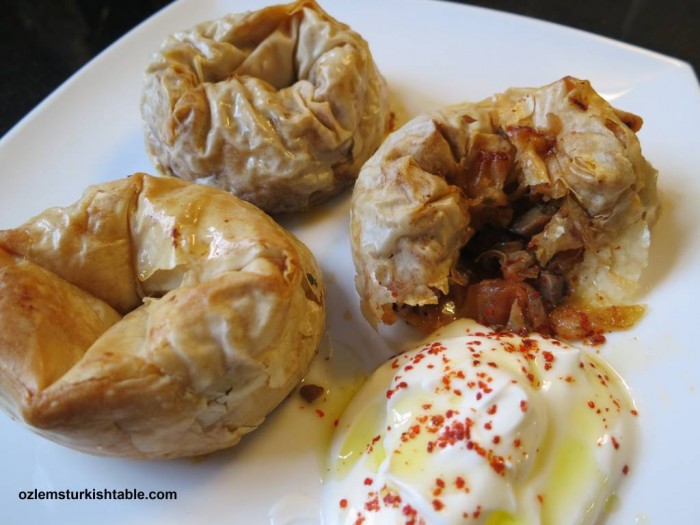
Turkish vegetarian rose ravioli with filo pastry; Mantarli Gul Manti
 
With the garlicky yoghurt and red pepper flakes infused olive oil drizzled over, these vegetarian Turkish rose raviolis (or Gul Manti / Gul Boregi) with mushroom filling make an impressive, delicious course. Filo pastry is used here, please follow the instructions so that they won't get dried. Afiyet Olsun!
Author:
Recipe type: Savory Pastries
Cuisine: Turkish cuisine
Serves: 3-4
Ingredients
  • 260 gr / 9 oz. filo pastry sheets, thawed
  • 225 gr / 8 oz. chestnut mushrooms, cleaned and chopped finely
  • 1 onion, very finely chopped
  • 2 garlic cloves, crushed
  • 3 small to medium tomatoes, finely diced
  • 1 bunch or ½ cup Italian flat leaf parsley, freshly chopped
  • 30 ml/ 2 tbsp. olive oil
  • Salt and freshly grounded black pepper
  • 4 fl oz. / ½ cup vegetable stock
  • For garlic yoghurt:
  • 260 gr / 9 oz. natural plain yoghurt, brought to room temp.
  • 2 garlic cloves, crushed with salt
  • For red pepper infused sauce:
  • 30 ml/ 2 tbsp. butter or olive oil
  • 5-10 ml/ 1-2 teaspoon red pepper flakes
  • Dried mint to sprinkle over to finish the rose ravioli
  • Small bowl of cold water aside to shape and seal the rose ravioli
Instructions
  1. Preheat oven to 350 F / 180 C
  2. For best results, thaw the frozen filo pastry in the fridge overnight and bring it to the room temperature30 minutes before using. That enables the filo thaw completely. If it is fresh as in the UK, you only need to bring the filo to the room temperature 30 minutes before using.
  3. Bring the yoghurt to room temperature by taking out the fridge and set aside in a warm spot in the kitchen.
  4. Clean the mushrooms with a damp paper towel and chop finely.
  5. Sauté the chopped onions with some olive oil for a couple of minutes, until soft.
  6. Add the mushrooms and the garlic, cook for 3-4 minutes, until softened and most of the liquid is evaporated. Stir in the tomatoes and gently cook for another 3 – 5 minutes, until most of the juice is evaporated.
  7. Season with salt and pepper, add the parsley and mix well. Set aside to cool.
  8. Grease a baking tray with 1 tbsp. olive oil.
  9. On a dry surface, place the filo pastry sheets on top of one another and cut in half horizontally to form rectangles. Place damp paper towel over them to keep moist. Have a bowl of water near you.
  10. Take out two rectangular filo pastry sheets on a dry surface (cover the rest of the filo pastry with damp towel).
  11. Spread 1 ½ tablespoon of the mushroom mixture in a line the middle and roll like a cigar. Seal the ends of the pastry with a little water.
  12. Then, starting from one end, roll the cigar shape into a rose shape sealing the end again with a little water. Make sure you seal all the openings/cracks with a little water. If any bigger cracks appear, you can patch it with a little pastry, sealing with water again, it works.
  13. Brush the gul manti with a little olive oil and place them on a greased tray. Repeat this with all rectangles.
  14. Bake in the oven for about 20 – 25 minutes or until golden.
  15. Take the gul manti out of the oven once they are golden brown. Then place a dessert spoonful of stock on each hot manti and put in the oven for another 5 minutes to soak up the stock. The finished rose mantis should be nice and crispy outside and moist inside.
  16. For the garlic yoghurt; whisk together the yoghurt and the crushed garlic in a bowl until smooth and creamy.
  17. For the red pepper infused sauce; melt the butter (or gently heat the olive oil) in a small pan. Add the red pepper flakes and mix well.
  18. Place the hot rose ravioli (gul manti) on a serving dish. Pour the garlic yoghurt over it first then dribble the peppery sauce over the garlic yoghurt.
  19. Finish the dish by sprinkling dried mint over it and serve immediately.
Notes
1) Filo pastry dries out very quickly and becomes unworkable. To prevent this, keep the pastry sheets under a damp dish towel or paper tpwel and only take out one at a time. Any leftover pastry can be rolled up, sealed in a freezer bag and kept in the freezer.
2) You can freeze the baked gul mantis, rose ravioli. They can be successfully reheated on a greased tray (at 350 F /180C for about 15 minutes)

Continue Reading

Wholesome Turkish Cuisine, use of spices and Hospitality above all

Elmbridge Food Festival at Painshill Park, Surrey - England

Elmbridge Food Festival at Painshill Park, Surrey – England

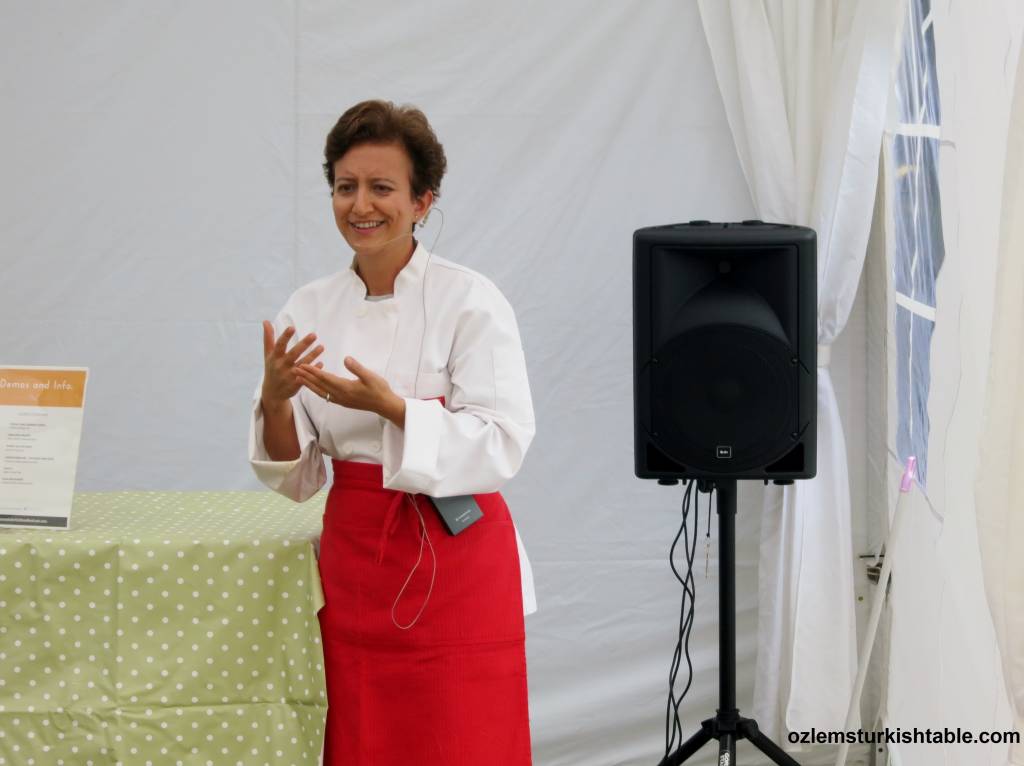
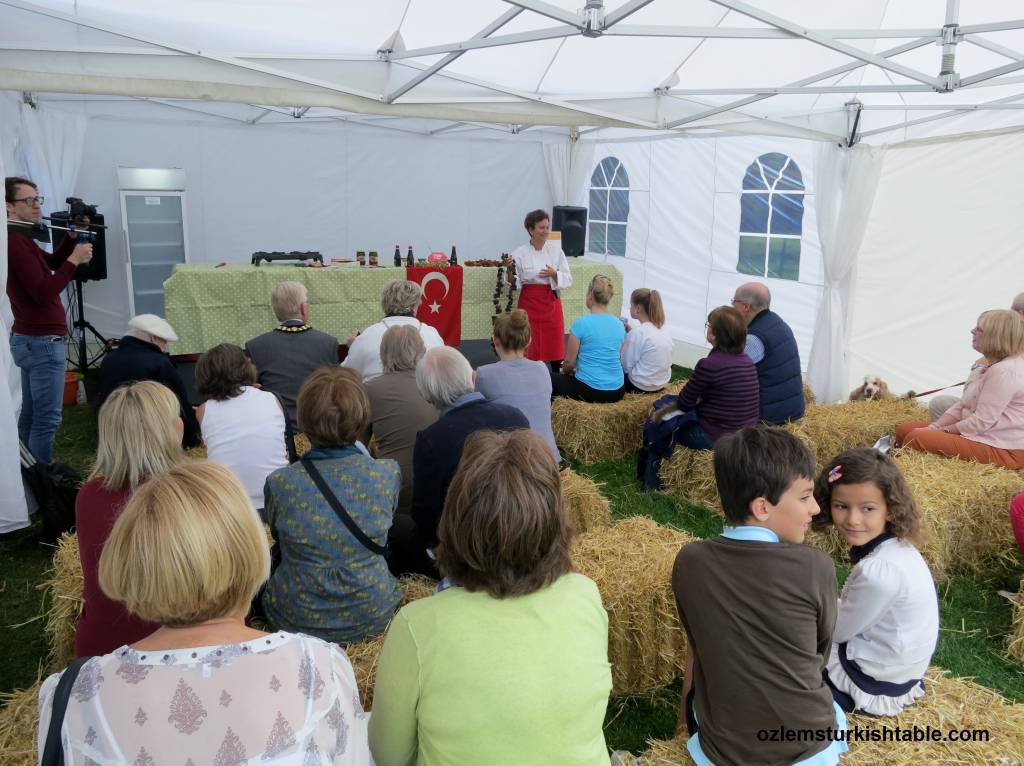
Talking about Turkish cuisine and culinary heritage at the demo theatre, Elmbridge Food Festival

Talking about Turkish cuisine and culinary heritage at the demo theatre, Elmbridge Food Festival

I was delighted to be one of the guest speakers at the Elmbridge Food Festival at the Painshill Park’s, the beautiful 18th century landscape garden, Surrey – England last weekend. The festival showcased the local produce, artisanal bakery as well as ethnic cuisines in Surrey. It was a gorgeous weekend with sun upon us and a well-attended enthusiastic crowd at the demo theatre.

So much to talk about (now that I was given a mic and a crowd!); Turkish hospitality, importance of seasonality, use of spices and more

So much to talk about (now that I was given a mic and a crowd!); Turkish hospitality, importance of seasonality, use of spices and more


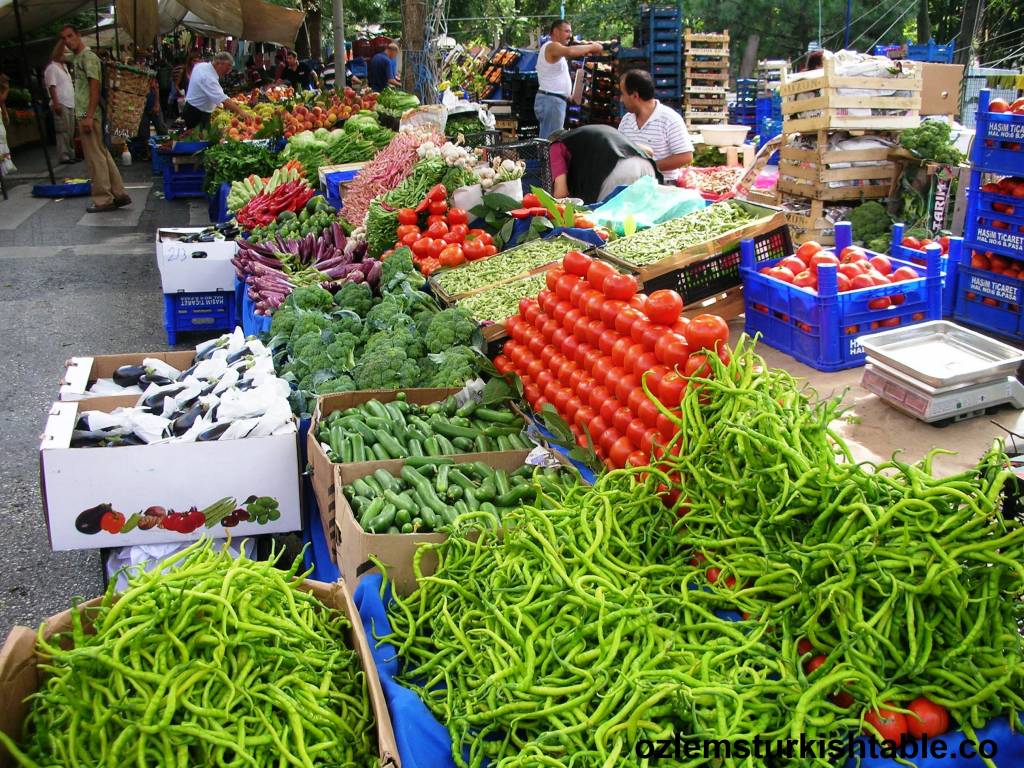
Fresh fruit and vegetables galore at the markets, pazar, in Turkey,

Fresh fruit and vegetables galore at the markets, pazar, in Turkey

It was a great opportunity to talk about delicious, wholesome Turkish cuisine and that it is beyond kebabs (as much as we love them). Turkish cuisine is based on fresh, seasonal produce. We are a lucky nation blessed with four seasons and abundance of seasonal fruit and vegetables regularly on display at farmer’s markets, pazar. In addition to fresh produce, wholesome grains like bulgur, legumes, dried fruits and nuts also feature frequently in Turkish cuisine. Here is some more information on Turkish cuisine and culinary traditions, if you like.

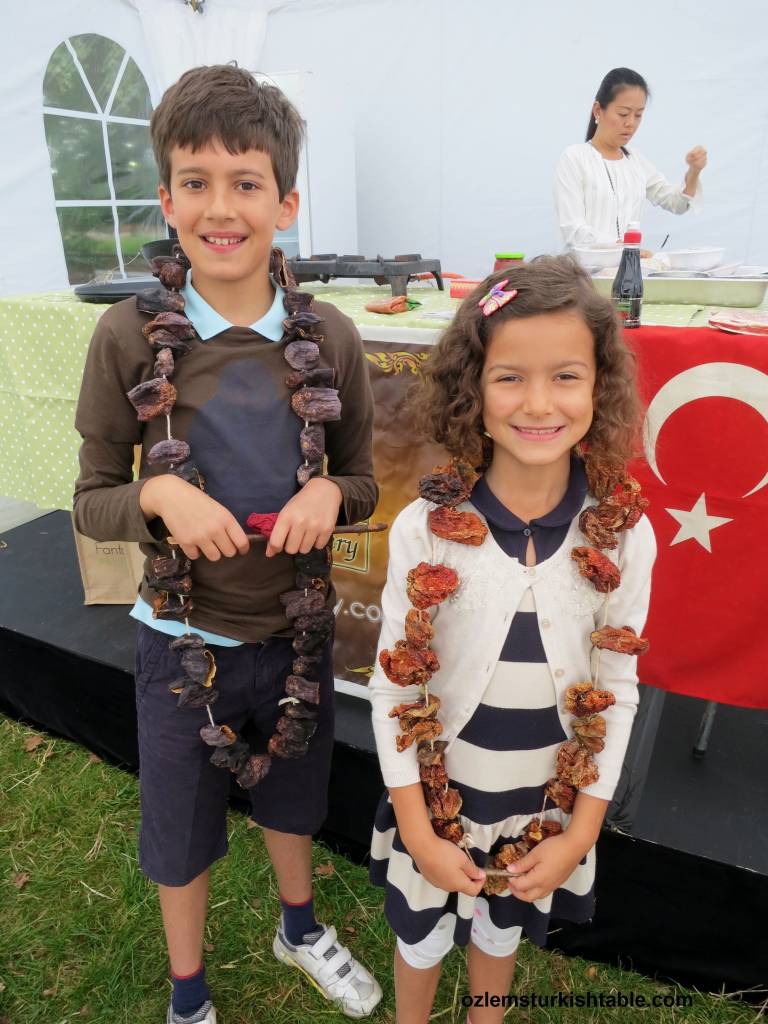
My sweet models displaying dried bell peppers and eggplants!

My sweet models displaying dried bell peppers and eggplants!

The dried bell peppers, eggplants (aubergines) and baby okra attracted a lot of attention (thanks to my sweet helpers!) during the food festival. This is a mainly southern Turkish tradition; the excess produce of meaty peppers, aubergines (eggplants) and baby okra are dried under the hot sun in the summer at the southern part of Turkey. The flesh and seeds of the eggplants and pepper are taken out and left for drying at the regions of Antakya and Gaziantep. They will end up having a rich, concentrated flavor and delicious when stuffed with ground meat and aromatic rice, as in these stuffed dried eggplants and peppers, kuru patlican ve biber dolmasi.

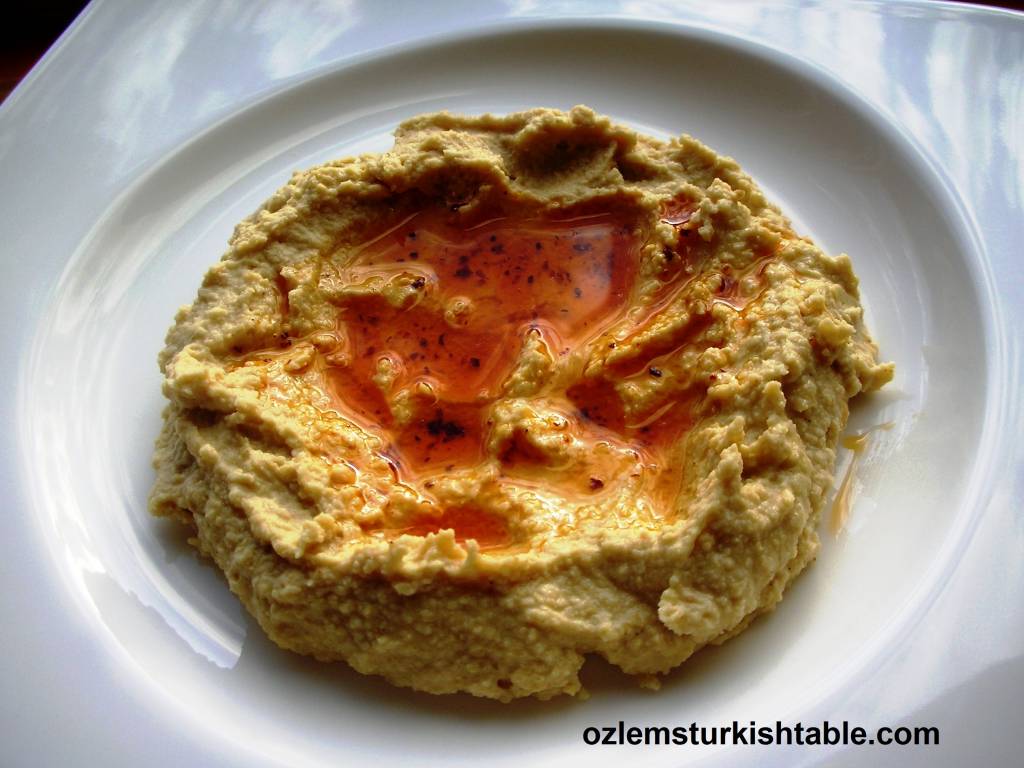
Hummus, flavored with red pepper flakes infused olive oil

Hummus, flavored with red pepper flakes infused olive oil

The fresh produce, grains and legumes are also flavored with artful use of spices in Turkish cuisine. For instance, we use pungent, warm cumin often. Combined with chickpeas and tahini, cumin is the spice that makes hummus taste like hummus. Cumin is wonderful on lamb and beef; with chickpeas, lentils, cabbage, eggplant and cooked tomato; or combined with spices like dried mint, paprika, cilantro (coriander) and saffron. It’s also perfect with garlic or fennel.

Ezo Gelin Corba, Turkish red lentil and bulgur soup, flavored with dried mint and red pepper flakes.

Ezo Gelin Corba, Turkish red lentil and bulgur soup, flavored with dried mint and red pepper flakes.

How about the hearty Red lentils and bulgur soup, Ezo Gelin Corba? This spicy red lentil soup is one of my favorites; rich in fiber and protein and flavored with the refreshing dried mint and smoky, spicy Turkish red pepper flakes or chili flakes. It is a very satisfying, heartwarming meal itself with some crusty bread aside. You can read more about spices used in Turkish cuisine here; they are a wholesome way of adding flavors naturally.

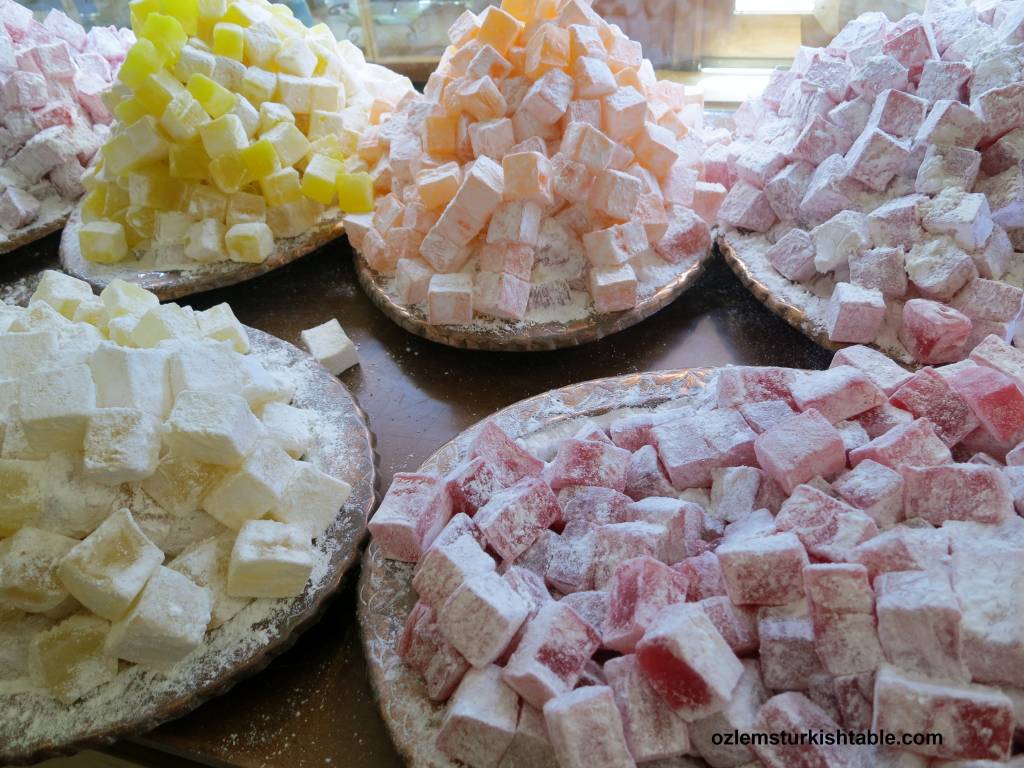
Turkish Delights, Lokum

Turkish Delights, Lokum

We finished our talk with the Turkish Delights, Lokum, one of Turkey’s hallmarks. The real thing is much more fragrant, less sweet and packed with flavor, compared to the ones I came across abroad. Therefore I decided to make my own Turkish delight and demonstrated in one of of Turkish cookery classes. You’d be pleasantly surprised to see it is easier than you think, though bear in mind that home made lokum will be softer than the commercial ones but packed with flavor. Here’s my home made Turkish delight recipe, if you’d like to try out.

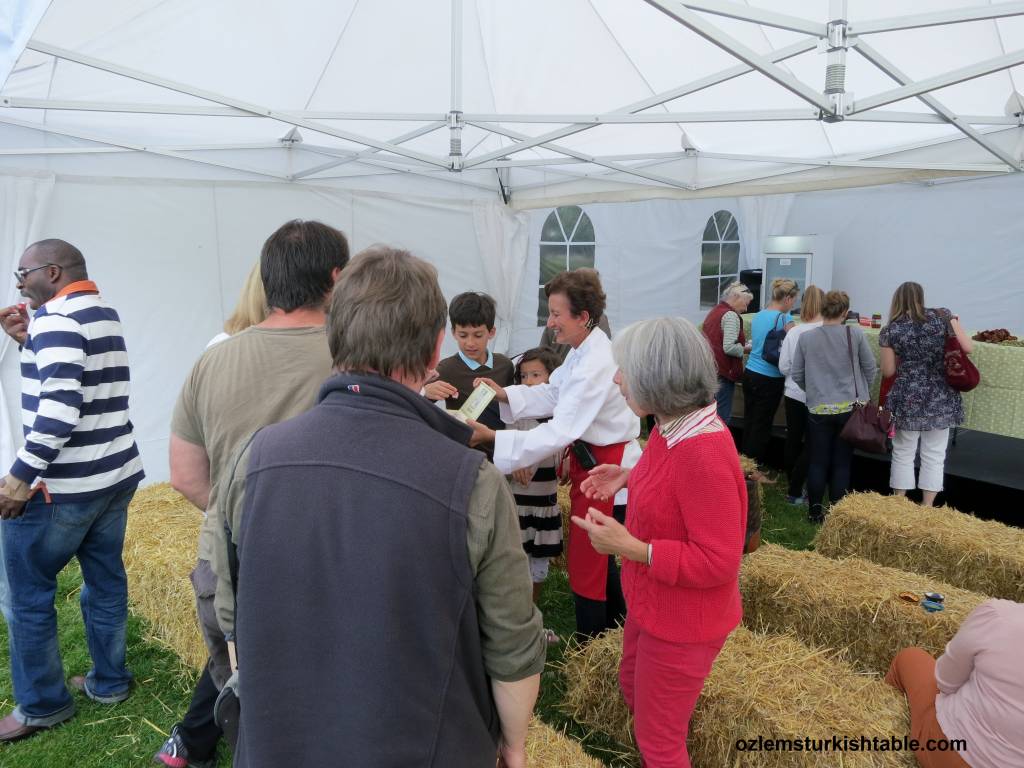
Serving Turkish Delights at the Elmbridge Food Festival

Serving Turkish Delights at the Elmbridge Food Festival

One of the highlights of my talk at the food festival was the hospitality, generosity of Turkish cuisine and culture. Hospitality is a big part of Turkish culture and you can feel it everyday life all around. I vividly remember friends and extended family members knocking the door of my Grandmother’s 400 year old house in Antakya spontaneously and happily welcomed to the dinner table. We would all sit around her courtyard dinner table under the fig tree and have a feast of senses with arrays of wonderful mezzes, abundance of fresh fruit and vegetables cooked in olive oil (Zeytinyaglilar), succulent kebabs and many more. You will be offered tea or Turkish coffee in the banks, shops, wherever you go with a smile. Turkish saying “Basimin ustunde yerin var” (“I would place you above my head”) I think sums the Turkish hospitality very well. We Turks place our guests at the top of our heads and would be delighted to share our food with them, even it is some fresh bread and cheese.

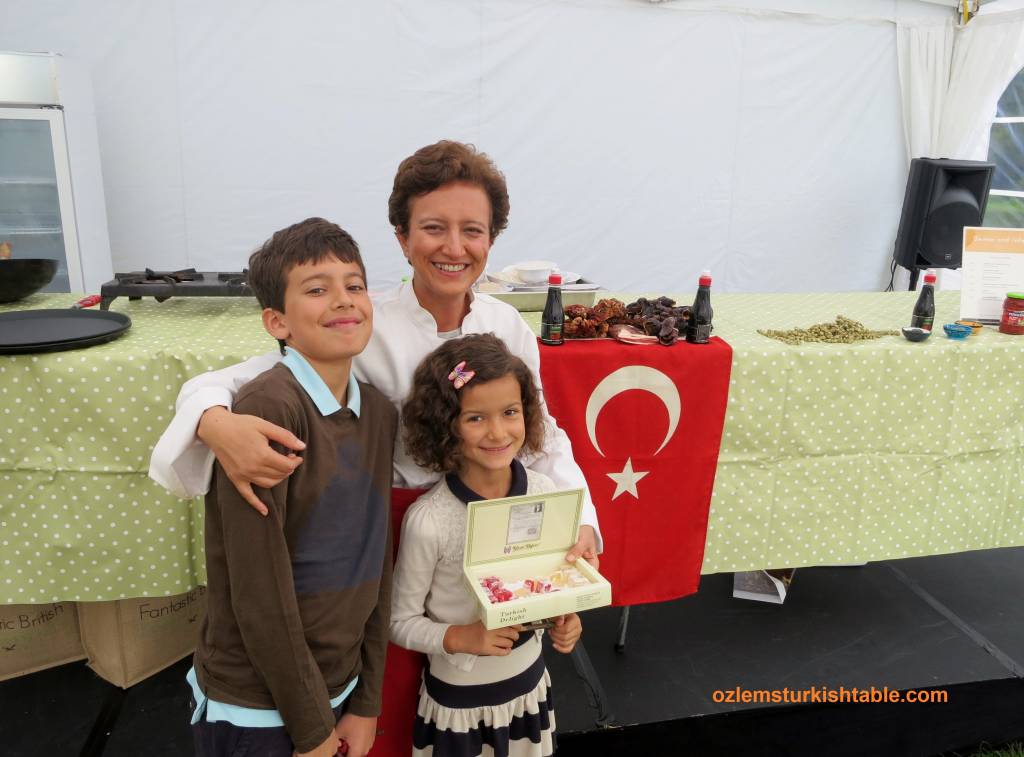
Children helping me out for serving Turkish Delights.

Children helping me out for serving Turkish Delights.

I hope this inspires and you keep on enjoying delicious, wholesome Turkish cuisine.

Afiyet Olsun,

Ozlem


Continue Reading

Barbunya Pilaki; Borlotti (Cranberry) Beans Cooked with Vegetables

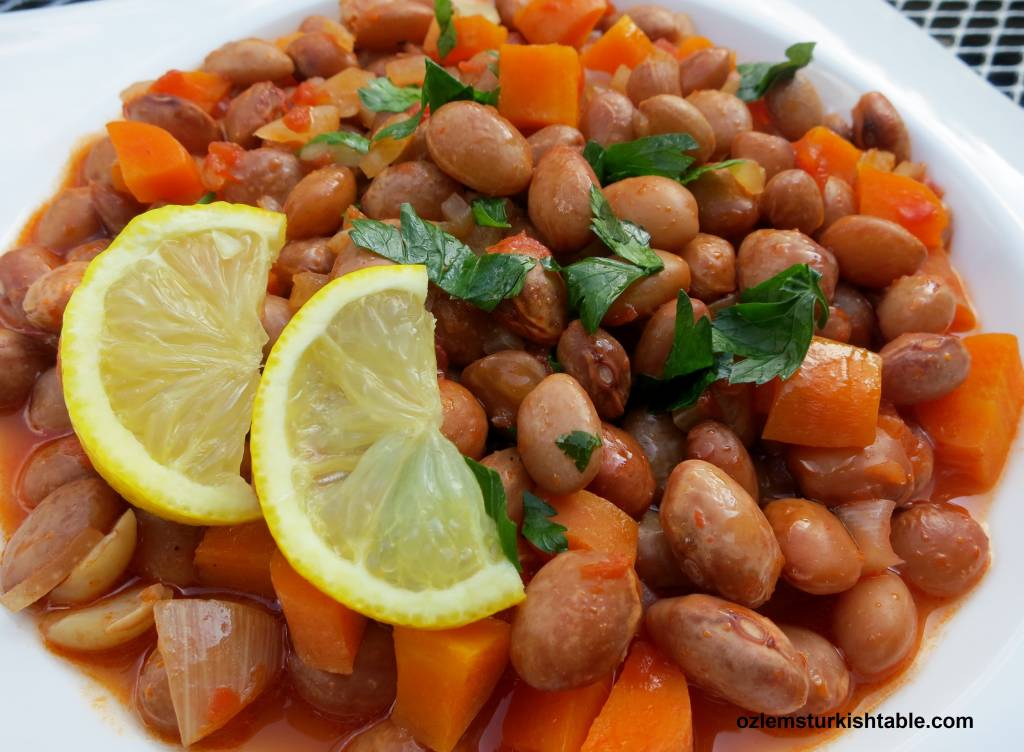
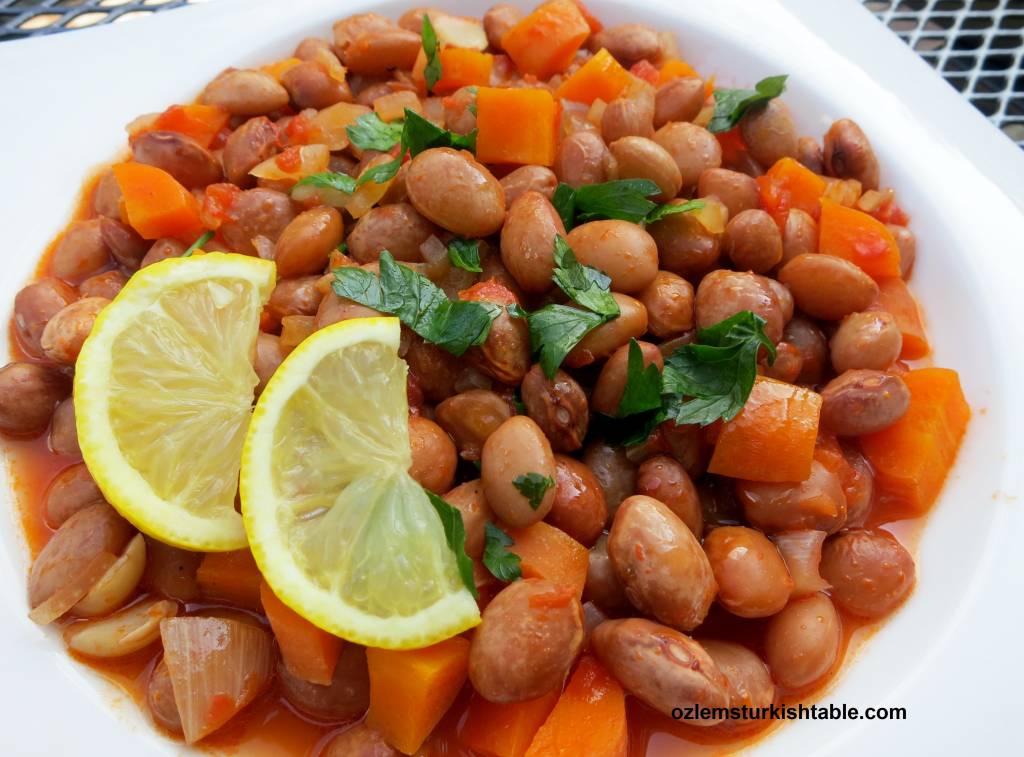
Barbunya Pilaki; Borlotti (Cranberry) beans cooked with onions, tomatoe and carrots in olive oil

Barbunya Pilaki; Borlotti (Cranberry) beans cooked with onions, tomatoes and carrots in olive oil

Barbunya pilaki, borlotti beans cooked in olive oil with tomatoes, onions and carrots, is my father’s favorite Zeytinyagli, Vegetables cooked in olive oil, Turkish style. Pilaki is a style of Turkish mezze, where vegetables and beans are mainly cooked with onions, garlic, tomato in olive oil, with a little addition of sugar, to balance the flavors. We serve pilaki garnished with herbs and wedges of lemon; the tangy, refreshing lemon juice is really a must here and complements borlotti, barbunya means so well. Turkey’s much loved Barbunya Pilaki is served at room temperature or cold as a mezze or appetizer.

Fresh barbunya beans (in stripy pink) at Besiktas pazari, Istanbul

Fresh barbunya beans (in stripy pink) at Besiktas pazari, Istanbul

In Turkey, you can get the fresh barbunya beans (in stripy pink) or borlotti beans in abundance in summer, at the farmers markets, Pazar. It was my dad’s job at my parent’s home in Istanbul to pod them ready to be cooked and whoever is around joins in this therapeutic podding exercise. My dear belated father, Orhan, absolutely loved barbunya Pilaki; his face would lit up even the mention of it.

If you can’t get hold of fresh barbunya beans, try the dried borlotti (or cranberry beans, as they are called in the US) beans, like I have used here. They are easy to cook, wholesome and delicious. Dried or fresh borlotti beans work best in this dish.

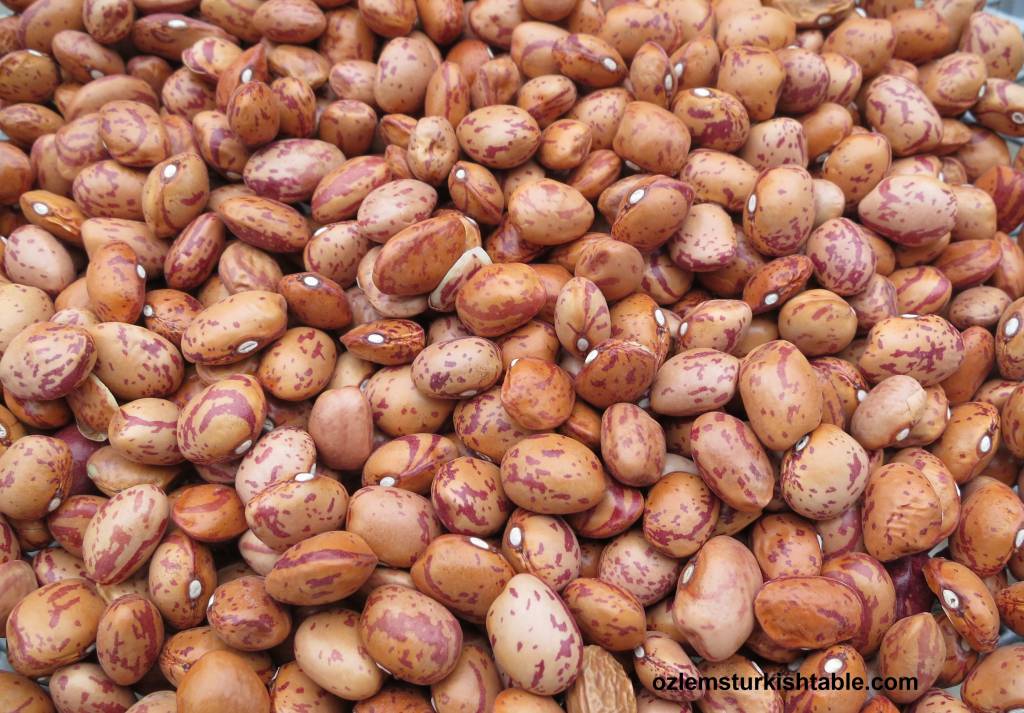
Dried barbunya or borlotti or cranberry beans

Dried barbunya or borlotti or cranberry beans

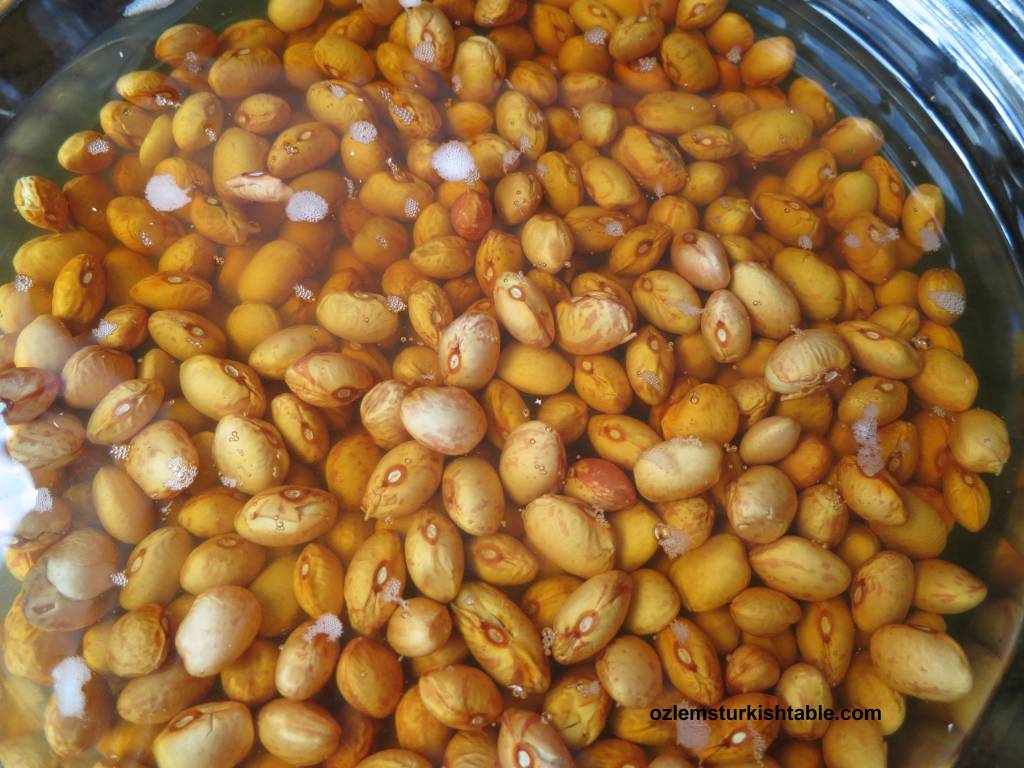
A variety of kidney beans, borlotti beans are a large plump bean that is pinkish-brown in color with reddish-brown streaks. They are packed with goodness, rich source of cholesterol-lowering fiber and Omega 3 and 6 fatty acids. If you are using dried beans, they need to be soaked and rehydrated in warm water for at least 8 hours or overnight. If you are pressed with time or can’t get the dried or fresh borlotti beans, try a good quality canned borlotti beans in this recipe; it will still be a nutritious, delicious meal.If you are using canned precooked borlotti beans, rinse the beans and set aside. Cook the vegetables first as per the recipe, for 15-20 minutes, and then gently combine the cooked beans into the pot and simmer further 5 minutes.

Dried barbunya or borlotti or cranberry beans need to be soaked and rehydrated in warm water for at least 8 hours or overnight.

Dried barbunya or borlotti or cranberry beans need to be soaked and rehydrated in warm water for at least 8 hours or overnight.

Traditional Barbunya Pilaki is quite a plain but delicious meal, mainly consisting of the beans, onions and tomatoes. I like adding carrots here, as their sweetness and texture goes well with barbunya. Our family loves Barbunya Pilaki therefore I tend to make a bit batch. It stays well in the fridge for good 3 days and as the flavors settle, tastes even better the next day. You can serve as part of a mezze spread, a delicious vegetarian and vegan course. We also enjoy Barbunya Pilaki next to grilled fish, meat and vegetables. If you choose to serve next to main courses, I suggest serving Barbunya Pilaki warm.

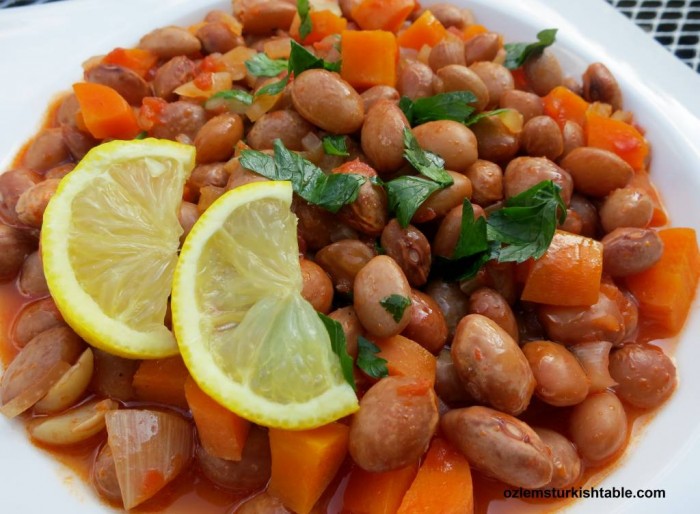
Barbunya Pilaki; borlotti or cranberry beans cooked with onions, tomatoes and carrots in olive oil.

Barbunya Pilaki; borlotti or cranberry beans cooked with onions, tomatoes and carrots in olive oil.

 I hope you enjoy this easy, delicious and wholesome Barbunya Pilaki.

Afiyet Olsun,

Ozlem x


I am passionate about my homeland’s delicious, healthy  cuisine; this recipe and over 80 delicious, easy Istanbul flavours are included at my cookery book,  ISTANBUL, Delicious Recipes from the Heart of the City.  You can get a copy here worldwide.

Afiyet Olsun.

5.0 from 5 reviews
Barbunya Pilaki; Borlotti (Cranberry) Beans Cooked with Vegetables
 
Barbunya pilaki, borlotti (or cranberry) beans cooked in olive oil with tomatoes, onions and carrots, is a much loved Zeytinyagli, Vegetables cooked in olive oil, Turkish style. Pilaki is a style of Turkish mezze, where vegetables and beans are mainly cooked with onions, garlic, tomato in olive oil, with a little addition of sugar, to balance the flavors. This vegetarian and vegan dish is easy, delicious and packed with goodness. Serve as part of mezze spread or accompany grills.
Author:
Recipe type: Vegetables and beans Cooked in Olive oil, Pilaki
Cuisine: Turkish Cuisine
Serves: 6
Ingredients
  • 350 gr/12 oz./2 cups dried borlotti beans (or cranberry beans), soaked in warm water overnight
  • 1 medium to large onion, finely chopped
  • 2 medium carrots, quartered and chopped in small cubes,
  • 400 gr/ 1 can of good quality canned chopped tomatoes
  • Handful of flat leaf parsley, finely chopped
  • 10 ml/ 2 tsp sugar
  • 45ml/3 tbsp. olive oil
  • 16 fl. oz./2 cups water
  • 1 lemon, cut in wedges
  • Salt and freshly ground black pepper to taste
Instructions
  1. Soak the dried borlotti (or cranberry) beans overnight or for at least 8 hours.
  2. Then drain the beans, rinse and transfer to a pot, filled with plenty of cold water.
  3. Bring the pot to the boil, partially cover the pot and simmer for about 30 – 35 minutes. Make sure the beans become tender, but not soft or mushy, they should still have a bite to them.
  4. Drain and rinse the cooked beans under cold water and set them aside.
  5. Heat the olive oil in the pot and stir in the onions, sauté for 2 – 3 minutes, until they start to soften.
  6. Add the carrots, combine well and sauté for another 2 minutes.
  7. Stir in the canned tomatoes and sugar, season with salt and freshly ground black pepper. Combine well.
  8. Add the beans to the pot and give it a good mix. Then pour in the water, combine well.
  9. Bring the pot to the boil; then turn the heat to low, cover the pan partially.
  10. Simmer for 30 to 35 minutes, until the beans are cooked (but not mushy). Check the seasoning and add a little more salt or ground black pepper if needed.
  11. Serve Barbunya Pilaki at room temperature or cold as part of a mezze spread or appetizer, garnished with chopped parsley and wedges of lemon by the side to squeeze over. If you choose to serve next to main courses, I suggest serving Barbunya Pilaki warm.
Notes
If you are using dried borlotti (or cranberry) beans, they need to be soaked and rehydrated in warm water for at least 8 hours or overnight.

Continue Reading