
Recipes    

Turkish cuisine provides healthy, hearty, delicious food for family and friends.
Find out more

Cookery Classes

I teach Turkish cooking classes in England,Turkey & USA, hope you can join us!,
Find Out More

Grated Radish Salad with Tahini Sauce; Tahinli Turp Salatasi

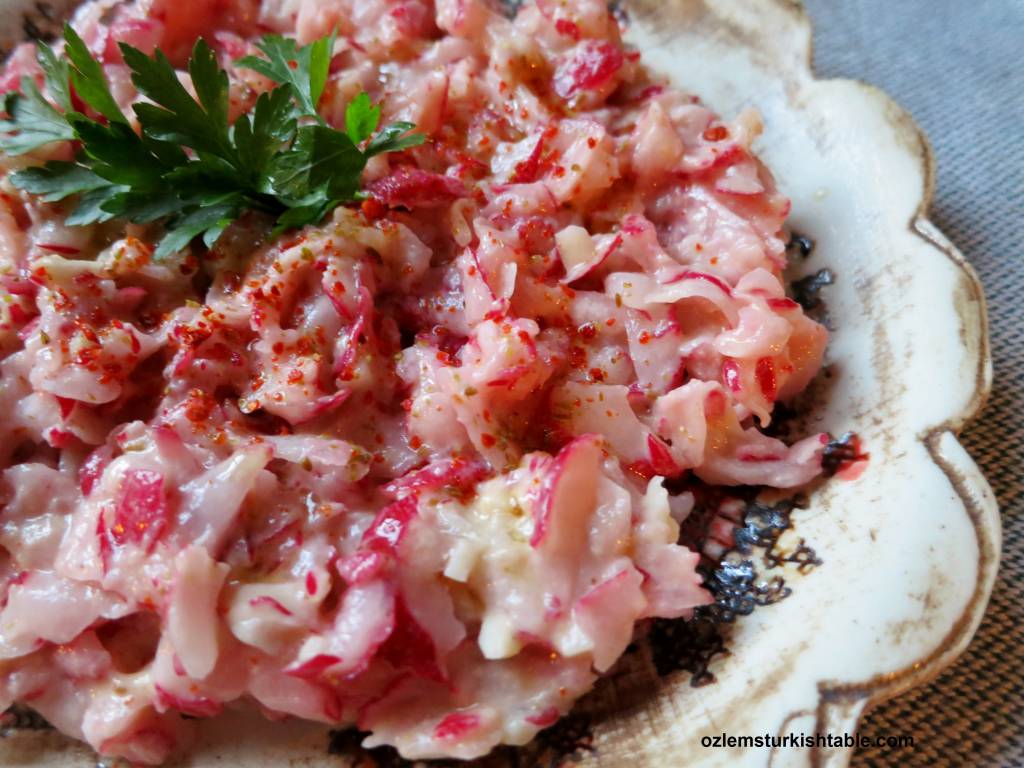
Grated radish salad with tahini dressing; Tahinli Turp Salatasi

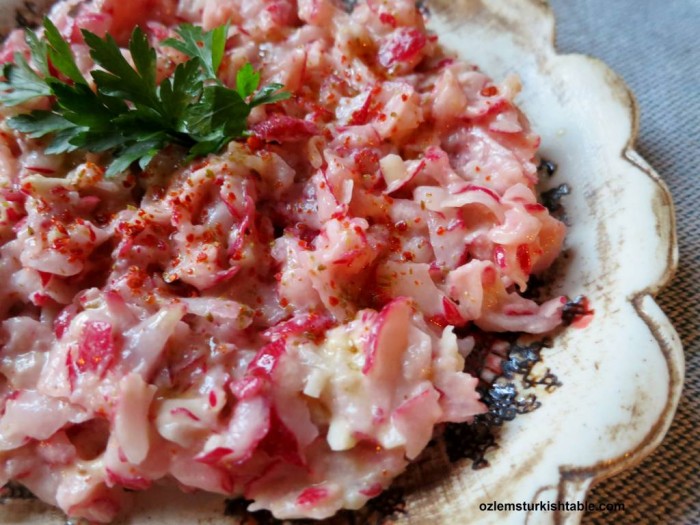
Grated radish salad with tahini dressing; Tahinli Turp Salatasi

Juicy, crunchy red radishes – turp, as we call in Turkey- add a lovely, punchy colour and a delightful peppery taste to dips and salads. In southern Turkey, in Adana region as well as in Antakya, we make a delicious, refreshing radish salad with a simple tahini sauce. We serve this Tahinli Turp Salatasi as part of a mezze spread, especially to accompany Oruk or Icli Kofte, our version of the Middle Eastern Kibbeh. The refreshing, peppery flavors of the radish salad complement the rich, nutty Oruk very well.

Delightful and easy to make radish salad with tahini sauce; tahinli turp salatasi

Delightful and easy to make radish salad with tahini sauce; tahinli turp salatasi

Tahini or Tahin, as we call it in Turkish, is a paste made from sesame seeds; it is a much loved ingredient in southern Turkish cooking as well as in the Middle East and Eastern Mediterranean. We use tahini in dips like hummus, salads and in baking, as in this tahini bread rolls. Most supermarkets carry tahini these days; make sure to give it a good stir before using it as it tends to separate.

Tahini makes a delicious, healthy dressing at this wonderful radish salad; tahinli turp salatasi

 I hope you can give this delicious, nutritious radish salad with tahini a go; so easy to make and packed with flavor. Here I’d like to thank my talented seramic artist cousin, dear Nihal Sarioglu and Zen Ceramics in Istanbul for my beautiful plate, showcasing this lovely radish salad with tahini sauce.

Afiyet Olsun,
Ozlem

5.0 from 4 reviews
Grated Radish Salad with Tahini Sauce; Tahinli Turp Salatasi
 
Juicy, crunchy red radishes – turp, as we call in Turkey- add a lovely, punchy colour and a delightful peppery taste to dips and salads. In southern Turkey, in Adana region as well as in Antakya, we make a delicious, refreshing radish salad with a simple tahini sauce. We serve this Tahinli Turp Salatasi as part of a mezze spread, especially to accompany Oruk or Icli Kofte, our version of the Middle Eastern Kibbeh. Hope you enjoy it, Afiyet Olsun.
Author:
Recipe type: Healthy Turkish Salads with Tahini Sauce
Cuisine: Southern Turkish Cuisine
Serves: 4
Ingredients
  • 200 gr / 7 oz. red radishes, washed and pat dried
  • 1 clove of garlic, crushed with salt and finely chopped
  • Juice of 1 small lemon
  • 15 ml/ 1 tbsp. tahini, stirred
  • 30 ml/ 2 tbsp. extra virgin olive oil
  • 5 ml/ 1 tsp. cumin
  • 5 ml/ 1 tsp. red pepper flakes or chili flakes
  • Sea Salt and freshly ground black pepper to taste
  • Flat leaf parsley to decorate
Instructions
  1. Clean and pat dry the radishes. Trim off the stem end and tip, keep the skin.
  2. Grate the radishes and place in a bowl. Sprinkle some salt over and let the moisture come out, for 5 minutes.
  3. Using an absorbent kitchen paper towel or clean tea towel, squeeze the grated radishes to get rid of the excess moisture. Later, place them in a serving bowl.
  4. To make the tahini sauce; combine the tahini, chopped garlic, lemon juice and extra virgin olive oil in a small container and mix well. Season with sea salt and freshly ground black pepper to your taste.
  5. Pour in this sauce over the grated radishes and combine well.
  6. Sprinkle the ground cumin and red pepper flakes over the radish salad with tahini and decorate with flat leaf parsley.
  7. Afiyet Olsun.
Notes
Make sure to give tahini a good stir before using it as it tends to separate.

Stuffed grapevine leaves, aubergine with lentils, Turkish flat breads and More; Let’s create a Turkish Feast; Sunday 13th December, 12 noon – 3.30pm; Divertimenti Cookery School – Hands On –

"An unforgettable evening of Turkish cookery; loved your passion, enthusiasm and clear instructions, many thanks for a great class."

“An unforgettable evening of Turkish cookery; loved your passion, enthusiasm and clear instructions, many thanks for a great class.”

Turkish cuisine not only reflects a rich historical and cultural heritage, it is also healthy and a feast to all your senses. Kick off the festive season in style and join us for an unforgettable day of scrumptious Turkish food, history and culture at my Turkish Cookery class at Divertimenti Cookery School on Sunday 13th December, 12 noon – 3.30pm. During this Hands On class, you will be amazed to see how easy it is to recreate these delicious courses once you have a go. From courgette fritters with feta and dill, mucver, to stuffed vine leaves, yaprak sarma, from aubergines, lentils and peppers cooked in olive oil to Pide, Turkish flat breads with toppings and stuffed apricots dessert with walnuts, you will have a chance to create and enjoy an authentic, wholesome Turkish feast, great for entertaining.

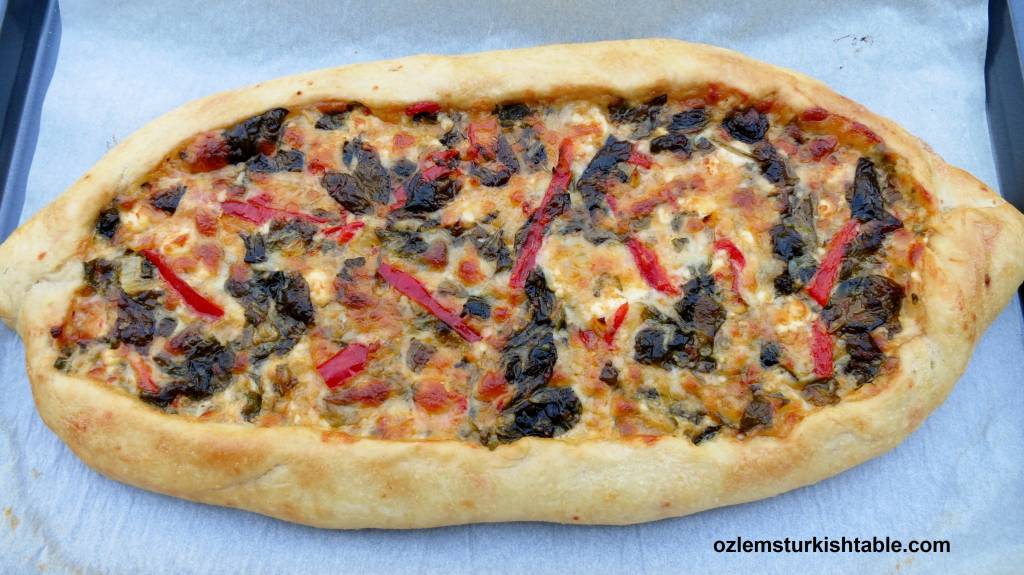
We will me making Turkish oval flat breads with cheese and vegetables, Peynirli, sebzeli pide, and many more at my Dec. 13th Turkish Cookery Class

We will be making Turkish oval flat breads with cheese and vegetables, Peynirli, sebzeli pide, and many more at my Dec. 13th Turkish Cookery Class

Here’s the class details; Signing up for this class is through Divertimenti Cookery School at this link, hope you can join us!

Continue Reading

Simit Kebabi; Ground Meat and Bulgur Kebabs, Gaziantep Style

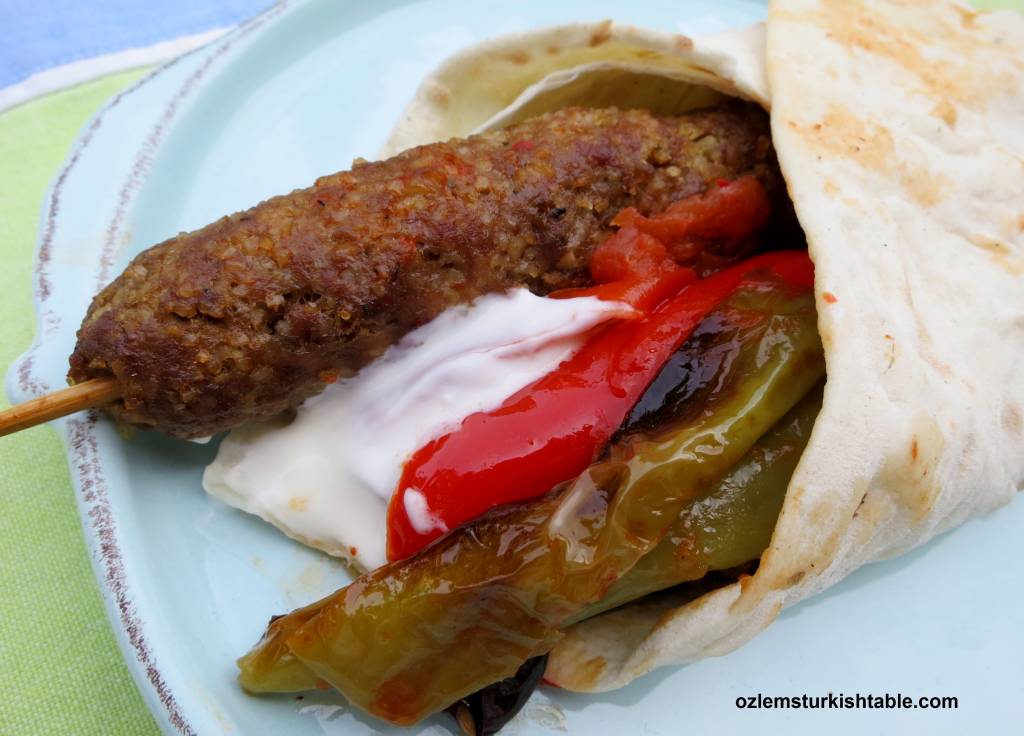
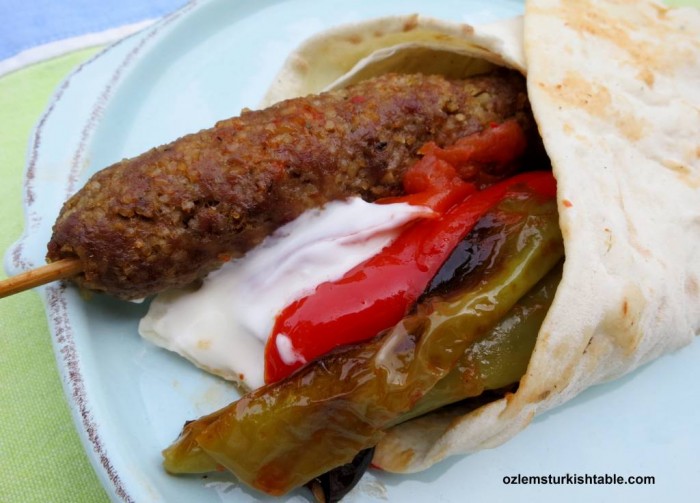
Simit Kebabi; Ground (minced meat) and bulgur kebab, Gaziantep Style

Simit Kebabi; Ground (minced meat) and bulgur kebab, Gaziantep Style

This delicious ground (minced) meat and bulgur kebab called Simit Kebabi, hails from Gaziantep, considered as one of the gastronomic capitals of Turkey. Fine bulgur is referred as Simit in Gaziantep and that’s where the kebab’s name come from (Simit is also the name of the popular Turkish street food, the sesame coated bread rings). Bulgur is an important ingredient in southern Turkish cooking; it appears in pilafs, mezzes like Icli Kofte, soups and in kebabs. Fine bulgur brings a wonderful texture and taste to this kebab, fragrantly spiced with cumin, red pepper flakes and dried mint. If you can’t find fine bulgur, you can ground the coarse bulgur in food processor in a couple of pulses; take care not to ground too much and turn the bulgur into fine powder.

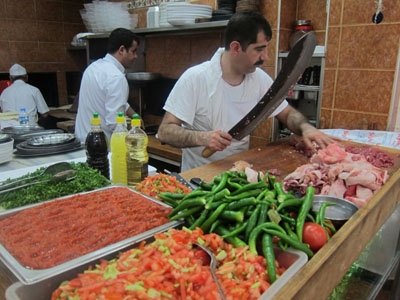
Vakkas Usta preparing the meat using Zirh blade at Istanbul’s Şeyhmus Kebab; photo credit: IstanbulEats

It is important to have some fat content in the meat mixture for this kebab; traditionally, tail fat is included in this kebab in Gaziantep. The ustas, masters in Gaziantep prepare the ground (minced) meat for the Simit Kebabi, chopping by hand, using a special curved-bladed knife called Zirh. This method gives the meat a lot of flavor and much better texture; so if you can get your meat hand chopped by the butcher that would be great. If not, use ground lamb or beef with some good fat content in it.

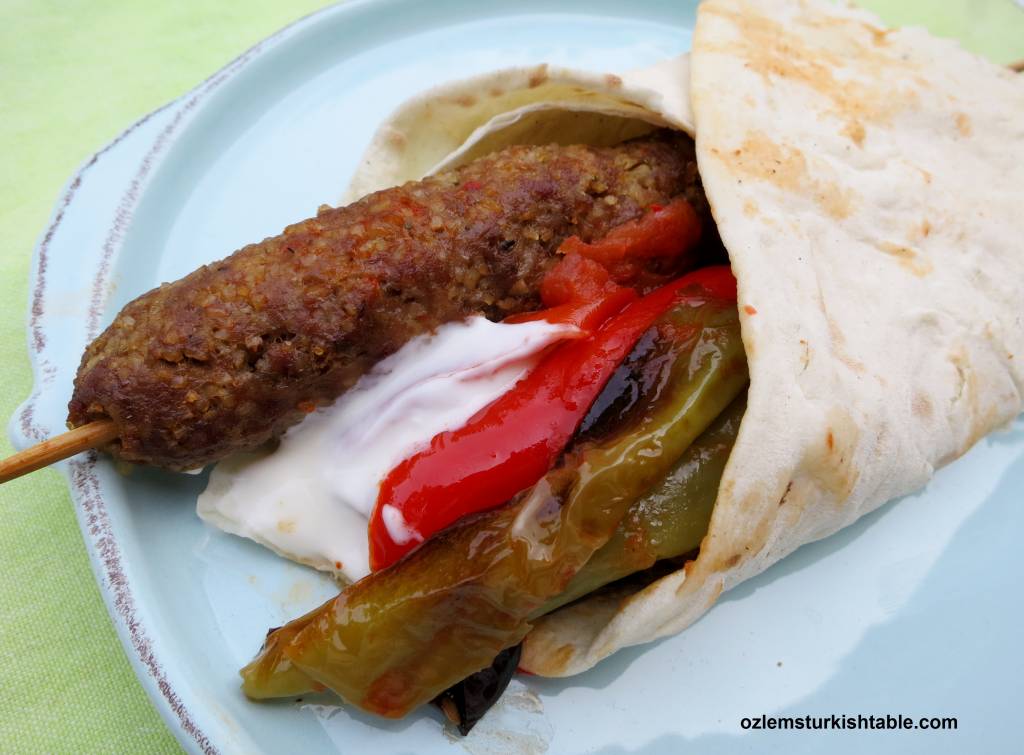
I served my Simit Kebabi with roasted vegetables and garlic yoghurt by the side. You can wrap the kebab and roasted vegetables with a dollop of garlicy yoghurt, in Turkish flat breads or pita pockets. Here is my Turkish flat breads recipe if you’d like to make flat breads at home.

Simit Kebabi; Ground (minced meat) and bulgur kebab with roasted vegetables, Gaziantep Style

Simit Kebabi; Ground (minced meat) and bulgur kebab with roasted vegetables, Gaziantep Style

This recipe is inspired and adapted from the wonderful Gaziantep Cookery, A Taste of Sun and Fire cookery book, edited by Aylin Oney Tan. I hope you enjoy this delicious southern Turkish style kebab.

My Turkish Cookery Class at the Divertiment Cookery School, London;

Tuesday 13th October, 7pm – 9.15pm

A quick reminder of my Turkish cookery class on Tuesday 13th October, 7pm – 9.15pm at Divertimenti Cookery School, London. I will be teaching how to recreate delicious, wholesome Turkish classics such a spinach and feta filo pie, Ispanakli Borek, Turkish classic stuffed aubergines, Karniyarik, Spicy bulgur wheat salad with pomegranate molasses, Kisir and homemade baklava (much lighter and delicious!), along with tips and stories from my homeland. You will be amazed to see how easy each course is, also wholesome and packed with flavor. Here  is the class details. Booking is through the Divertimenti Cookery School, hope you can join us!

5.0 from 1 reviews
Simit Kebabi; Ground Meat and Bulgur Kebabs, Gaziantep Style
 
This delicious ground (minced) meat and bulgur kebab called Simit Kebabi, hails from Gaziantep, one of the gastronomic capitals of Turkey. Serve this fragrantly spiced kebab with roasted vegetables and garlic yoghurt, in flat breads. Afiyet Olsun!
Author:
Recipe type: Southern Turkish, Gaziantep Style Kebab with Bulgur
Cuisine: Turkish Cuisine
Serves: 4
Ingredients
  • 1 lb. ground (minced) lamb
  • 75 gr / 2.6 oz. / ⅓ cup fine bulgur (or coarse bulgur, grounded to fine bulgur in food processor)
  • 3 cloves of garlic, finely chopped
  • 80 ml/ 2.7 fl. oz./ ⅓ cup hot water
  • 15 ml/ 3 tsp. red pepper flakes (or a bit less if you prefer less spicy)
  • 5 ml/ 1 tsp. ground cumin
  • 5 ml / 1 tsp. dried mint
  • Salt and freshly ground black pepper to taste
  • Bowl of water to shape the simit kebab on skewers
  • For the roasted vegetables:
  • 2 medium eggplants (aubergines) quartered and sliced
  • 1 medium onion, quartered and coarsely chopped
  • 1 red bell (or pointy) pepper and 1 green bell (or pointy) pepper, deseeded and cut in chunks
  • 60 ml/ 4 tbsp. olive oil
  • For the garlicy yoghurt sauce:
  • 13 oz. / 1 ½ cup plain whole milk yoghurt
  • 1 small clove of garlic, crushed with a pinch of salt and finely chopped
Instructions
  1. Preheat the oven to 200 C/ 400 F
  2. Place the fine bulgur in a bowl and pour in the hot water. Combine well and set aside for 10 – 15 minutes for the bulgur to absorb all the water and soften.
  3. Place the soften bulgur in a large mixing bowl and stir in the garlic, ground (minced) meat, red pepper flakes, ground cumin and dried mint. Season with salt and freshly ground black pepper. Have a bowl of water by your side. Wet your hands and knead the mixture well for 5 – 8 minutes, until all combined.
  4. Wet your hands and take a large lump of the meat mixture – just a bit less than ½ cup and form into a ball. Mold it around and along the skewer, until it is evenly thick. Squeeze and shape the meat gently so that the meat sticks to the skewer. Work meat around and down the skewer while rotating skewer with bottom hand until kebab is ¾" in diameter. Cover the skewered meat in cling film and refrigerate until firm, for about 30 minutes.
  5. Now prepare your vegetables. Using a vegetable peeler, peel the eggplants (aubergines) lengthways in zebra stripes. Cut the eggplants lengthways, and then slice about ½ inch thick. Sprinkle some salt over them and leave for about 15 minutes. Squeeze out their moisture with paper towel. On a baking tray, spread the eggplant slices, chopped onions and the colorful peppers. Drizzle 4 tbsp. the olive oil over them and season with salt and black pepper. Coat all the pieces with olive oil and seasoning. Bake in the preheated oven for about for about 35 minutes, until they are chargrilled around the edges.
  6. To bake the Simit Kebabi, grease a baking tray and arrange the prepared kebab skewers side by side. Sprinkle 3 tbsp. water over them and place a (heat resistant) bowl of water at the bottom of the oven (this will keep the kebabs moist). Bake the kebabs for 35 – 40 minutes, turning them half way around.
  7. You can also grill the kebabs over a medium charcoal fire, turning frequently in the same direction. Or you can grill kebabs on hottest part of grill, turning as needed, until slightly charred and cooked through, for 12-15 minutes.
  8. To make garlicy yoghurt; crush a small garlic clove with salt and chop finely. Stir in to the yoghurt and combine well.
  9. Serve the Simit Kebab hot, along with the roasted vegetables, garlicy yoghurt and flat breads. You can wrap the kebab and roasted vegetables with a dollop of garlicy yoghurt, in Turkish flat breads or pita pockets too. Afiyet Olsun.

Continue Reading

Fasulye Pilaki; White Beans Cooked in Olive Oil with Vegetables

Fasulye Pilaki, White (Cannellini beans) cooked in olive oil with vegetables

Fasulye Pilaki, White (Cannellini beans) cooked in olive oil with vegetables

Fasulye Pilaki is a delicious and wholesome vegetarian Turkish mezze, where vegetables and white (or cannellini) beans are cooked with onions, garlic, carrot and potato in olive oil. As in the case with our Zeytinyagli dishes, the category in Turkish cuisine where we cook vegetables in olive oil, we add a little sugar to balance the flavors. We serve pilaki cold or at room temperature, garnished with parsley and wedges of lemon; the tangy, refreshing lemon juice is really a must here and complements this beans based mezze very well.

I love the ease of preparing this dish as you can prepare ahead of time; it tastes even better the next day as the flavors mature. You can serve fasulye pilaki as a side to grilled fish, meat or vegetables. It is delightful as part of a mezze spread and for lunch too. This dish is also naturally gluten-free.

Fasulye Pilaki, White (Cannellini beans) cooked in olive oil with vegetables

Fasulye Pilaki, White (Cannellini beans) cooked in olive oil with vegetables

The gorgeous plate that serves my Fasulye Pilaki in the photo is a gift from my very talented ceramic artist cousin, dear Nihal, who co-owns the beautiful Zen Ceramics in Istanbul with other seramic artists. Zen Ceramics combines the Anatolian Culture with contemporary designs at their hand made unique porcelain objects, suitable for daily life. I count myself lucky to have a wonderful collection of their beautiful plates so my heartfelt thanks to them!

Afiyet Olsun,

Ozlem

4.8 from 4 reviews
Fasulye Pilaki; White Beans Cooked in Olive Oil with Vegetables
 
Fasulye Pilaki is a delicious and wholesome vegetarian Turkish mezze, where vegetables and white (or cannellini) beans are cooked with onions, garlic, carrot and potato in olive oil, served at room temperature or cold. You can serve fasulye pilaki as a side to grilled fish, meat or vegetables. It is delightful as part of a mezze spread and for lunch too. This dish is also naturally gluten-free.
Author:
Recipe type: Mezzes & Vegetarian
Cuisine: Turkish
Serves: 4
Ingredients
  • 1 can – 440 gr / 14 oz. of cooked white beans or cannellini beans, juice drained OR 275 gr/ 1½ cups/ 10 oz. dried white beans or cannellini beans*
  • 1 medium onion, finely diced
  • 1 medium carrot, quartered and diced in small pieces
  • 1 medium potato, cut in small cubes
  • 2-3 cloves of garlic, finely diced
  • 45 ml / 3 tablespoons of olive oil for cooking
  • 30 ml/ 2 tablespoons of extra virgin olive oil to drizzle before serving
  • Handful of flat leaf parsley, chopped
  • 5 ml/ 1 tsp sugar
  • Juice of ½ lemon
  • 8 fl oz. / 1 cup water
  • Salt and freshly ground black pepper to taste
Instructions
  1. If using dried beans, soak the dried white or cannellini beans overnight or for at least 8 hours. Then drain the beans, rinse and transfer to a pot, filled with plenty of cold water.
  2. Bring the pot to the boil, partially cover the pot and simmer for about 30 – 35 minutes. Make sure the beans become tender, but not soft or mushy, they should still have a bite to them. Drain and rinse the cooked beans under cold water and set them aside.
  3. If you are using precooked beans in can, simply drain its juice and rinse under cold, running water and set aside.
  4. Heat the olive oil in the pot and stir in the onions, sauté for 2 – 3 minutes, until they start to soften.
  5. Add the garlic, carrots and potato, combine well and sauté for another 2 minutes. Pour in the water, cover and let them cook for 10 minutes in low to medium heat.
  6. Stir in the beans, sugar, lemon juice and season with salt and freshly ground black pepper. Combine well.
  7. Turn the heat to low, cover the pan.
  8. Simmer for another 10 – 15 minutes, until the beans and vegetables are cooked (but not mushy). Check the seasoning and add a little more salt or ground black pepper if needed.
  9. Drizzle the extra virgin olive oil over the Fasulye Pilaki and let it cool in the pan, covered.
  10. Serve Fasulye Pilaki at room temperature or cold as part of a mezze spread or appetizer, garnished with chopped parsley and wedges of lemon by the side to squeeze over.
Notes
If you are using dried beans, first soak the dried beans in plenty of water overnight. Next day, drain the water and boil the dried beans in fresh water for about 20 minutes, covered. Drain the water and set the partially cooked white beans aside (If you are using precooked white beans, simply drain the juice and rinse the beans under cold water).
 

Continue Reading