
Cookery Classes

I teach Turkish cooking classes in England,Turkey & USA, hope you can join us!,
Find Out More

Recipes    

Turkish cuisine provides healthy, hearty, delicious food for family and friends.
Find out more

Cakes and Desserts

Kaymakli Ekmek Kadayifi – Turkish Bread Pudding in Syrup

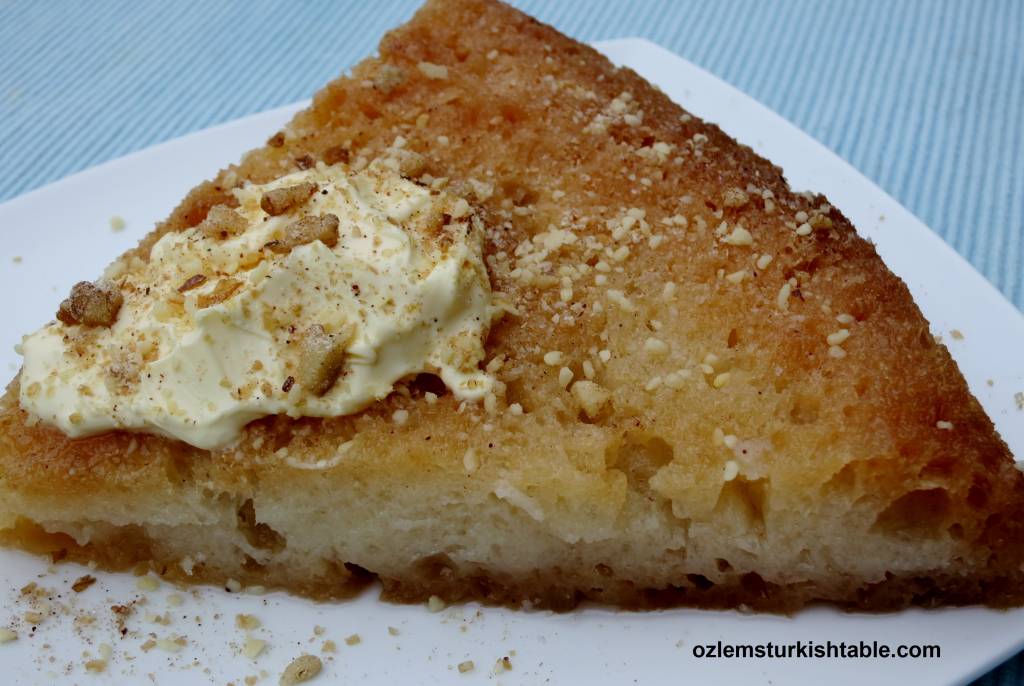
Ekmek Kadayifi; Turkish bread pudding soaked in syrup

Ekmek Kadayifi; Turkish bread pudding soaked in syrup

Bread, ekmek, is a main staple in Turkish cuisine and the loaf of bread takes the center piece in Turkish homes, for breakfast, lunch and dinner. We also have a delicious and very popular dessert, made with the special (dehydrated) bread soaked in syrup, the delicious Ekmek Kadayifi.

One of the treasures that my parents kindly brought over from Turkey when visiting us was this special dehydrated bread used for making Ekmek Kadayifi.  Topped with the thick Turkish clotted cream, kaymak, it is a heavenly and a very satisfying dessert. Ekmek kadayifi is also served during religious festivals like the end of Ramadan celebrations, Seker Bayrami, in Turkey.
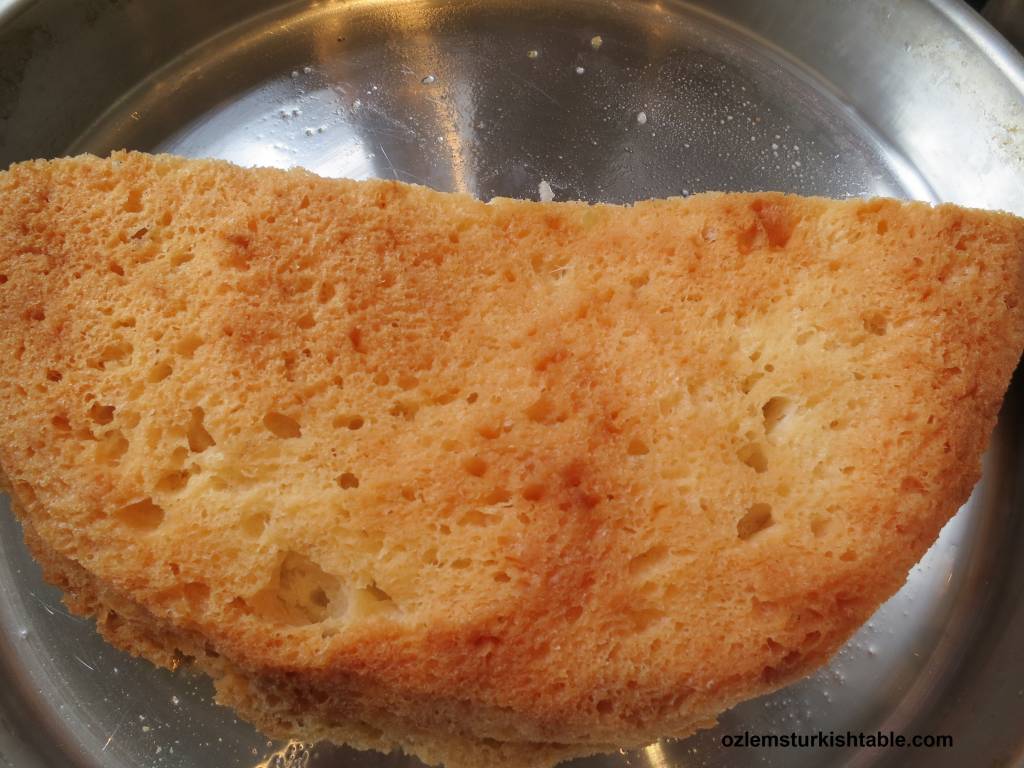
Ekmek kadayifi, the dry, dehydrated bread is first soaked in hot water.

Ekmek kadayifi, the dry, dehydrated bread is first soaked in hot water.

Ekmek kadayifi is very popular in Antakya, where my roots are from and you can easily get this special dehydrated bread from bakeries and pastry shops to make the dessert in Uzun Carsi, Antakya. It is also available in Eminonu, Kadikoy – Istanbul and in most parts of Turkey. Ekmek Kadayifi is a popular dessert that you can enjoy in restaurants and pastanes (patisseries) all around Turkey. Unfortunately it is difficult get this dehydrated bread abroad. Middle Eastern shops, Turkish shops and online Turkish stores like Tulumba.com and Best Turkish Food.com may carry them, worth checking. I have also seen crumpets being used as an alternative to this dehydrated bread abroad. If using crumpets, you’ll need to adjust the syrup quantity.
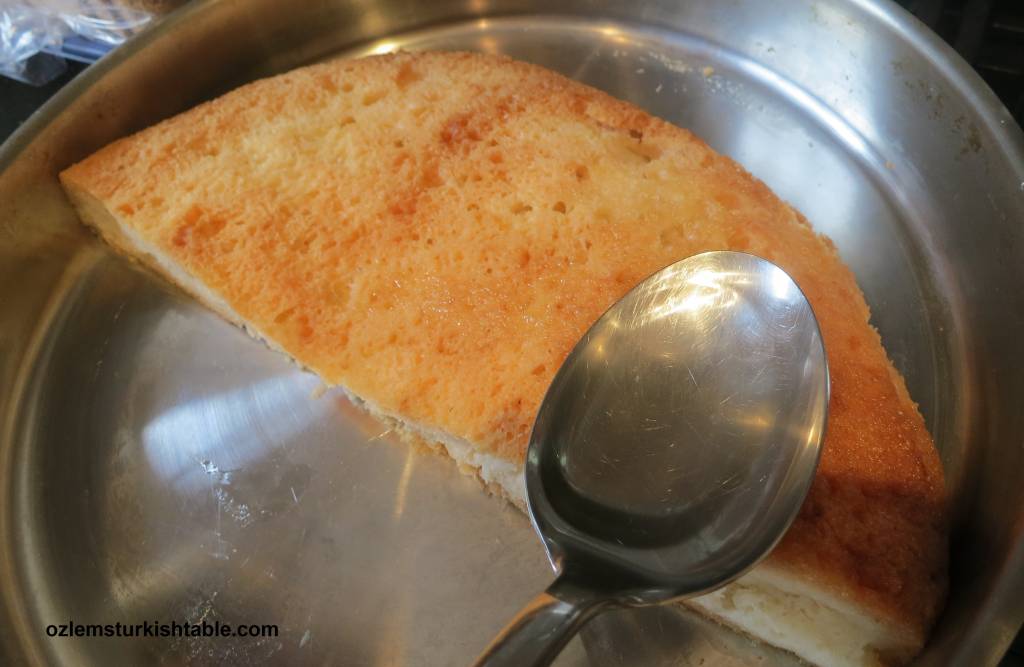
Pour the syrup over ekmek kadayifi evenly and let it soak the syrup.

Ekmek kadayifi is a very easy and a bountiful dessert. First you will need to soak the dry bread in hot water and it will dramatically expand, almost doubling the size, so bear this in mind. The next stage is the addition of the syrup and letting the bread soak the syrup. I have used half of dry ekmek kadayifi (15 cm/6” in diameter) and it served 8 people generously. Kaymak, Turkish thick clotted cream is the traditional accompaniment, if you can’t get kaymak, clotted cream (as found in the UK) or a dollop of mascarpone cheese also work well.

Delicious Ekmak Kadayifi; Turkish bread pudding in syrup; delicious with kaymak or clotted cream.

Delicious Ekmak Kadayifi; Turkish bread pudding in syrup; delicious with kaymak or clotted cream.

I don’t enjoy very sweet desserts and my syrup here is less sweet and fragrant with the lemon juice. We served ekmek kadayifi with crushed walnuts and glad to see everyone really enjoyed it – hope you enjoy yours too. This special dessert and many more are included at my cookery book, Ozlem’s Turkish Table – signed copies and special delivery rates to the US available at this link.
Afiyet Olsun,

Ozlem

5.0 from 5 reviews
Kaymakli Ekmek Kadayifi – Turkish Bread Pudding in Syrup
 
Ekmek Kadayifi is a traditional and very popular Turkish dessert made with the special (dehydrated) bread soaked in syrup. It is served with kaymak, the thick Turkish clotted cream and ground walnuts or pistachio nuts over it. Clotted cream or mascarpone cheese may be a good substitution, if you can't get kaymak.
Author:
Recipe type: Turkish Desserts
Cuisine: Turkish Cuisine
Serves: 8
Ingredients
  • Half of ready, dried ekmek kadayifi (15 cm/ 6” in diameter) – Turkish dehydrated bread for kadayif
  • 1 lt /2 pints / 4 cups hot water
  • For the syrup:
  • 400 gr/ 14 oz./ 2 cups sugar
  • 625 ml/1 pint 4 fl oz./ 2 ½ cup hot water
  • ¼ lemon
  • Crushed walnuts to serve
  • Kaymak, Turkish clotted cream or clotted cream or mascarpone cheese to serve
Instructions
  1. Place the dehydrated ekmek kadayifi, the dried special bread in a large tray.
  2. Pour the how water evenly over the dry bread, making sure it’s all wet. Let the bread absorb the water for 15 minutes.
  3. After 15 minutes, the bread will be almost doubled its size. Get a clean kitchen towel and gently press and pat on the soaked bread to get rid of all the excess water in the soaked bread and in the tray. At the end of this stage, there should be no excess water remained. Take care not to press too hard, so that the bread won’t break.
  4. In a saucepan, stir in the sugar and hot water. Dissolve the sugar and bring to a boil. Then squeeze the ¼ lemon juice and the leave the lemon in the sauce pan.
  5. Turn the heat to low and simmer the syrup over 20 minutes, stirring occasionally. Then turn the heat off.
  6. Pour the syrup over the ekmek kadayifi evenly and cook for 25 -30 minutes on medium heat. Turn the pan occasionally so that all parts get to cook evenly. Spoon the syrup in the tray over ekmek kadayifi ; all syrup will be soaked at the end.
  7. Remove from the heat and let the ekmek kadayifi rest for 15 minutes. Slice and turn the ekmek kadayifi upside down to a serving dish. You can serve at room temperature or after chilled in the refrigerator.
  8. You can serve the ekmek kadayifi with Turkish thick clotted cream, kaymak and crushed walnuts over the slice. The British clotted cream or mascarpone cheese would also complement ekmek kadayifi well, if you can’t get kaymak.
Notes
You will need a large circle or square tray to make this bread pudding, bear in mind that the bread will almost double its size once soaked in water.
 

Continue Reading

Homemade Cezerye; Caramalised Carrot Paste Delight with Nuts

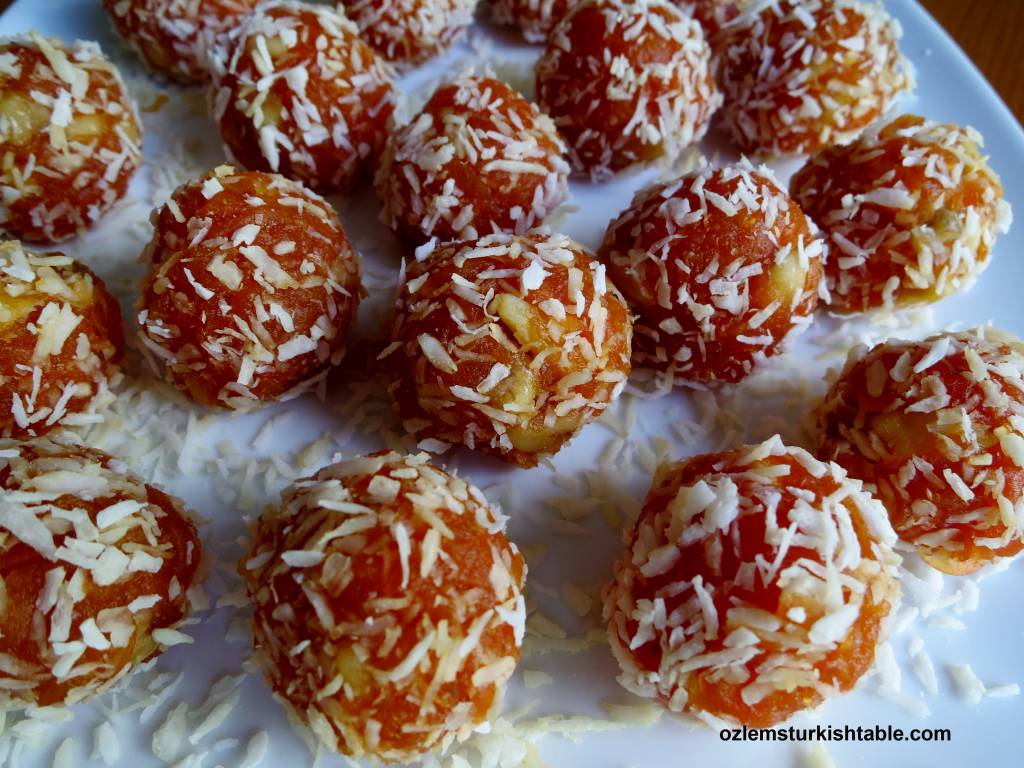
Cezerye; Caramalised carrot paste with nuts

Cezerye; Caramalised carrot paste with nuts

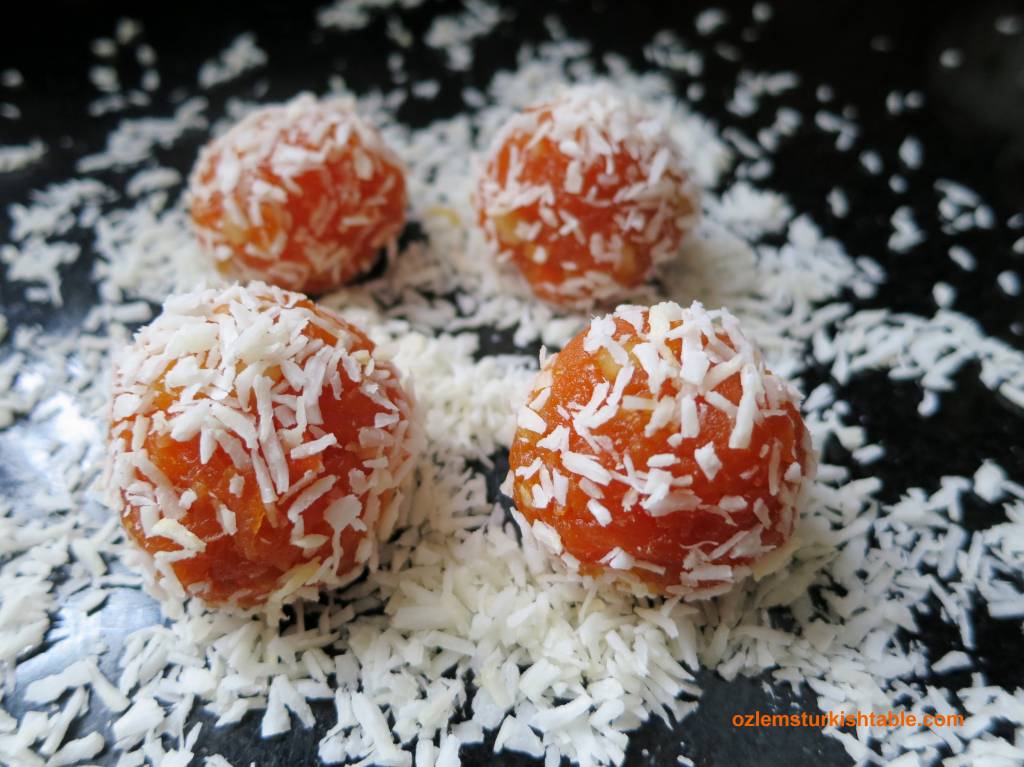
Have you ever tried the delicious Cezerye dessert? A specialty from Mersin region at southern Turkey, Cezerye is a delicious confectionery made of carrots, nuts and sugar, coated with desiccated coconut flakes. They are utterly delicious, healthy and also known to be an aphrodisiac.

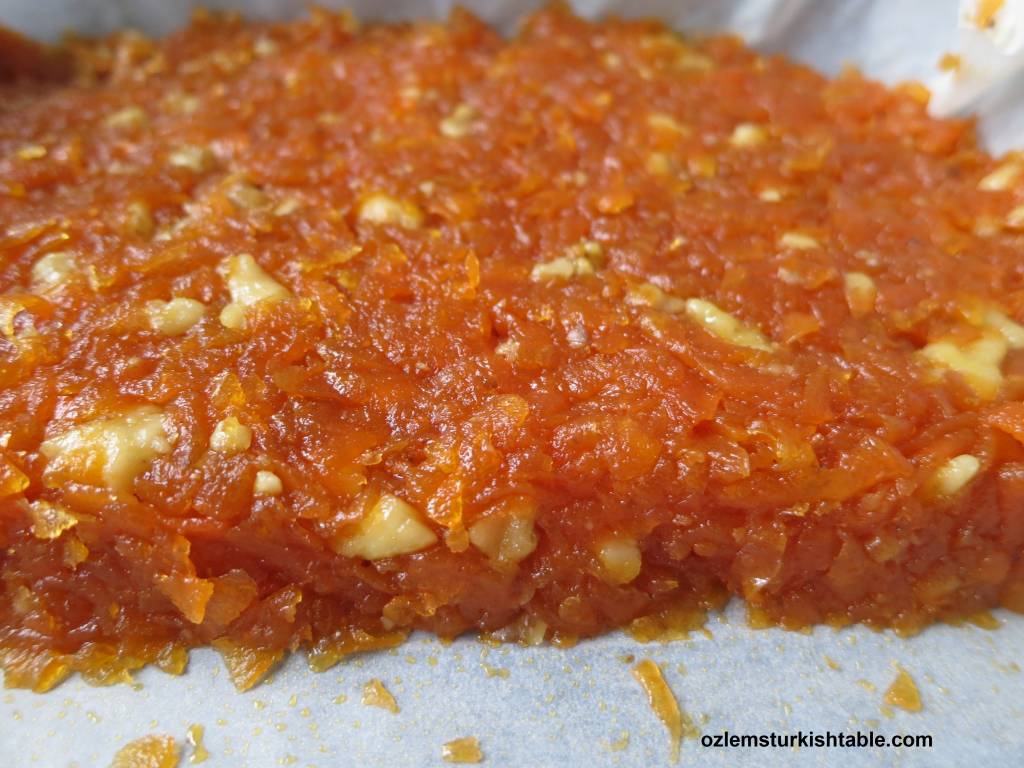
Spread the cooked carrot & nut paste evenly and tightly, making sure they stay intact.

Spread the cooked carrot & nut paste evenly and tightly, making sure they stay intact.

With my roots going back to southern Turkey, Antakya, I grew up sampling the very best Cezerye from the nearby Mersin region. Such a delicious and healthy snack, it was always available whenever we wanted some for a treat, therefore I haven’t really thought of making them when I was home. But living  abroad and not having an access to these scrumptious treats  make you brave enough to have a go at them, like making homemade Turkish Delights. I am delighted to report you that compared to making Turkish Delights, Cezerye is so much easier to make, lighter and equally delicious. They are traditionally made with hazelnuts; I used walnuts for my Cezerye recipe and they were delicious. My children absolutely loved them!

I am passionate about healthy, delicious Turkish cuisine, and wholesome desserts like this Cezerye; over 90 authentic Turkish recipes are included at my cookery book, Ozlem’s Turkish Table, Recipes from My Homeland. Signed copies are available at this link, if interested, and delivered worldwide.

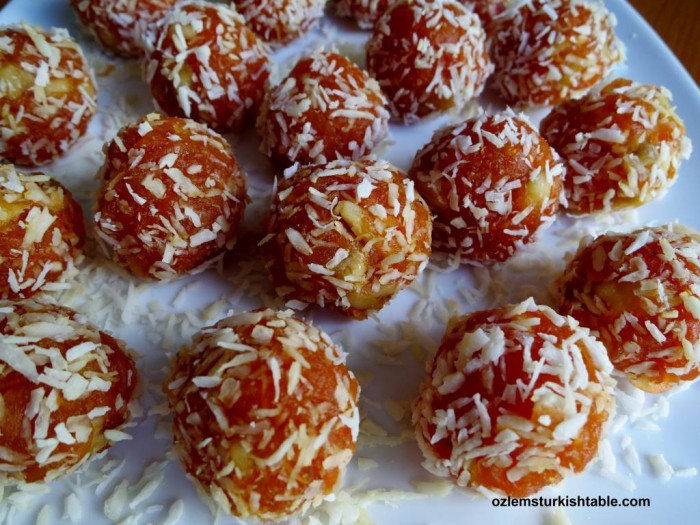
Cezerye; delicious carrot paste with walnuts from Mersin, Turkey.

Cezerye; delicious carrot paste with walnuts from Mersin, Turkey.

Carrots have never been sweeter; hope you can have a go and treat yourself, family and friends with these delicious carrot delights. Cezerye keeps well in an air tight container for a week.

Afiyet Olsun,

Ozlem


4.9 from 8 reviews
Homemade Cezerye; Caramalised Carrot Paste Delight with Nuts
 
A delicious and healthy caramalised carrot paste & walnuts dessert from Mersin, Turkey. I hope you can have a go and treat yourself, family and friends with these delicious carrot delights. Cezerye keeps well in an air tight container for a week.
Author:
Recipe type: Turkish desserts
Cuisine: Turkish Cuisine
Serves: 6
Ingredients
  • 3 medium to large carrots (app. 400 gr), cleaned and grated
  • 200 gr / 7 oz. / 1 cup white sugar (or 1¼ cup brown sugar)
  • 50 gr / 2 oz. walnuts, chopped into small pieces
  • 8 fl. oz./1 cup water
  • 50 gr/ 2 oz./1/3 cup desiccated coconut flakes to decorate
  • Bowl of water to shape cezerye squares or balls
Instructions
  1. Place the grated carrots, ½ cup water and sugar in a wide, heavy pan.
  2. Cook over medium heat, uncovered, stirring often. Cook this way for about 30 minutes or until all the liquid evaporated.
  3. Stir in the rest of the ½ cup water and cook again on medium heat, stirring continuously (carrots also release their own juice, therefore I prefer to add the liquid a step at a time so that the carrots won’t become mushy).
  4. Cook the carrots until all the juice evaporated and they are softened, this should take another 30 minutes. Using your stirring spoon, mash the cooked carrots to turn into a thick, chunky paste. At this point, they should also thicken, start to caramalise and get sticky (you can take a little bit between your fingers to test whether it sticks or not). Turn the heat off.
  5. Stir in the chopped walnuts to the carrot paste and mix well. Again using your stirring spoon, blend them all well and turn into a thick paste.
  6. Cover a small rectangular dish or tray with parchment paper. Spread the carrot paste evenly and tightly, making sure they stay intact, with a height of 1,5 cm (0.6”).
  7. Cover with a cling film and rest the mixture to settle for 2 hours in fridge.
  8. After 2 hours, start shaping the carrot paste. Have a bowl of water near you. Wet your hands, take a dessert spoonful and shape into small round balls. Or wet your knife and cut into small squares.
  9. Spread the desiccated coconut flakes on a dry surface and coat the carrot balls and squares with the flakes to coat all over.
  10. Cezerye is ready to serve. Cezerye keeps well in an air tight container for a week.
Continue Reading

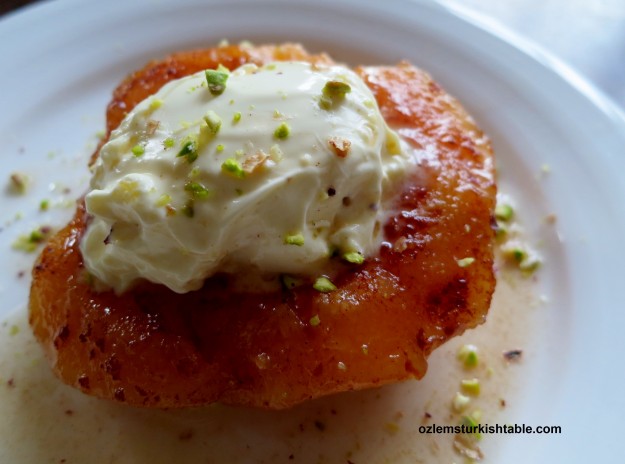
Turkish Quince Dessert; Ayva Tatlisi

Turkish Quince Dessert, Ayva Tatlisi

Turkish Quince Dessert, Ayva Tatlisi

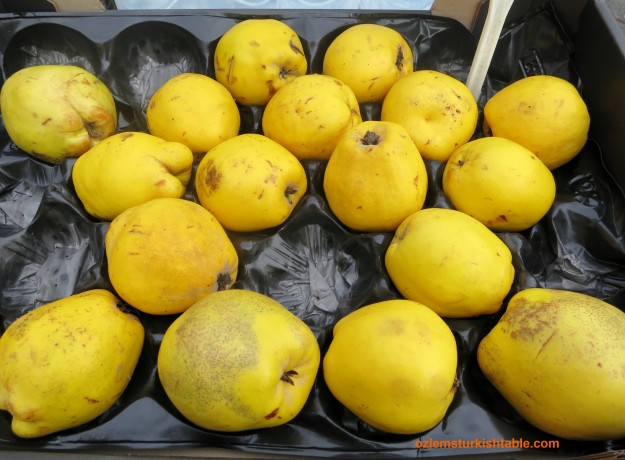
Quince, ayva as in Turkish, is a seasonal fruit, best enjoyed from October to early January and it is plentiful in Turkey. It is a rare treat to get in England, so you can imagine my excitement seeing them at the Turkish Market in Cheam, in Southeast England. I got my quinces and my heart was set to make the much loved, delicious Turkish quince dessert, Ayva Tatlisi, recipe also at my new cooking book, SEBZE.

Delicious, ripe quinces at the Turkish market in Cheam, England - a delightful sight!

Delicious, ripe quinces at the Turkish market in Cheam, England – a delightful sight!

Quince comes from the same family as apples and pears, and has a deliciously fragrant, rosy smell. There are also many health benefits of quince; it is packed with fiber, potassium and antioxidants. Quince is delicious when it’s ripe and you can enjoy eating raw, though it can also be quite tough to tackle. The hard, tangy and pale quince becomes soft, fragrant in a beautiful dark rosy pink color when it is cooked; quite a transformation for this humble fruit. Quince dessert, Ayva Tatlisi, is very popular in Turkey enjoyed in winter time, and it is divine, when cooked properly. You may notice some of the quince desserts come up in very deep, almost artificial red color, and I am afraid that case some artificial coloring may have been added to achieve this, to save up on the cooking time.

One of the elements that give this quince dessert its gorgeous color and fragrant taste is the slow, gentle cooking. I cooked mine for about 1 hour and 45 minutes over low heat and the transformation in the color and texture was amazing. Make sure to keep the seeds in the pan when you’re cooking the quinces; they help bringing out that gorgeous deep rosy pink/amber color. I also keep the peeled skin of quince in the pan; they all together bring a fragrant smell, beautiful color and thicken the syrup as the seeds contain pectin, a natural thickener. The cooked peels are lovely, chopped into strained yoghurt with nuts, for breakfast, as well as over toasted bread – another good example of no waste Turkish cuisine.

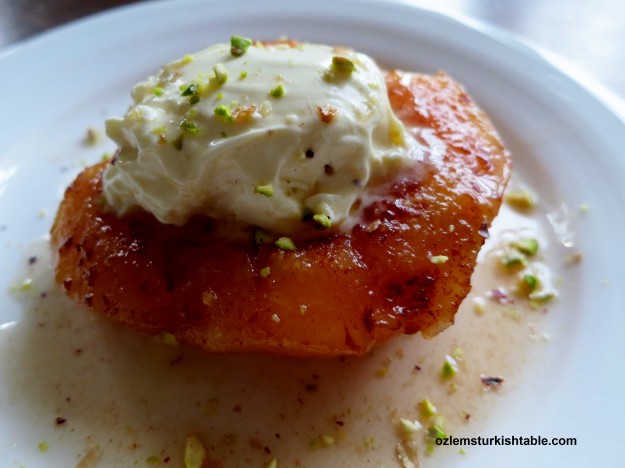
Pouched quince dessert in syrup, cloves and cinnamon, Ayva Tatlisi

Pouched quince dessert in syrup, cloves and cinnamon, Ayva Tatlisi

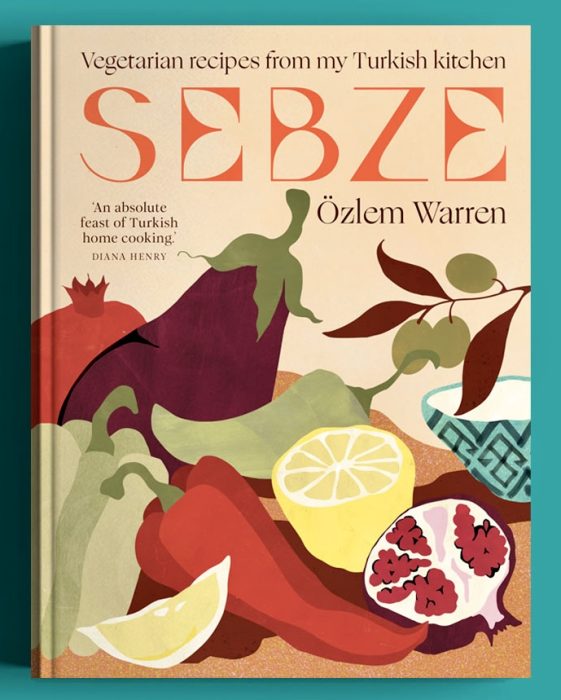
I hope you enjoy this easy and delicious quince dessert, Ayva Tatlisi; it simply melts in the mouth. You can prepare ahead of time and it keeps well in the fridge for 2-3 days. I love the fruity desserts in Turkish cuisine; they are fragrant and packed with flavor, this delicious Quince dessert, Ayva tatlisi and many more are included at my new cookery book, SEBZE, Vegetarian recipes from my Turkish kitchen. You can get a copy of SEBZE here, worldwide.

Serves 4

Preparation time: 15 minutes                  Cooking time: 1 hour 45 minutes (or a little more, depending on the size of the quince)

2 medium size quinces

170g/6oz sugar

10  cloves

370ml/13fl oz water

30ml/2 tbsp. juice of lemon

15g/ 1 tbsp. ground cinnamon

Turkish thick cream, Kaymak, or clotted cream to serve

Crushed pistachio nuts or walnuts to serve

Wash and cut the quinces in half, from top to bottom. Scoop out the core and keep the seeds, save the seeds aside. Peel the skin of the quince halves and set them aside too. Rub the peeled quince halves with the lemon juice; that will help quince not to go dark in color.

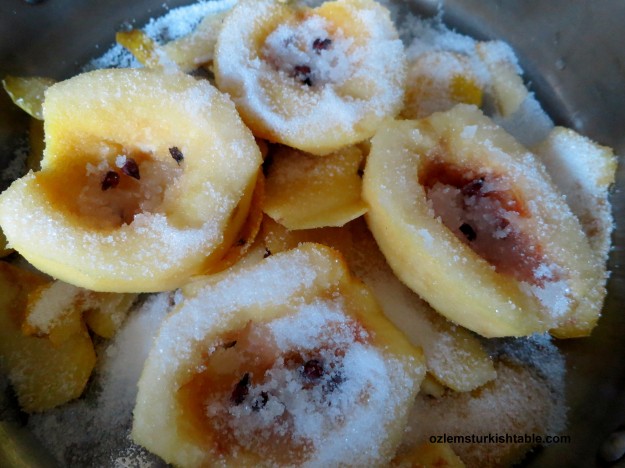
Spread the sugar evenly over the quince halves

Spread the sugar evenly over the quince halves

Spread the peels of quince as a layer in a heavy pan, wide enough to have 4 quince halves in one layer. Place the quince halves on top, in a way that the hollow side faces upwards. Spread the sugar evenly over the halves and stir in the reserved quince seeds, cloves and the water.

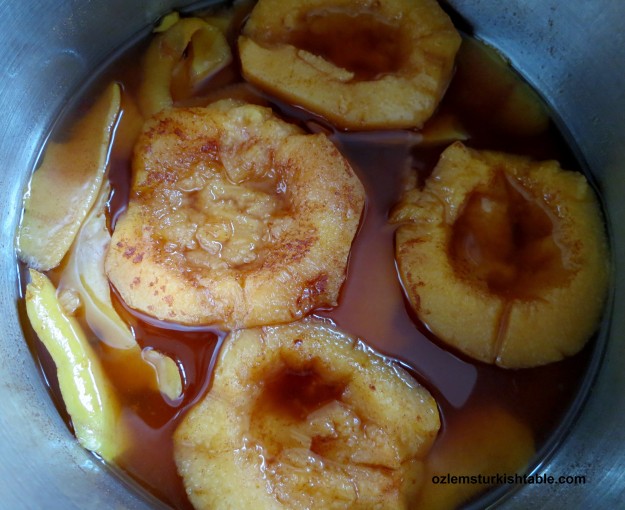
The quinces will start turning to a rosy, darkish pink color and the syrup will start to thicken.

The quinces will start turning to a rosy, amber color and the syrup will thicken.

Bring the pan to a boil then reduce the heat to low and cover the pan. Simmer gently for about 45 minutes. Check the quinces and flip the halves gently to the other side. The quinces will start turning to a rosy, darkish pink color and the syrup will start to thicken and caramelized. Stir in the ground cinnamon, cover and cook on low heat for l hour, pouring the juice over quince every 20 minutes or so (you may need a little more or less cooking time depending on the size of the quince), turn the heat off. You will now get a richer dark rosy pink color and some caramelisation.

Leave the cooked quinces cool in the pan. The syrup will thicken even more and the color will go darker, thanks to the seeds acting as a natural thickener. Once cool, place the quince halves on a serving plate, with a dollop of clotted cream or even better, Turkish kaymak, the thick cream of the water buffalos over the top. You can sprinkle some crushed pistachio or walnuts over and serve. You can use plant based cream to make this a vegan feast.

Turkish Quince Dessert, Ayva Tatlisi

Turkish Quince Dessert, Ayva Tatlisi

This delicious quince dessert keeps well in the fridge for a good 3 days.

Afiyet Olsun,

Ozlem


Continue Reading