

Recipes    

Turkish cuisine provides healthy, hearty, delicious food for family and friends.
Find out more

Cookery Classes

I teach Turkish cooking classes in England,Turkey & USA, hope you can join us!,
Find Out More

Cakes and Desserts

Milk Pudding with Mastic Gum; Damla sakizli muhallebi

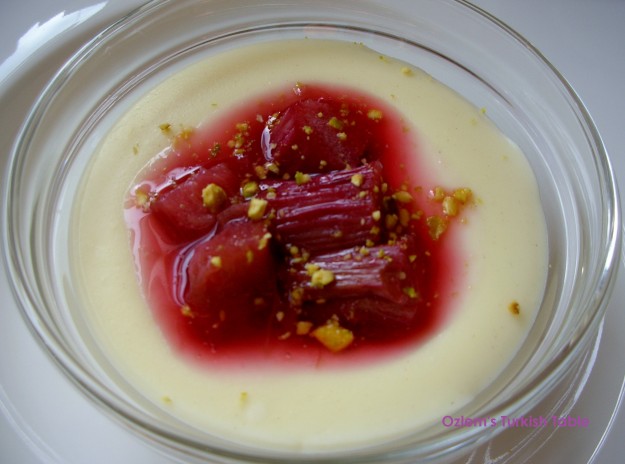
Milk pudding with mastic gum; the rhubarb compote goes really well with it.

End of Ramadan is always celebrated with wonderful sweet treats at home.  My dear cousin, Nihal, made us this delicious milk pudding with mastic gum, as part of these festivities in Istanbul back in August. Delicious, light and fragrant, this milk pudding has been a favorite treat for us  all.
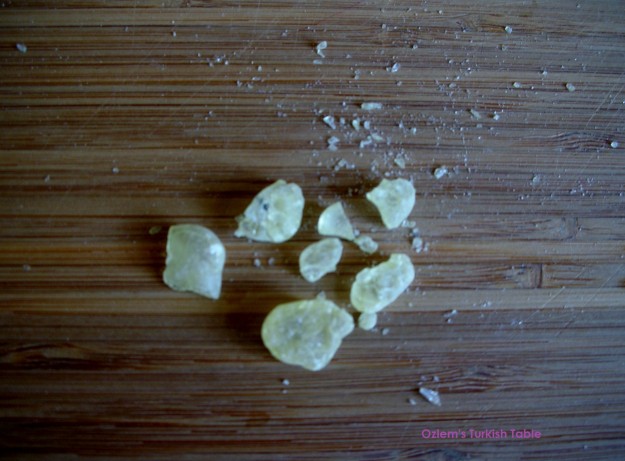
Chewy, fragrant mastic gum adds a wonderful flavor to the puddings.

In Turkey mastic gum is used in milky desserts, ice cream (a very delicious experience), and, naturally, chewing gum. Originally liquid, mastic gum is sold as hard small translucent lumps and melted in hot milk while making dessert. It can also be grounded with mortar and pestle. As it has a strong flavor, only one or two small lumps will be enough for your cooking.
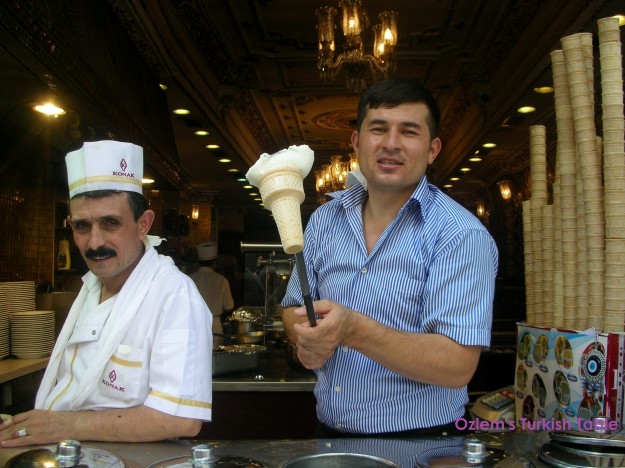
Turkish ice cream with mastic gum is a delicious experience

Mastic is a resin obtained from the mastic tree. In pharmacies and Nature shops it is called “Arabic gum” and “Yemen gum”. In Greece it is known as the “tears of Chios,” being traditionally produced on that Greek island. When chewed, the resin softens and becomes a bright white and opaque gum. The flavor is bitter at first, but after chewing releases a refreshing, slightly piney or cedar flavor. It contains antioxidants, and also has antibacterial and antifungal properties, and apparently also good for your gums and teeth.  You can get mastic gum at TulumbaAmazon as well as at Middle Eastern Stores.
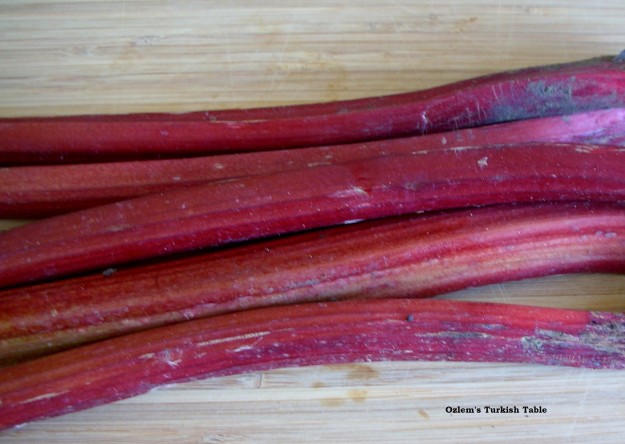
I got some lovely rhubarb from my veg&fruit box and made a rhubarb compost to go with the pudding. Rhubarb’s sweet and sour taste really complemented the pudding.  Any berry or plum compote would also go well with this pudding.

Have you ever used mastic gum in your cooking? I would love to hear your experience and hope you enjoy this one!


Serves 4                               Cooking time: 30 minutes

70gr /2.6oz unsalted butter

3 tbsp plain flour

3 tbsp sugar – you can add a little more if you like it sweeter-

700ml/1 ½ pints whole milk – you can use semi skimmed if you like, though it works best with whole milk-

2 small pieces of mastic gum

1 tbsp finely crushed pistachios to decorate
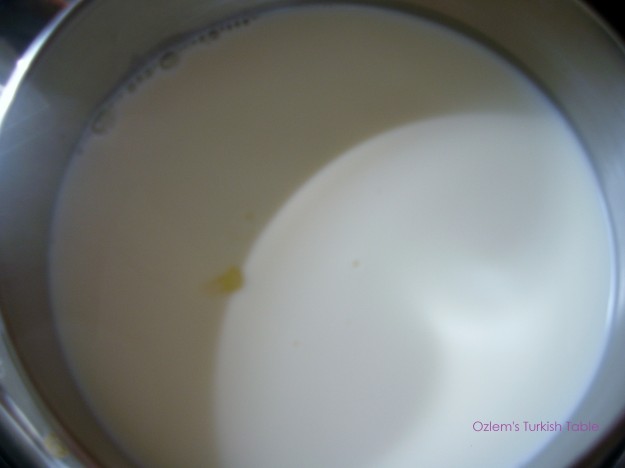
 

Stir well so that the mastic gum dissolves in hot milk.

Bring the milk to the boil in a heavy pan.  Reduce the heat, stir in the sugar and the mastic gum. Stir constantly until the mastic gum dissolves. Take it off the heat.
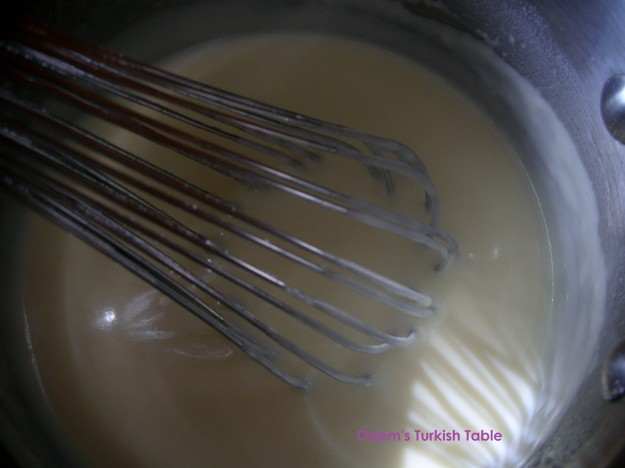
Stir the mixture constantly, always in the same direction, to avoid lumps forming.

Melt the butter in a heavy pan and stir in the flour, combine well.  Add a cup of hot milk mixture to the flour and stir constantly,  always in the same direction, to avoid lumps forming . When the mixture thickens add another cup of the hot milk mixture, stir until it thickens. Repeat this process until the hot milk is finished and the mixture thickened.

Pour the pudding into individual bowls and leave to cool. Once cool, place the bowls in the fridge to be chilled.

Rhubarb Compote

This is a very easy and versatile rhubarb compote. It is wonderful served with the milk pudding, ice cream or yoghurt. I must say, I even love eating the compote just alone too!
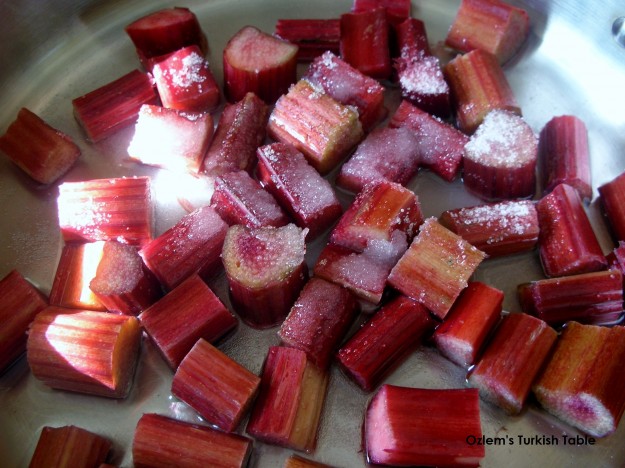
Trim and cut the rhubarbs into 2-3 cm chunks and mix with the sugar and water.

Simply mix your  rhubarb (6 sticks would serve generously for 4-6 people), trimmed and cut into 2-3cm chunks, with 1/2 cup of sugar and ¾ cup water in a heavy pan. Cook them over a medium heat for about 10-15 minutes, until they are soft. Leave a side to cool.

You can layer the rhubarb compote over the chilled milk pudding bowls. Sprinkle the crushed pistachio nuts over them, they are ready for your enjoyment.


Afiyet Olsun!

Ozlem



Continue Reading

Treats for Seker Bayrami, Eid Al-Fitr – Gullac, Baklava and more

Wonderful blue tiles at the Blue Mosque

There is a wonderful excitement in my parent’s home in Istanbul, as the holy month of Ramadan is now reaching to its end soon. My mother has been fasting, and we are all look forward to being together this year to celebrate the end of Ramadan in Istanbul. Ramadan is a time of spiritual reflection, improvement, charity, as well as increased devotion and worship. I love seeing family and friends visiting each other, elderly eagerly waiting for the young ones to pay a visit; little ones eagerly waiting for their sweet treats. Ramadan is a wonderful opportunity to give back to the community, share what you have and visit one another. A wonderful time when feelings of tolerance and charity are foremost in people’s minds.

Inside of the Blue Mosque; a special time to visit during Ramadan

Gullac

My mother has so many treats in her mind for the family and friends to share. One of her favorite dessert for this time of the year is the traditional dessert, Gullac. This lovely, light dessert is prepared with Gullac wafers which is made with corn starch and wheat flour. You can find Gullac wafers at specialty or Middle Eastern stores, or at Turkish online shops like Tulumba or Marketurk in the UK.

Güllaç contains walnuts or almonds between the layers which are soaked in milk. It is light and wonderful dessert for warm summer days. You can decorate Gullac with pomegranate seeds in winter or dried fruits like apricots in summer; crushed pistachios are also wonderful over gullac.

Delicious and refreshing Gullac dessert, very light too

Delicious and refreshing Gullac dessert, very light too

Ingredients:

1 pack gullac wafers

600gr sugar

3kg milk

6 tbsp rose water

400gr crushed almonds

Chopped dried apricots and crushed pistachios to decorate


Combine milk and sugar in a heavy pan and bring to a boil. Add the rose water to the boiling milk.

Moisten the gullac wafers with milk. Spread the half of the wafers on top of each other on a wide tray. Sprinkle crushed walnuts or almonds in the middle, and stack the rest of gullac layers, soaked in the milk mixture. Pour the rest of the milk mixture over the top wafer and let it cool.  Garnish with dried apricot and crushed pistachio and serve.

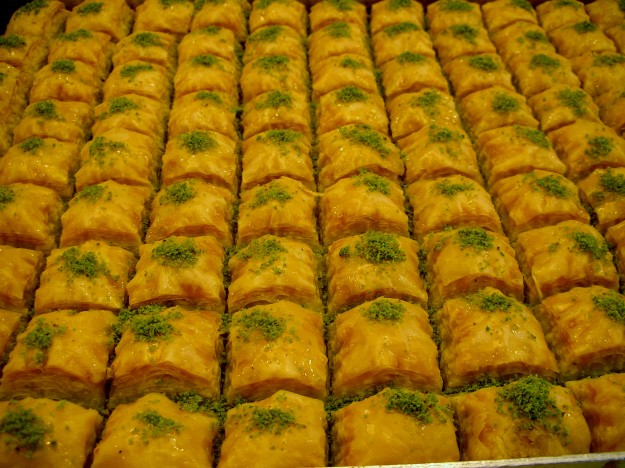
 Here are some more ideas for end of Ramadan treats; who can resist baklava? It is easy to make home made baklava using fillo sheets.

Scrumptious baklava with pistachios

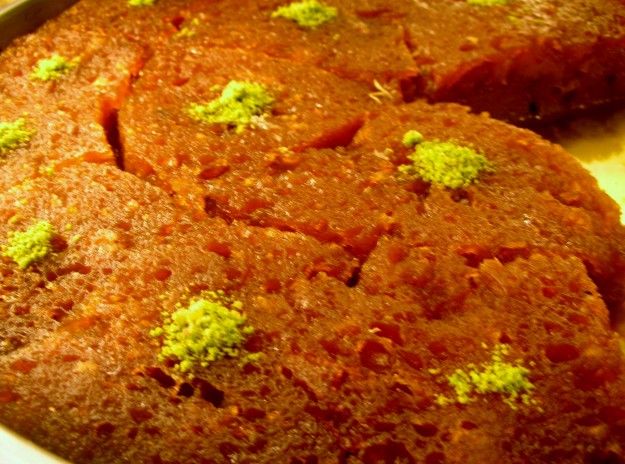
Here is Ekmek Kadayifi – Turkish bread pudding dessert, served with kaymak, our thick clotted cream.

Ekmek Kadayifi; a traditional dessert especially at the southern Turkey

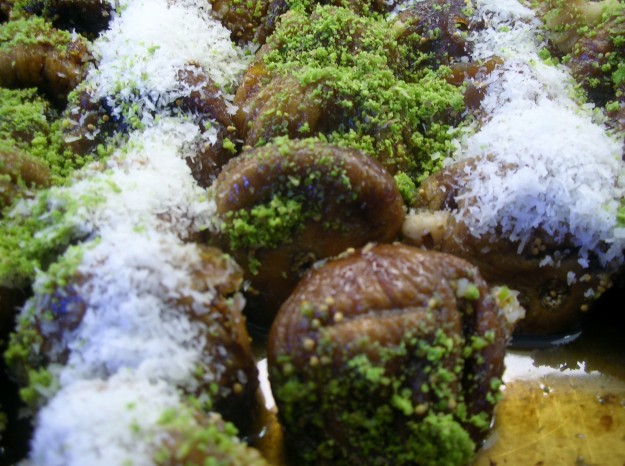
How about our dried fig dessert with stuffed with walnuts? Here, the dried fig is first poached in hot water for a few minutes to soften up then stuffed with nuts.

Poached dried figs stuffed with nuts, decorated with pistachio nuts

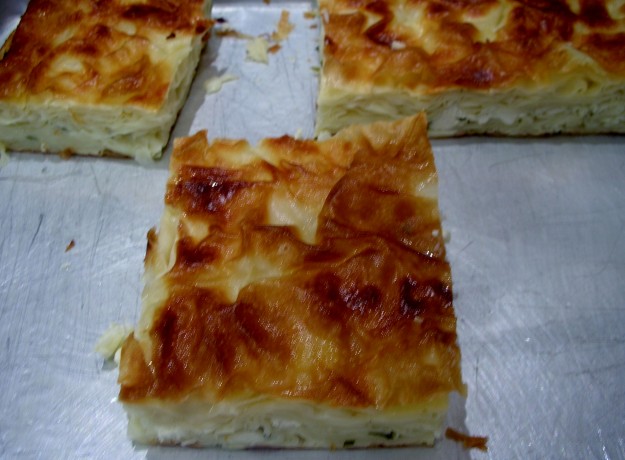
As you see, the sweets are the stars for the end of Ramadan festivities. If you rather prefer savory to sweet, then boreks are your best bet. Su borek made  with paper thin yufka sheets or with fillo pastry sheets, with cheese and parsley filling, may be just the thing.

Cheese and parsley filled borek; lovely treat


Whatever treat you may choose, I hope you enjoy them and have a chance to share with others.


Blue Mosque from the terrace of the Armada Hotel

Afiyet olsun!

Ozlem


Continue Reading

Home Made Turkish Delight – Lokum

Lokum ph2,Turkish Delight with OTT

Home made, fragrant Turkish Delights; easier than you think!

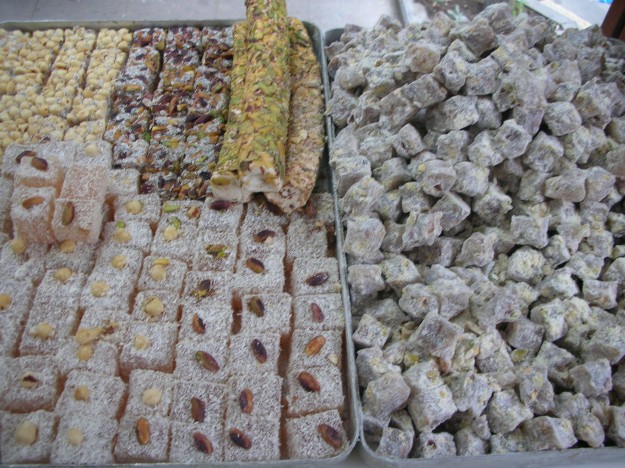
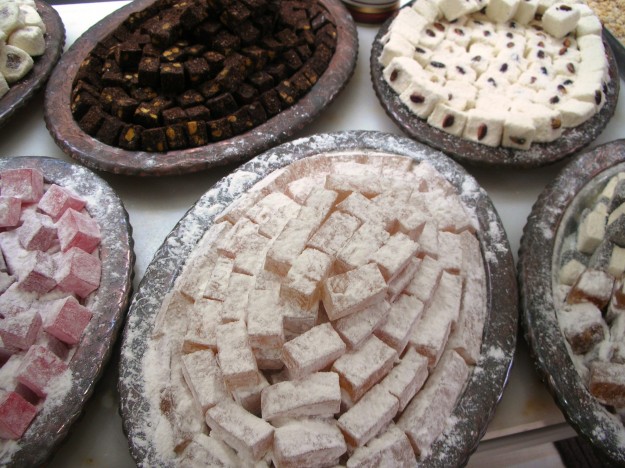
Have you ever tried Turkish Delight? These delicately flavored, scrumptious sweets are one ofTurkey’s hallmarks. They can be plain, sade, delicately flavored with fragrant rose water or dried fruits, nuts and desiccated coconut can be incorporated into the luscious mouthfuls of fragrant jelly.

Scrumptious Turkish Delights with nuts in Turkey; they are a real treat

My children love Turkish Delight, and living abroad, I can’t always get those wonderful delights from home. Making Turkish Delight, having them properly set can be a bit of a challenge, but this new recipe we tried at my Turkish cooking class last weekend came out so well, we were all so pleased! And yes, you can now make Turkish Delight in your home! I would allow for the fragrant jelly to set at least overnight (and more if you can). They also make wonderful gifts; to pack as presents, sprinkle a little corn flour mixture into a bag to stop sweets sticking.

Turkish Delight with rose water, and the back, with chocolate – you get all sorts of flavours these days!

Now, a bit of history on Turkish Delight. Prior to the arrival of refined sugar in the late 18th century, the Ottomans made a crude version of Turkish Delight using honey or pekmez, a concentrated grape syrup and wheat flour. Haci Bekir, a confectioner of the time, became famous due to his ingenious use of white sugar and corn starch and was summoned to Topkapi Palace to pioneer the development of what is today one of Turkey’s hallmarks. Special recipes for variations of Turkish Delight can be found in all regions ofTurkey. Sakiz (mastic gum) another ingredient revered by the Sultans, can be used to create a chewier version and is a must if you are preparing rolled up versions of lokum. This recipe is for plain (sade) lokum, however, you may wish to add shelled and chopped nuts of your choice – hazelnuts, pistachio nuts or walnuts work extremely well.

Prep time: 15 minutes (plus setting overnight) Cooking time: about 25 minutes

Makes about 64 small squares

25gr/1oz icing sugar

100gr/3 1/2 oz corn flour

700gr/1 1/2lb caster sugar

Juice of 1 lemon

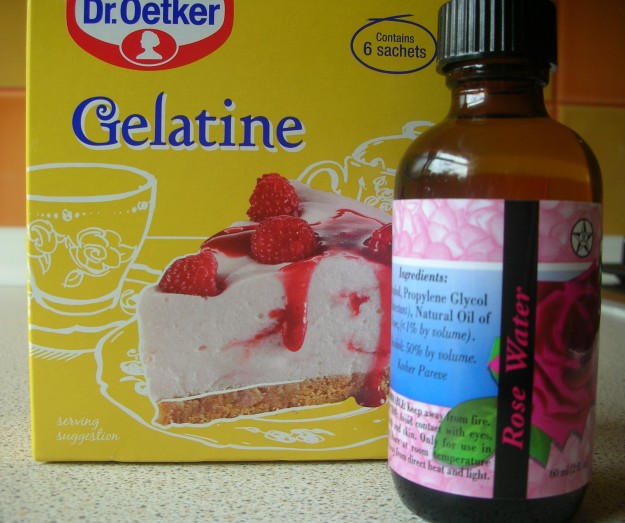
3 tbsp powdered gelatine (* see for a vegetarian gel option)

Red or pink coloring – optional

2 tbsp rose water

Gold edible glitter – optional

* If you prefer to use vegetarian gelatine, Dr Oetker has a vegetarian gel too, here is the link;
Vege-Gel is a vegetarian alternative to gelatine and not a substitute. Therefore, it has to be used in a slightly different way to gelatine and it may be necessary to adapt your recipe.

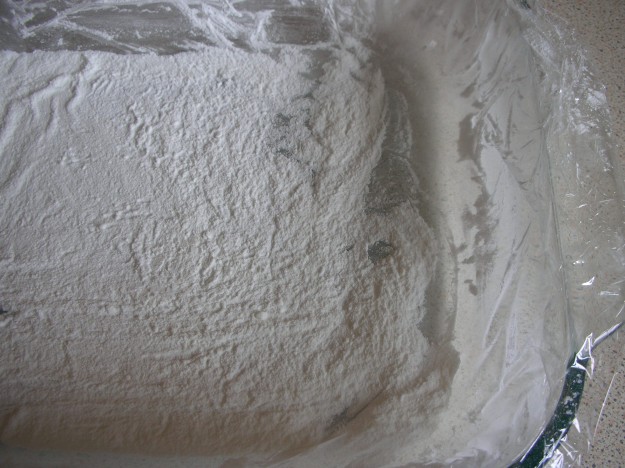
Sprinkle a little cornflour and icing sugar mixture over the base and sides of the bowl

Line a 20.5 (8in) square baking tin with a cling film. Sift icing sugar and 25g (1oz) of the corn flour into a small bowl. Sprinkle a little over the base and sides of the tin. Set bowl aside.

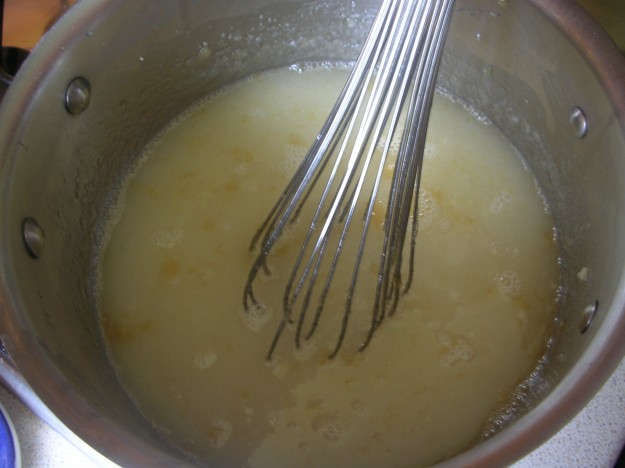
Put caster sugar, lemon juice and water into large pan, heat gently until dissolved

Put caster sugar, lemon juice and 400ml (14fl oz) water into large pan. Heat gently until dissolved – do not boil. In a small bowl, mix the remaining corn flour with 100ml (3 1/2 fl oz) cold water, and then stir into sugar syrup. Sprinkle gelatine over liquid and stir with balloon whisk to break up lumps. Bring to boil, then simmer over medium heat for 20 minutes, whisking often. The mixture should thicken and turn pale yellow.


Gelatine helps set the Turkish Delight and rose water adds a delicately perfumed flavor

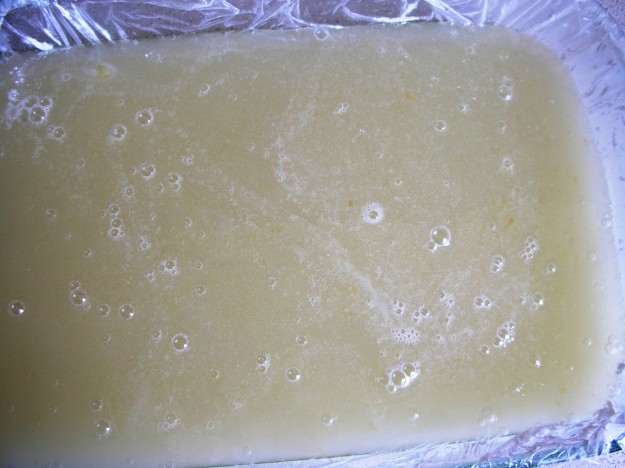
Remove from heat and whisk in a little food coloring to turn mixture into light pink (optional). Set aside for 5 min. Stir in rose water and pour into tin. Leave to set in a cool place overnight.

Leave to set Turkish Delight in a cool place overnight

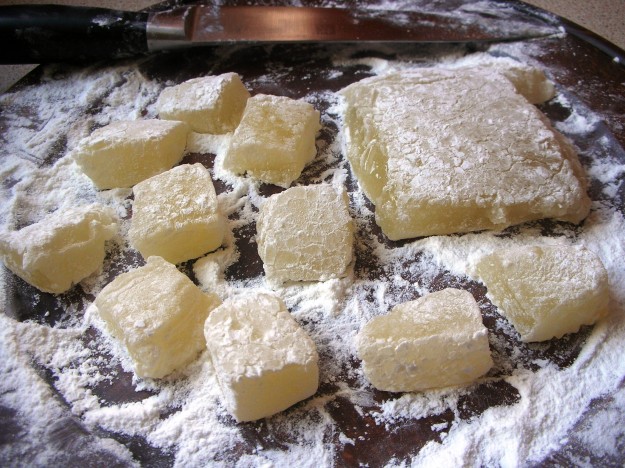
Dust a board with some reserved corn flour mixture, and then invert Turkish Delight on to it. Remove tin; peel off clingfilm. Cut into cubes, and then roll each gently in corn flour mixture to coat.

Dusting a board with the corn flour and icing sugar mixture really helps for the jelly not to stick

Sprinkle over a little glitter, if using. Place grease proof paper on a large metal tray. Then place the Turkish delight cubes on the tray side by side with a little space in between, in one layer. Let the Turkish delight air dry for 24 hours, for best results; this will prevent homemade Turkish delight from sweating.

Sprinkle the remaining corn flour mixture and gently coat each piece. Store in an airtight glass or metal container at a cool, room temperature (away from heat, sunlight, radiator etc.). If there is more than one layer in the container, place a sheet of grease proof paper between each layer and make sure there is a little space between each Turkish delight piece. Homemade Turkish delight is best enjoyed when fresh, though it keeps well stored in a dry place for up to 1 month.

To pack as gifts, sprinkle a little cornstarch mixture into a paper bag to stop the sweets sticking.

Afiyet Olsun, as we say in Turkish, which means “May you be happy and healthy with this food”. I hope you enjoy making Turkish delight, lokum, at home.

Poached dried apricots with clotted cream, from my book, SEBZE

Sweets takes center stage in Turkish cuisine, enjoyed during special occasions, festivities, celebrations or to make any day a bit more special. There are scrumptious and easy Turkish sweet treats in my new book SEBZE, Vegetarian recipes from my Turkish kitchen, including Firin Sutlac, Acibadem cookies, Poached dried apricots in clotted cream, Revani with caramalised orange slices, Quince dessert, Pistachio short bread cookies and  more.  You can order a copy of SEBZE here, worldwide.

SEBZE, Vegetarian Recipes From My Turkish Kitchen

SEBZE, Vegetarian Recipes From My Turkish Kitchen

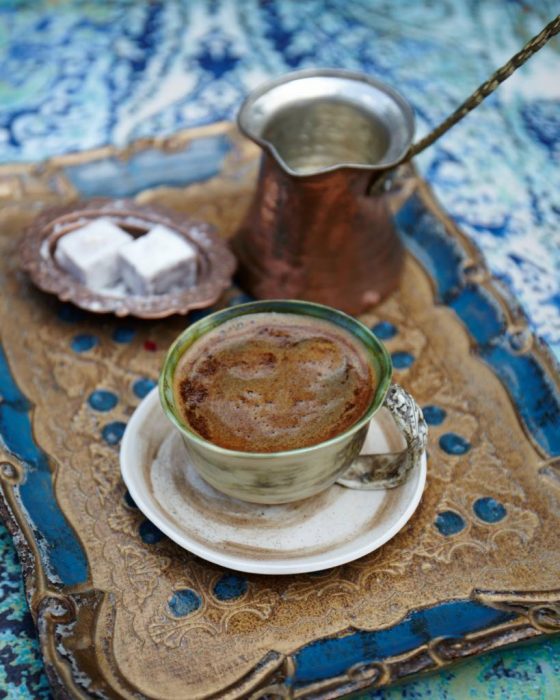
Turkish Delight goes so well with Turkish Coffee, and here is the recipe, of you would like to try.

Turkish coffee, Turk kahvesi

Afiyet Olsun,

Ozlem


Continue Reading