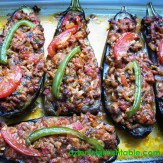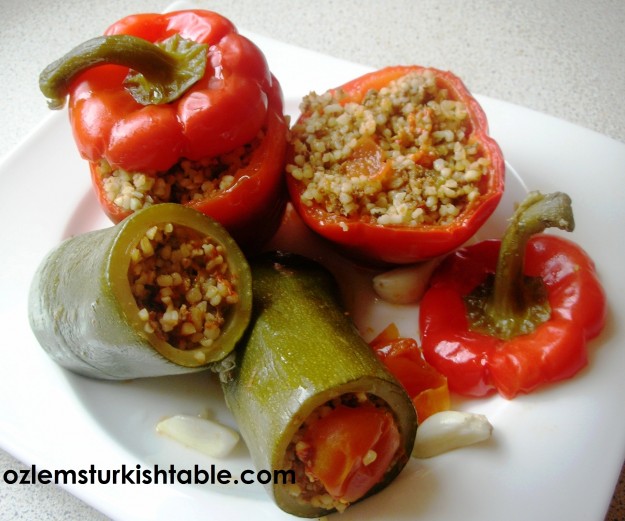
Stuffed peppers and zucchini with bulgur, ground meat & onion
Some of the food we eat has the power to transport us to our childhood, have a special link to bond us with those precious memories. These stuffed peppers and courgettes (zucchini) have such power on me; they are the delicious gateways to take me back home, right to my mother’s as well as my grandmother’s kitchen in the ancient city of Antioch, Antakya.
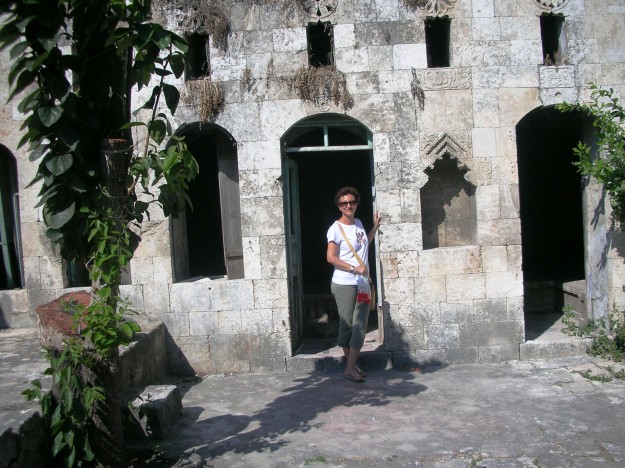
My Grandmother’s 450 year old house in ancient Antioch; we used to gather around a big table in the courtyard for wonderful feasts
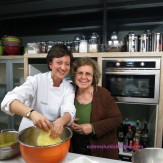
Preparing the dolma is quite a grand ritual at home; cousins, sisters, whoever available, gather around a big table; filled with trays of vegetables and stuffing. Some prepare the vegetables, scooping the flesh out, some make the filling, and some do the stuffing. These all happen, of course, with constant flow of Turkish coffee and tea (cay) and catching up! We would then eagerly wait for the dolma to be cooked; then me and my sister would eat the dolma with a dollop of plain yoghurt on top. We used to call them our “savory ice cream”; I am now trying this trick on my children:)
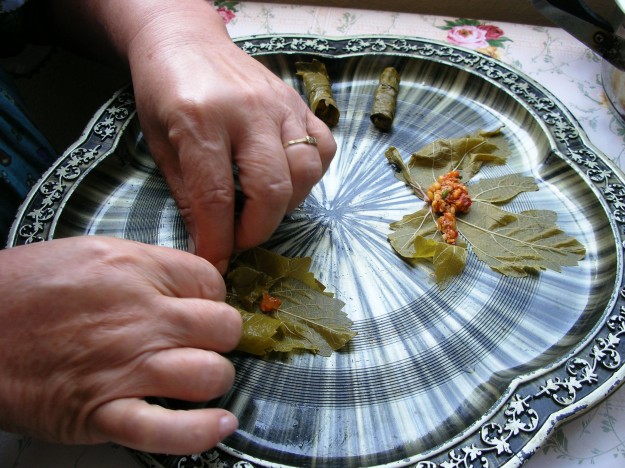
My mother rolling the stuffed vine leaves; we would all help preparing the vine leaves, removing stalks, or making Turkish coffee!
We Turks love stuffing vegetables. The word dolma is used for the vegetables like aubergines, peppers, courgettes that are stuffed. Fruits such as apples, quince and plums can be stuffed too. We also stuff vine leaves (that is called sarma) and cabbage leaves (lahana sarma, here is the link for that recipe), either with an aromatic rice, pine nuts and currants or with ground meat, rice, herbs and spices.
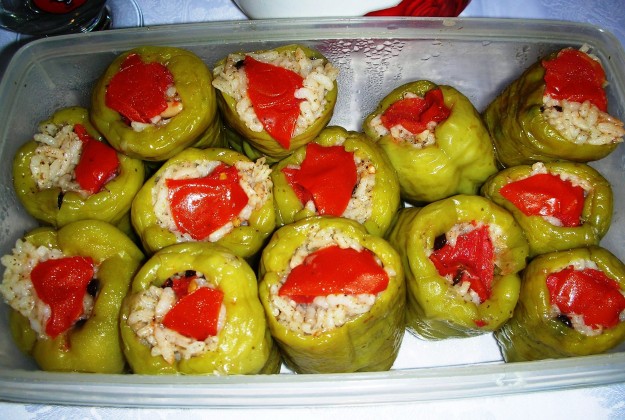
Stuffed peppers with aromatic rice and herb filling
This recipe comes from the ancient town of Antakya, Antioch, where my roots are from. This is the region where bulgur, red pepper paste, pomegranate molasses and spices like red pepper flakes, cumin, and mint are used frequently. All these add such rich, wonderful flavor to the dishes, and very healthy too. I used bulgur instead of the traditional rice for stuffing, like we do in Antakya. Bulgur’s nutty, wonderful flavor adds another dimension to the dish, with bonus of bulgur’s many health benefits. In Antakya, once the flesh of the vegetables taken out, they are given a little wash with pomegranate molasses & little water. The tangy and sweet flavor of the molasses adds to the richness of the flavor. You can use a good balsamic vinegar if you can’t get hold of pomegranate molasses.
I hope you enjoy this delicious, satisfying dolma packed with flavor and memories and have a chance to visit the fascinating Antioch sometime.
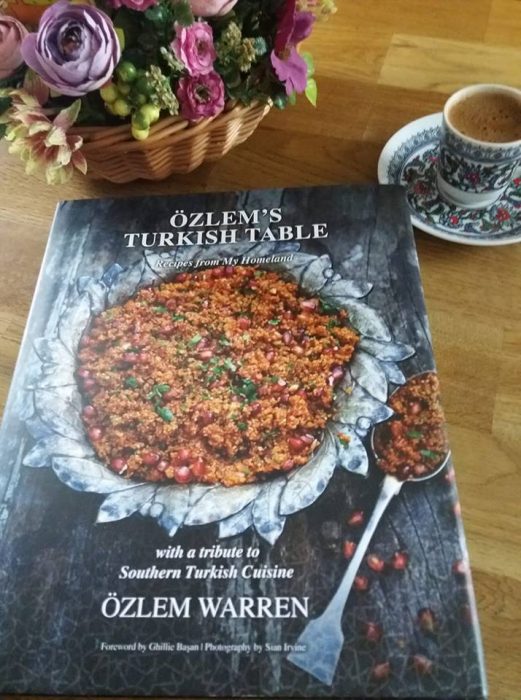
Signed copies of Ozlem’s Turkish Table book, available to order at this link
I am passionate about sharing authentic Turkish recipes from my homeland and the wholesome, delicious Turkish cuisine; this lovely recipe and many more (over 90 recipes) are included at my cookery book, Ozlem’s Turkish Table, Recipes from My Homeland. You can order Signed copies at this link, delivered promptly worldwide.
If you live in the US, Canada or Mexico, hardback copies of Ozlem’s Turkish Table cookery book can be purchased at this link with lower shipping rates.
Serves 6-8
Preparation time: 40 minutes Cooking time: 40-45 minutes
3 medium size courgettes (zucchini)
3 medium size bell peppers
30ml/2tbsp pomegranate molasses or good balsamic vinegar, mixed with 1tbsp water
3 small tomatoes, cut in half (to cap the dolmas)
6-8 cloves of garlic, crushed
For the filling:
110gr/4oz/ 1/2 cup ground beef/lamb or ground turkey
115gr/4oz/generous 1/2 cup coarse bulgur wheat
1 medium onion, finely chopped or grated
Handful of flat leaf parsley, finely chopped
10ml/1tbsp olive oil
10ml/1 tbsp concentrated tomato paste or red pepper paste
5ml/1 tsp red pepper flakes/chilli flakes
5ml/1tsp ground cumin
5ml/1tsp dried mint
Salt and ground black pepper to taste
Bowl of plain (natural yoghurt) or cucumber, yoghurt dip, cacik to serve
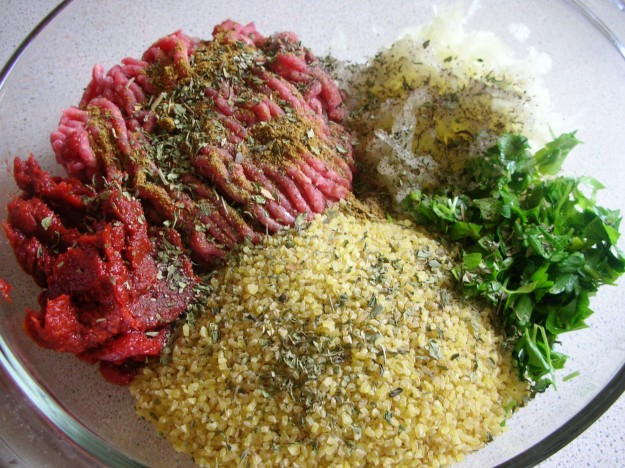
Stuffing ingredients all together
Put the ground meat in a large bowl and stir in the rest of the filling ingredients. Season and knead, until all blended well. The filling is ready.
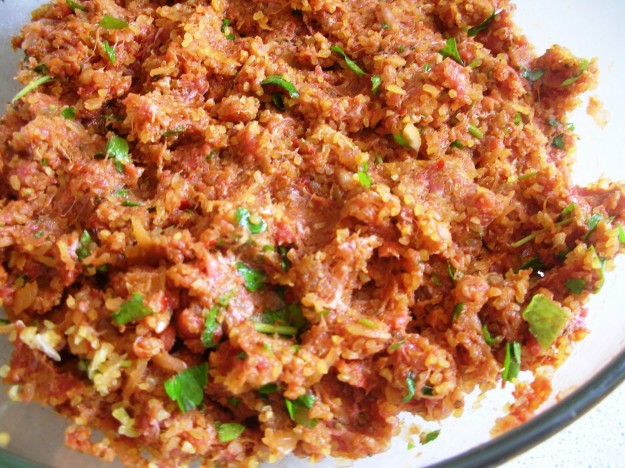
Stuffing ingredients, after mixing
Now, let’s prepare the vegetables. Cut the stalk ends of the peppers and save them aside (we will need them to cap the stuffed peppers later). Scoop out the seeds of the peppers.
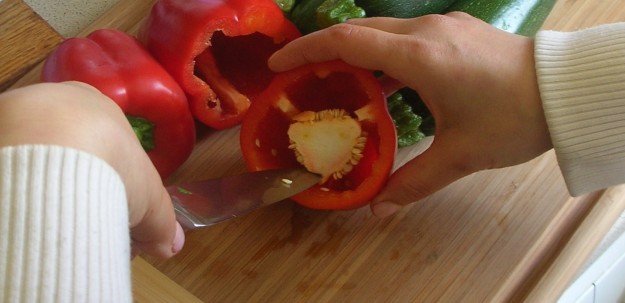
Scoop out the seeds of the peppers to prepare for stuffing
Cut the courgettes in half. Scoop out the flesh of the courgettes with the help of a long coffee spoon (in Antakya, we use a long and thin scooping device made just for that purpose). Carefully remove some of the flesh to create a cavity that is large enough to stuff. Take care to leave the bottom of the courgettes intact.
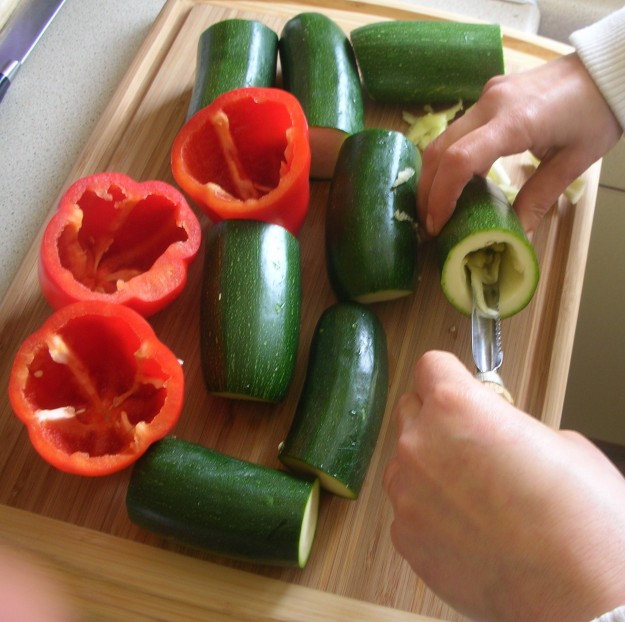
Taking the flesh out of the courgettes (zucchini); long coffee spoon would work here
I Iike to save the flesh of the courgettes, as they go very well in the bulgur, tomato and courgette recipe. You can keep them in a sealed freezer bag in the freezer up to 3 months.
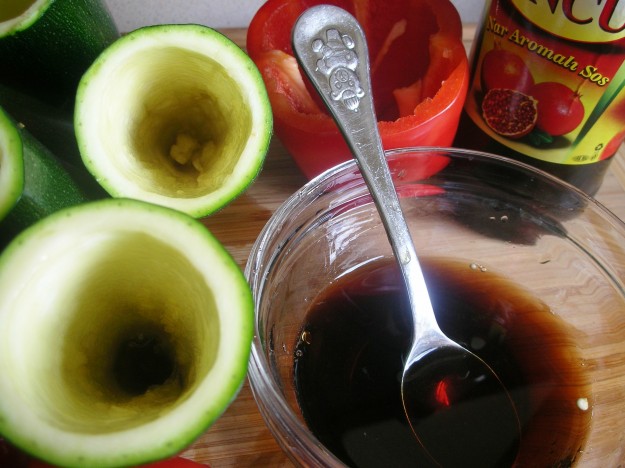
Give a little wash to the peppers and zucchini with pomegranate molasses and water mix
Mix the water with the pomegranate molasses (or balsamic vinegar) and wash the inside of the peppers and courgettes with this mixture. Add the left overs of this delicious juice to filling mixture, mix well.
Take spoonfuls of the filling mixture and pack it into the vegetables. Take care not to overfill to the top, as bulgur will need a little space to expand. Place the stalk ends and the halved tomatoes as lids. Place the stuffed vegetables upright, packed tightly, in a heavy pan. Pour a couple of cups of water to the pan, until it covers the half of vegetables. Stir in the cloves of garlic and cover. Bring the liquid to the boil, then reduce the heat and cook gently for about 40 minutes or until the vegetables are tender.
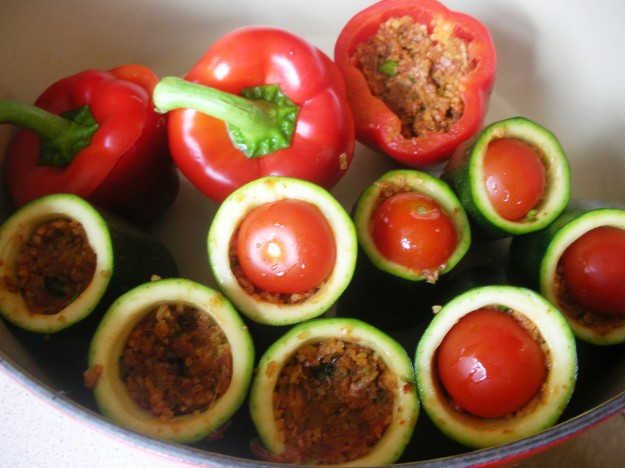
Cap the stuffed peppers and zucchini with the pepper stalks and halved tomatoes
Serve hot with plain natural yoghurt or Cacik; yoghurt and cucumber dip.
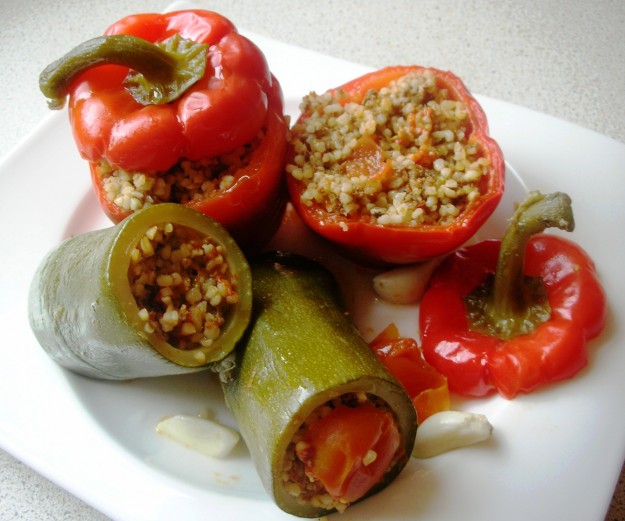
Stuffed peppers and zucchini; they go so well with plain yoghurt by the side
Afiyet Olsun!
Snapshot from home, Turkey: Ancient city of Antioch, Antakya
Here is a new section in the blog! Whenever I can, I would like to give a little snapshot of fascinating places in Turkey that I have visited. Food and travel complement one another so well, and I hope this part could bring the places alive and inspire you to visit sometime.
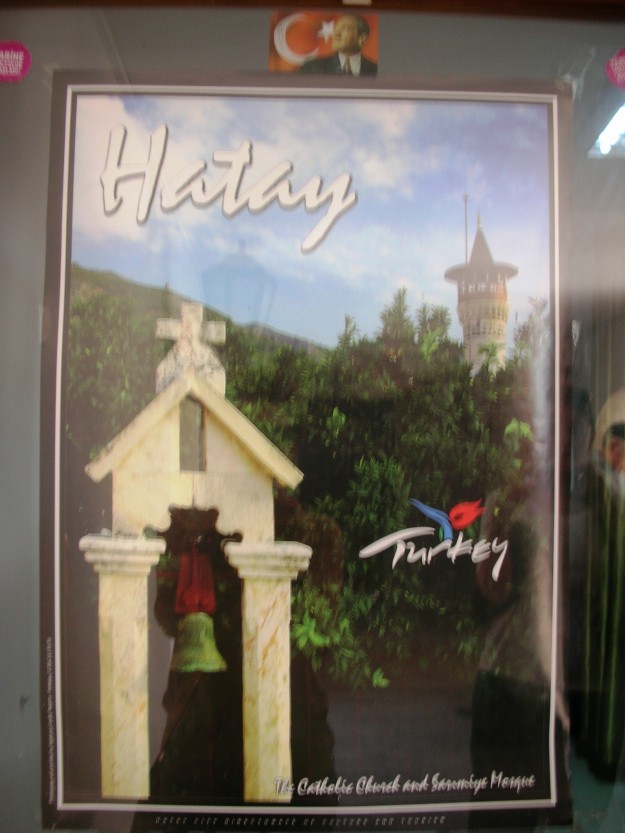
Ancient Antioch, Antakya; cradle of many civilizations
Here, I would like to introduce my beloved, ancient home town Antakya, located in the southern part of Turkey. Antakya was one of the three biggest cities of the Roman Empire and the capital of the east. Antakya was founded in B.C. 4 by the Syrian King, Seleukos, and he named the city after his father, Antiochos. Over the centuries, the city was under Roman, Byzantine, Ottoman and French rule. As of 1939, Antakya became a part of the Republic of Turkey.
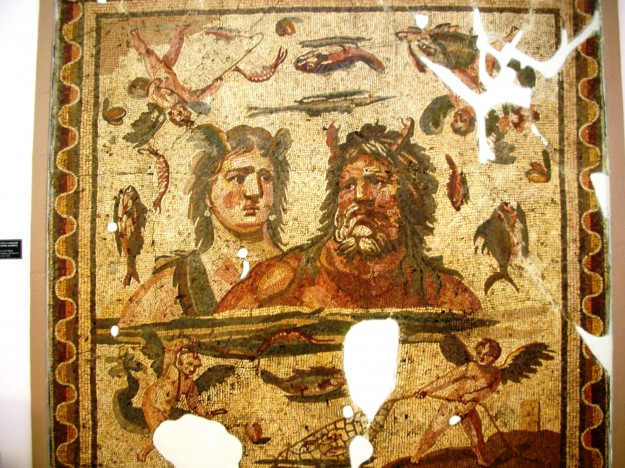
One of the many grand mosaics at the Antakya Mosaic Museum
Antakya Mosaic Museum is the world’s 2nd biggest mosaic museum in terms of the richness, quality and the size of the mosaics. The mosaics you’ll see there are from the Roman and the Byzantine periods, and they are simply fascinating. The museum also hosts magnificent sculptures; the most important of them is the 3 meter high figure of Apollo.
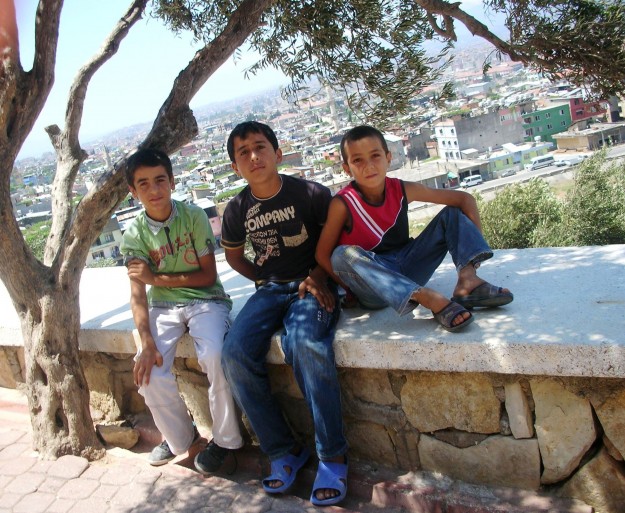
Friendly children of Antakya, guiding us towards the Church of St Peter
St Pierre Church (Church of St Peter) is another fascinating sight. St Peter’s Church, built in a cave, on the skirts of Habib Neccar Mountain in Antakya, is known as one of the first places that the early Christians gathered. St Petrus, one of the followers of Jesus (A.D. 29- 30), came to Antakya and used this “cave” to expand Christianity. St PierreChurch is regarded as the first church of Christianity outside Jerusalem. Due to its importance, Pope Paul 6th declaredSt Pierre Church a pilgrimage for Christians. Every year on June 29th, Remembrance of St Petrus ceremonies take place in Antakya, with the participation of thousands of Christians from around the world.
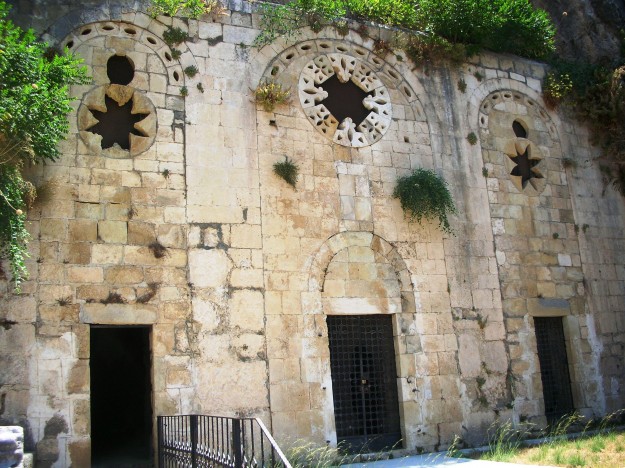
Church of St Peter, Antakya
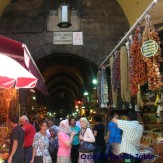
Another wonderful visit in Antakya is the Long Market, Uzun Carsi, city’s ancient market. This is the place I visited many times as a child, to get our daily bread, yoghurt, cheese and vegetables, when we used to visit my Grandma. The smells and colors are simply mesmerizing. Antakya’s cuisine has an incredible richness of fresh herbs and spices, packed with flavor. A type of wild oregano, zahter, cumin and red pepper flakes are used very commonly. The red pepper paste, biber salcasi, is one of the landmarks of Antakya too. The richness of this red pepper paste adds a wonderful flavor to casseroles and meat dishes. Another specialty food item worth mentioning is the nar eksisi, the syrup made from concentrated sour pomegranate juice. This incredibly rich, concentrated flavor is a must for many traditional salads and meze spreads.
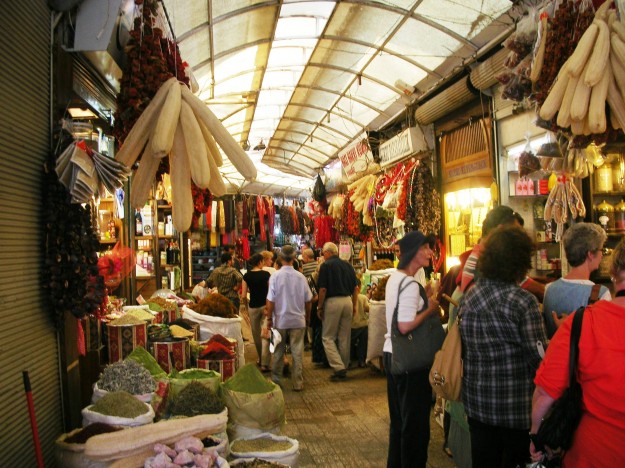
The Long Market (Uzun Carsi) in Antakya, packed with mesmerising spices, olive oil based soaps and many more
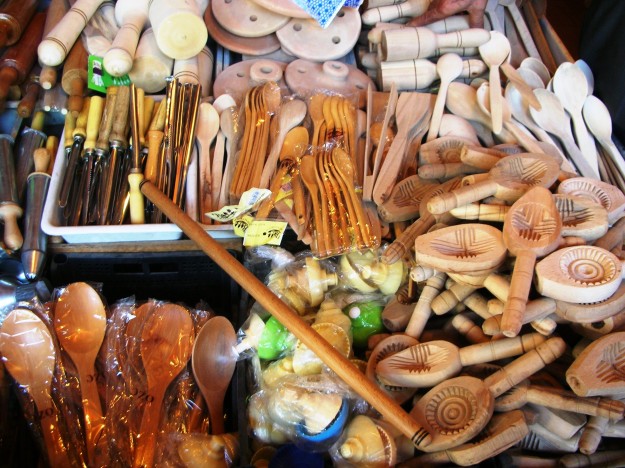
Hand carved wooden spoons in the Long Market; I use them everyday!
This is the Tunel of Vespasion, in the village of Kapisuyu, Antakya. It was built as a water channel in the 2nd century. Another fascinating visit.
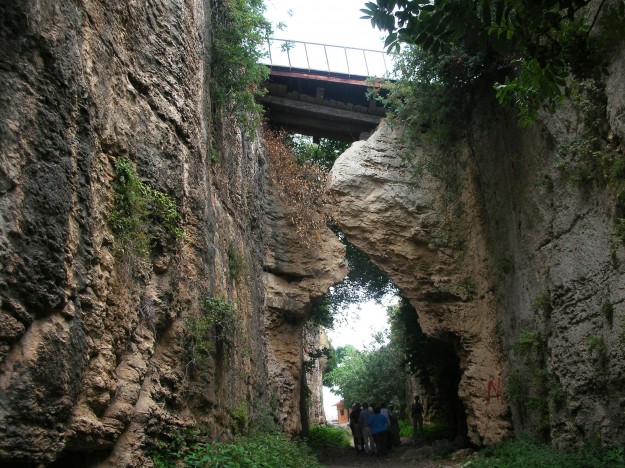
The Tunnel of Vespasion, Antakya – Hatay
There are many more photos of my travels to Turkey here, if you would like to have a look.
Happy travels to you all!